
Product Market Fit
How Nabla dropped 80% of its product and found PMF
Real strategies, frameworks, and insights from leaders who built Europe's fastest-growing products.
26/9/2025
•
.png)
.avif)
Backstory
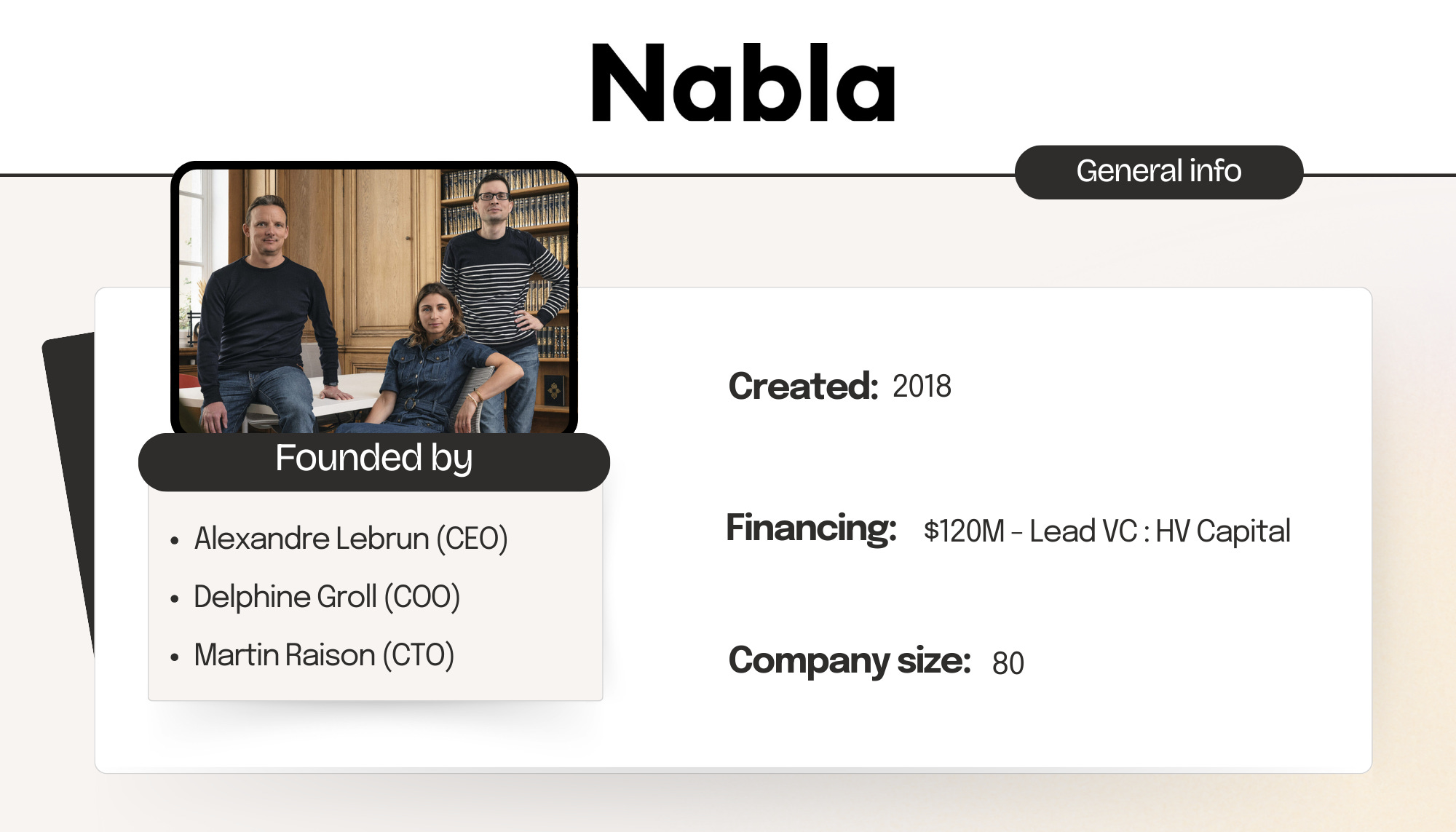
Founded in 2018 by Alexandre Lebrun (ex-Wit.ai, acquired by Facebook), Nabla set out to reinvent how AI could help doctors by tackling administrative overload. The team initially built its own telehealth clinic for women, then pivoted to a broad "Care Platform" (EHR*-like system) combining patient records, messaging, prescriptions, and video consults. Despite strong tech, adoption plateaued.
By 2022, with funding at $11M and a 25-person team (60% engineering, only 1 in marketing), Nabla faced a breaking point. The platform had only ~10 small B2B clients, mostly friendly early adopters, and the healthtech funding downturn dried up their ICP.
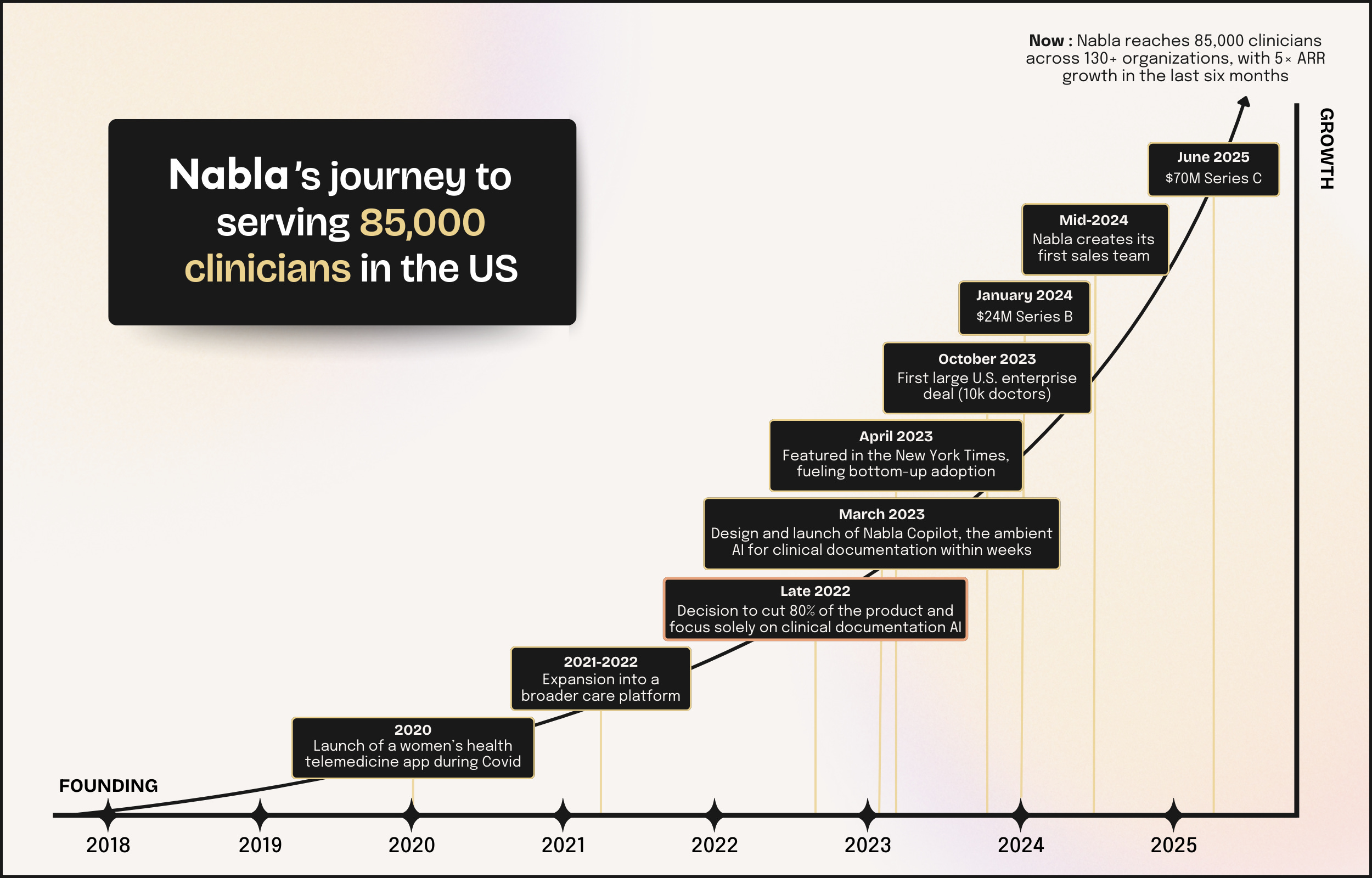
In late 2022, they made a radical choice: kill 80% of the product and focus solely on an AI assistant that automated medical documentation. That move changed everything.
I sat down with Alexandre Lebrun, cofounder and CEO of Nabla, to discuss how killing 80% of their product became the catalyst for true product-market fit.
*EHR: Electronic Health Record
In just a few years, Nabla has grown to:
- 85,000 clinicians across 130+ healthcare organizations
- $120M total funding (Series C in 2025)
- 5× ARR growth in the last 6 months
- A team of 80 people
Disclaimer: The organizational choices and technical solutions shared in this newsletter aren’t meant to be copied and pasted as-is. Always keep your company’s context in mind before adopting something that works elsewhere! 😊
Why breadth kills focus in healthcare software
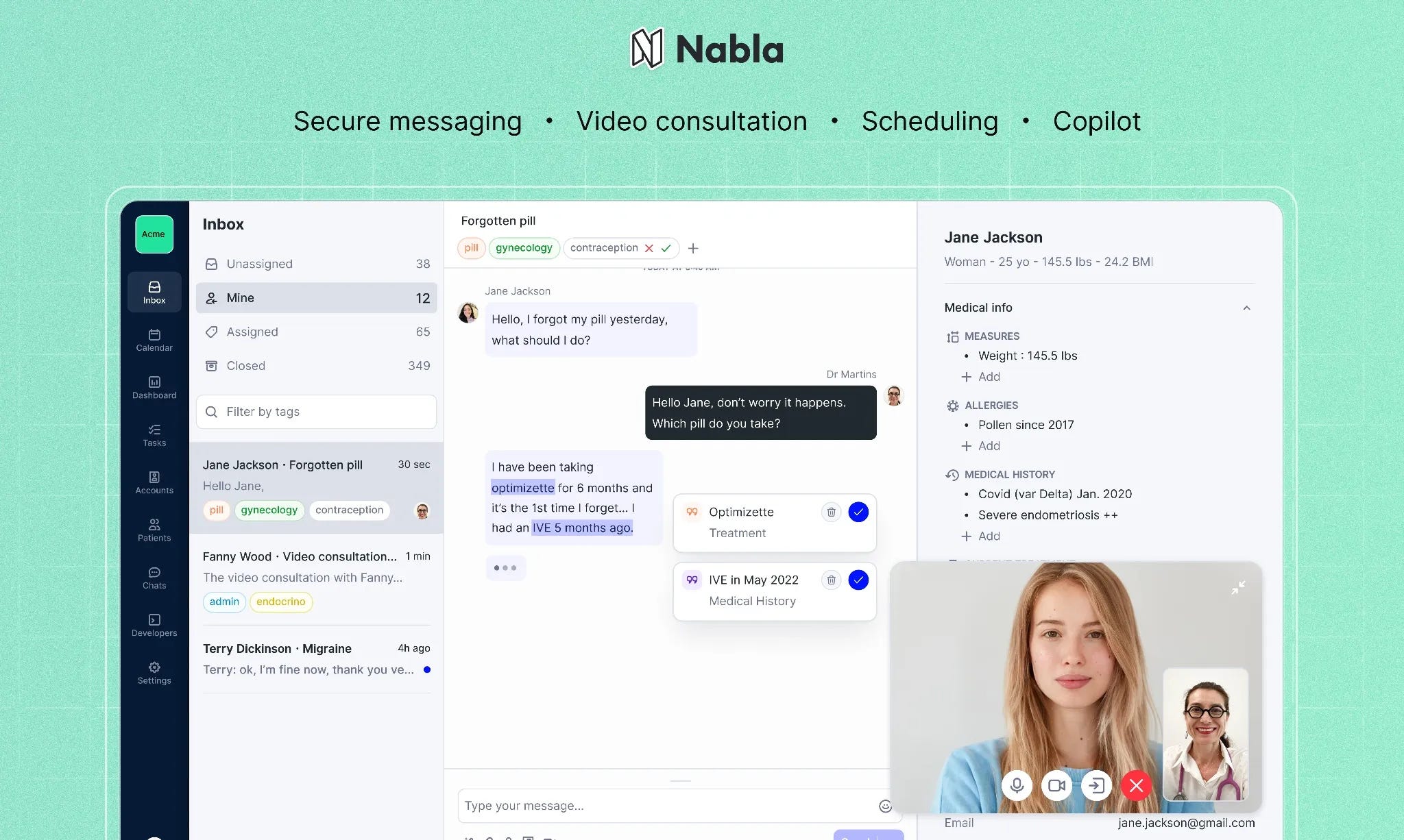
Before becoming an AI copilot assistant, Nabla’s Care Platform looked like a CRM for medicine: records, chat, teleconsultations, prescriptions. Built with Facebook-level UX, it impressed in demos but failed in adoption. Clients were too small, usage negligible and expansion impossible.
"We quickly hit a ceiling at around 10 clients. We couldn’t really see who the 11th one would be." - Alexandre Lebrun, Nabla’s CEO
Worse, selling to hospitals was impossible given entrenched incumbents.
The trap? Listening too much to every doctor request. With funding cushion, the team expanded features endlessly, becoming horizontal without realizing it. The key lesson: in healthcare, breadth dilutes impact. A startup of 25 can’t fight incumbents with a mega-suite. The medicine world doesn’t reward breadth; it rewards solving one painful, daily workflow.
How a single insight unlocked PMF
Inside Nabla’s broad Care Platform, one feature stood out: an AI assistant that automatically wrote consultation notes. Hospitals didn’t want the full platform, but every demo sparked interest when this assistant appeared. Alexandre had his realization over dinner in Switzerland: “Why don’t we launch only this, since it’s what people really want?”. The lesson was clear: focus on the one piece that delivers the most value. To test the idea, he assigned 3 engineers and 1 PM to a small dedicated team.
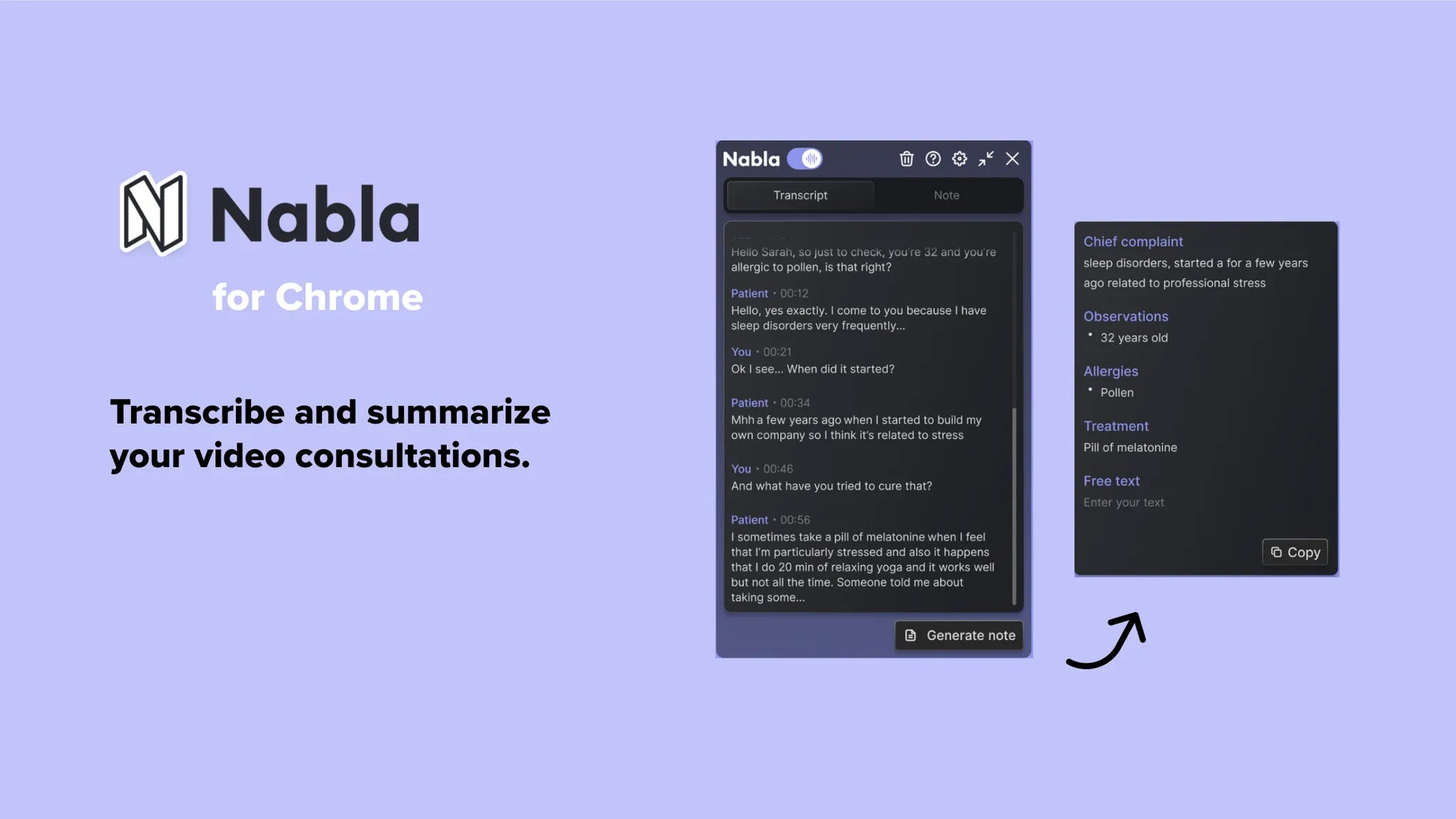
Within weeks, they extracted the AI assistant they had built from the platform, and made it work alongside doctors’ existing EHRs. This framing mattered: it was seen as support, not a replacement. Within weeks, adoption proved they were finally on the right path.
A Chrome extension as the entry point
Selling to hospitals is a graveyard of pilots. Nabla avoided it by targeting doctors directly with a simple Chrome extension. Crucially, it recorded nothing, easing privacy fears, and positioned itself as lightweight. Doctors trusted peers, not ads, so adoption spread via word of mouth.
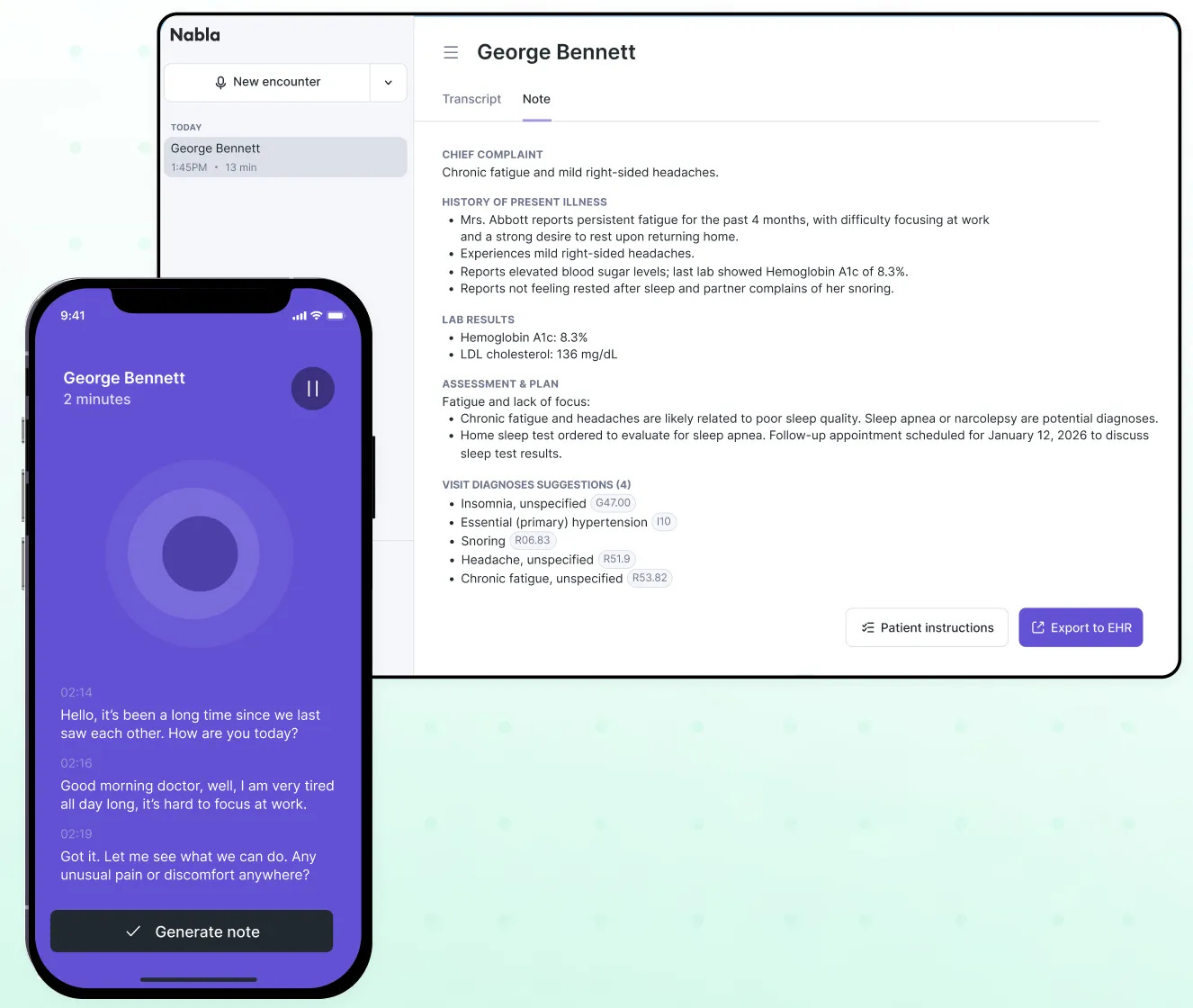
"You have to understand that doctors only listen to other doctors… and they were saying, ‘I save an hour a day, it’s magic." — Alexandre Lebrun, Nabla’s CEO.
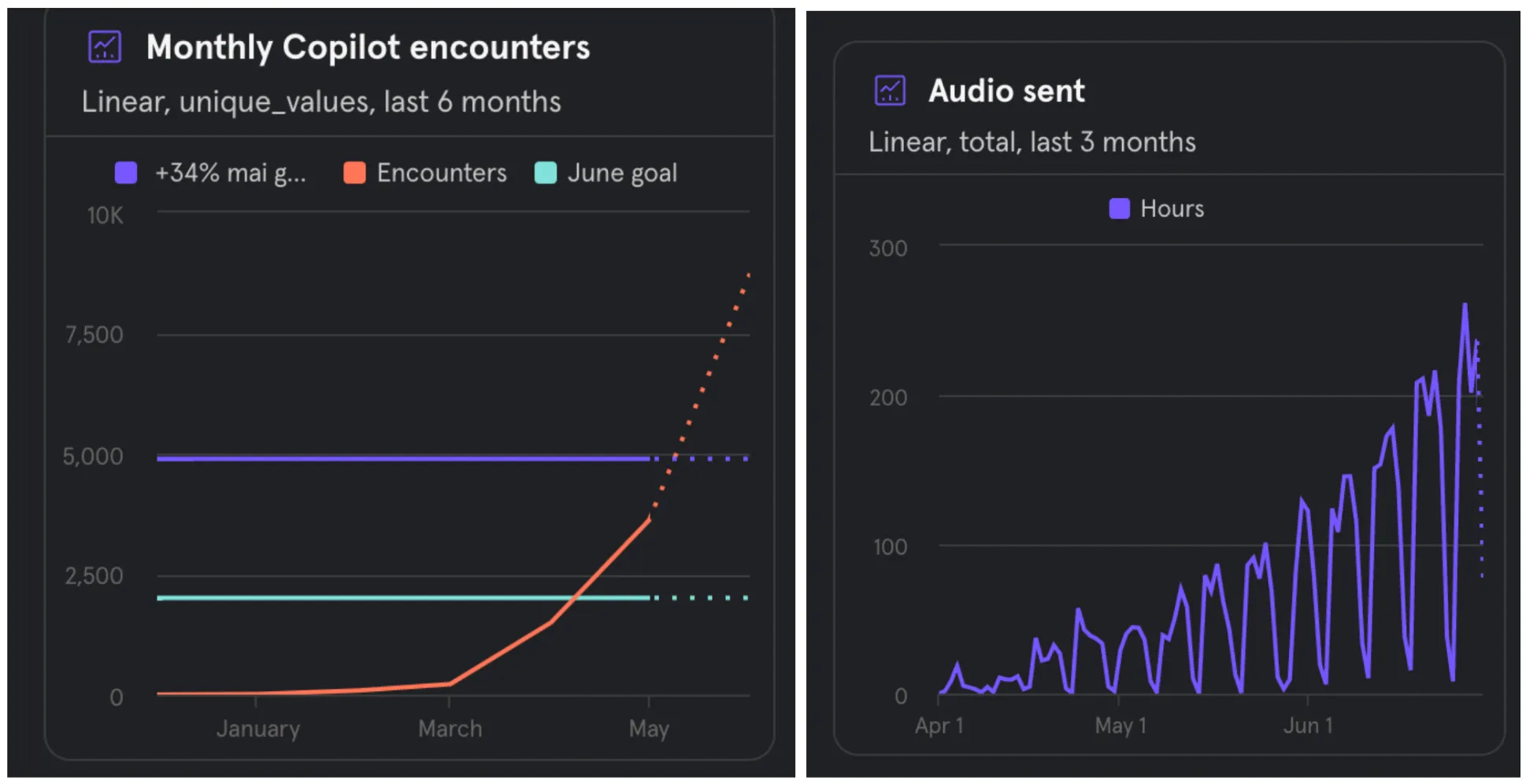
Word spread in closed Facebook groups and conferences. Early users loved it so much they lobbied IT later for integration. A New York Times feature in April 2023 accelerated the curve: adoption skyrocketed, ARR multiplied 5× in 6 months, and inbound enterprise deals arrived even without US sales staff.
Building conviction to throw away 80%
Letting go of years of work is really hard.
"It’s never easy to throw away 80% of a lifetime’s effort." admits Alexandre
To overcome attachment bias, he ran a mental exercise every quarter: “if I restarted from scratch, what would I build today?”. By late 2022, the answer was clear: the ambient AI assistant. That clarity gave the team courage to align. At Nabla’s Christmas dinner in 2022, Alexandre told the team they were all-in on the ambient AI assistant.
To his surprise, no one resisted. Engineers were thrilled to focus on something that worked. The discipline was not just in cutting scope, but in resisting re-expansion. Even today, Nabla has kept one persona (the doctor), avoiding the temptation to build for coders or admins.
Turning bottom-up use into enterprise contracts
Nabla’s Product-led growth wasn’t just luck. The Chrome extension design made trials frictionless, enabling doctors to self-onboard. As adoption grew, the team invested heavily in UX to support enterprise needs — building a full web app and later a mobile app to make usage seamless beyond the browser. Once usage spread inside hospitals, IT was pulled in: first for integration, then for enterprise licensing. Doctors became champions lobbying internally. This flipped the usual dynamic: rather than startups begging for pilots, hospitals begged Nabla for contracts. By the end of 2023, Nabla had signed its first 10,000-doctor enterprise deal in the US, before even opening a local office.
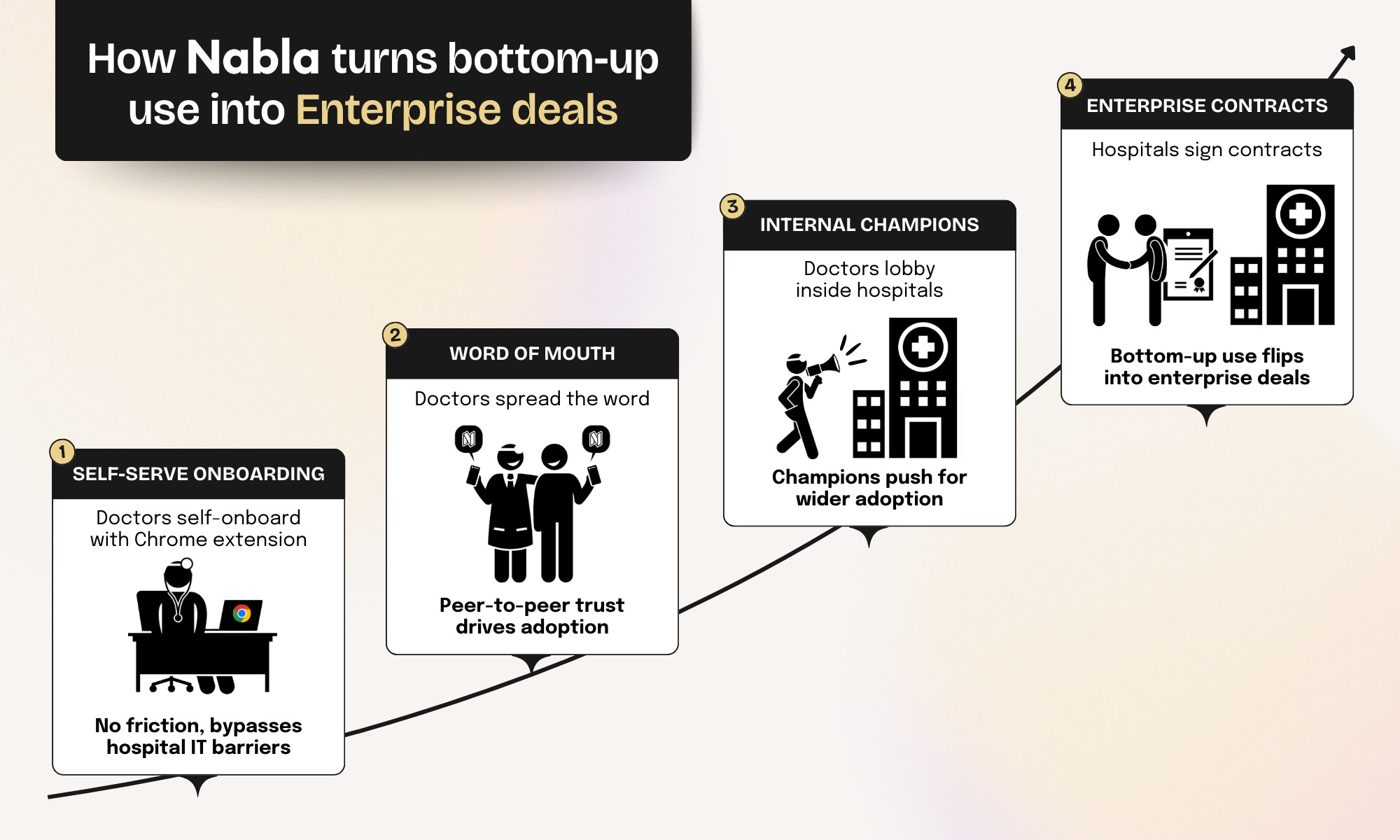
Today, 85,000 clinicians across 130+ organizations use Nabla’s Ambient AI. The GTM motion evolved, with a US Sales team now handling classic RFPs*, but seeded by grassroots adoption.
*RFP: request for proposal.
The mistake: chasing breadth instead of depth
Nabla’s initial misstep was building too wide, too fast. With ample funding and eager feedback, they added feature after feature until they had a massive horizontal product. The illusion: more features would manufacture PMF. The reality: breadth hid the absence of traction.
"We had plenty of resources… but having too much money can be dangerous." warns Alexandre.
The lesson is clear: if adoption is weak, piling features won’t fix it. Instead, cut scope until one workflow shows unstoppable pull. Nabla’s survival hinged on resisting sunk cost fallacy and daring to throw away 80% of their codebase.

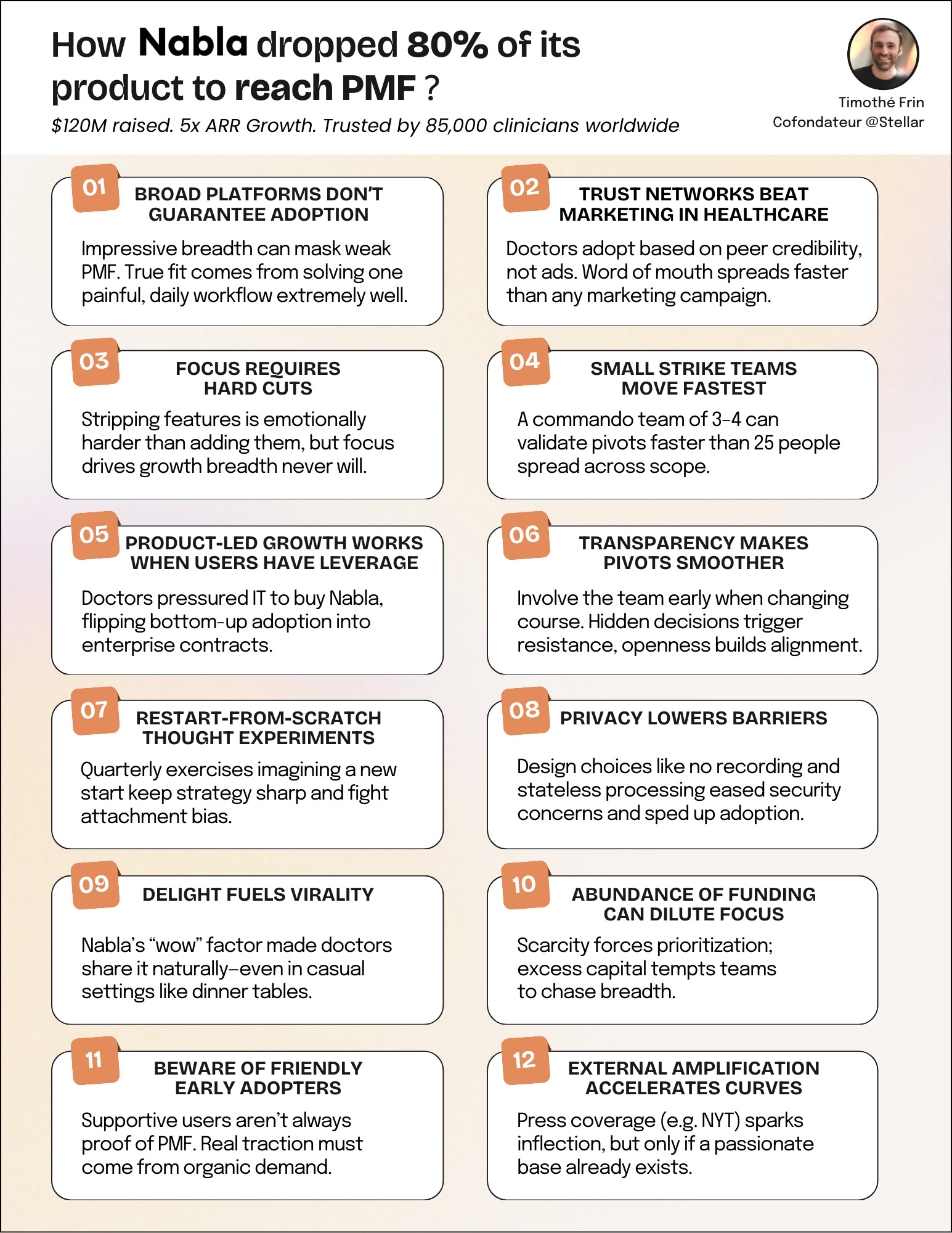
- Broad platforms can look impressive but fail to gain adoption; PMF requires solving one daily workflow painfully well.
- In healthcare, bottom-up trust networks (doctors → doctors) outperform marketing spend. Adoption spreads via credibility, not ads.
- Stripping away features is often harder than adding them, but focus can unlock growth that breadth never delivers.
- A commando team of 3–4 can move faster than 25 when testing radical pivots. Keep scope small to validate fast.
- Product-led growth works best when end users have political leverage internally; in Nabla’s case, doctors pressured IT to buy.
- Transparency with the team during pivots avoids resistance; involve them early rather than surprising them.
- Quarterly “restart from scratch” thought experiments help fight attachment bias and keep strategy sharp.
- Privacy and security design choices (no recording, stateless processing) were crucial to lower adoption barriers.
- Viral adoption often comes from delight: Nabla’s “wow” factor gave doctors a reason to share it at dinner tables.
- Funding abundance can be dangerous; scarcity forces focus, while excess tempts you into breadth.
- Early adopter signals can mislead if they’re “friendly” users; adoption must be organic, not just supportive.
- Growth inflection often comes from external amplification (e.g., NYT article), but only if a passionate user base exists.
- Hospitals are a graveyard for early pilots; Nabla succeeded by bypassing procurement and seeding usage bottom-up.
- The hardest cut is often the right one: killing 80% of a product can be the only path to PMF.
- Scaling after PMF requires discipline not to re-expand personas too quickly; Nabla kept “clinician” as sole user.
My full interview with Nabla’s CEO
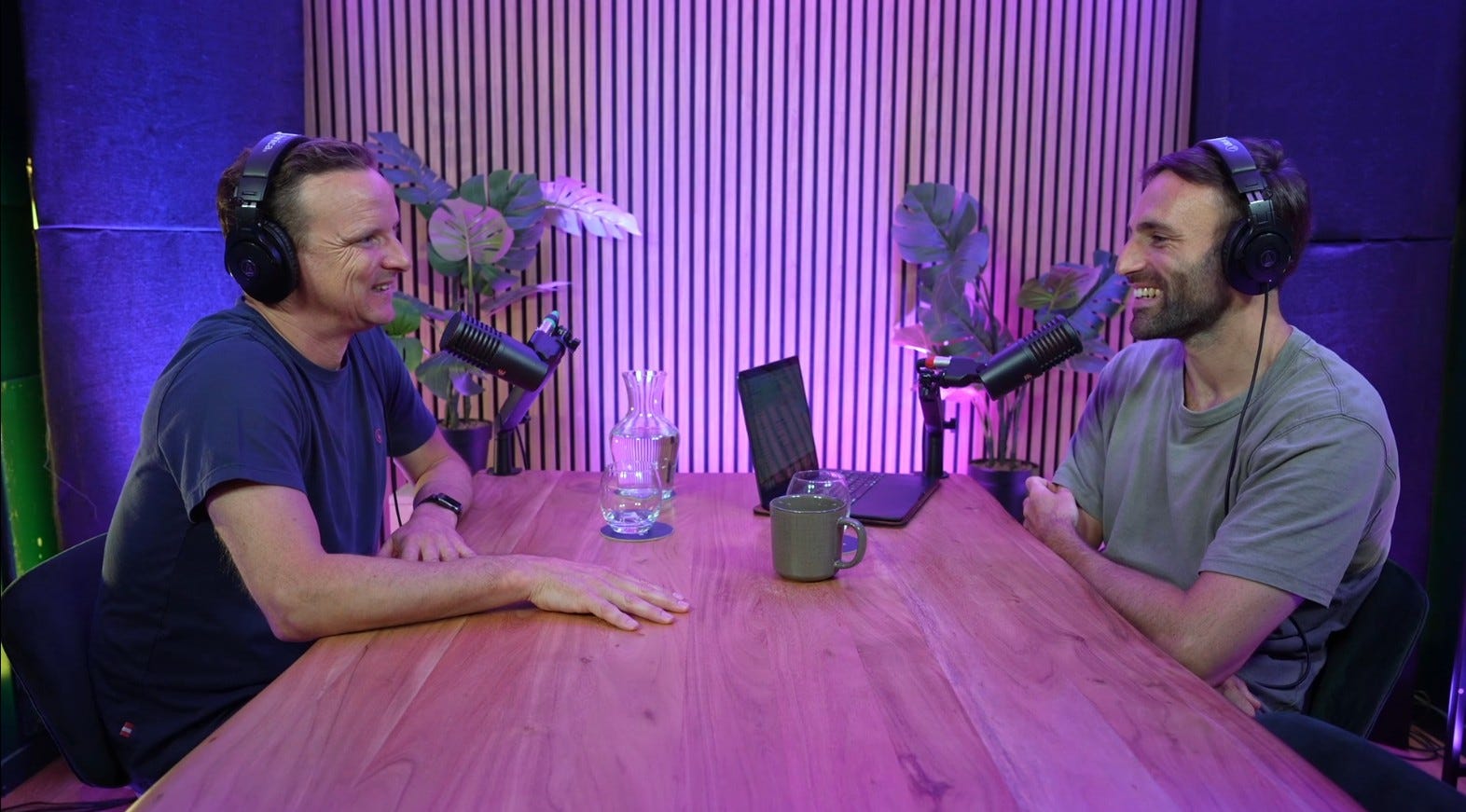
Dive deeper into this topic with Alexandre Lebrun, CEO of Nabla in my latest podcast episode:
Test your Product performance in 10 min
Trusted by 100+ startups and top CPOs like:


In this article
About Stellar
Stellar is a team of senior CPOs and CTOs who work hands-on inside product and engineering teams to fix what slows them down. Not advisors. Not trainers. Operators who've done the job before and know exactly where to look.
Discover StellarDive deeper
See all articles

.png)
.avif)