

Product Organization
How Pictarine scaled Radical Performance across the company
Real strategies, frameworks, and insights from leaders who built Europe's fastest-growing products.
22/1/2026
•
.png)
.avif)
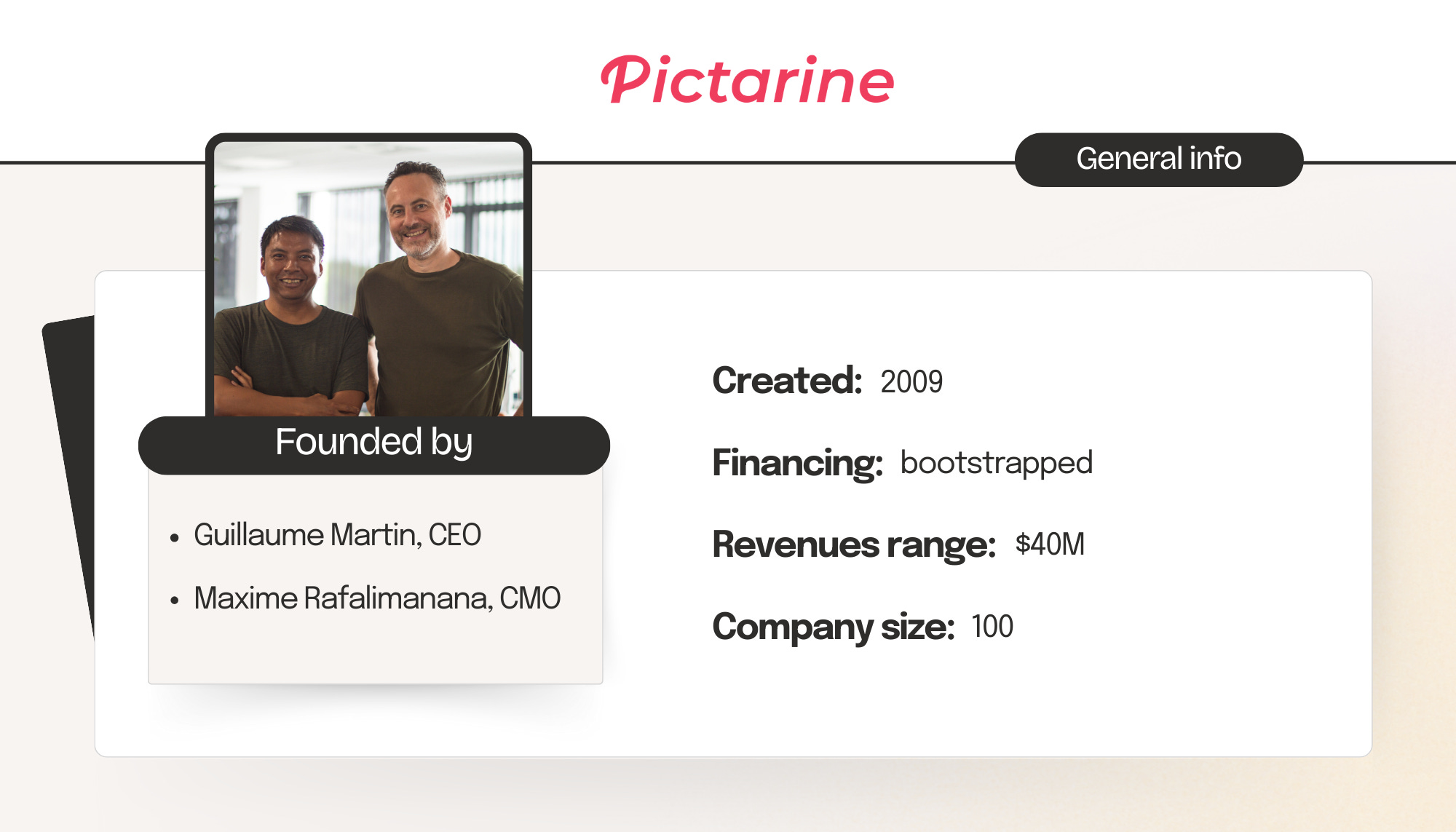
Pictarine is a Toulouse (France) based startup that quietly became a leader in photo printing in the US. From day 1, the promise has been simple: select photos on your phone in seconds, then pick up your prints in under an hour at a nearby store. Through partnerships with roughly 17 000 retail locations across two large US supermarket chains, Pictarine turned a simple mobile flow into a very real-world business.
Founded by Guillaume Martin (who I previously interviewed on the podcast🎙️) and Maxime Rafalimanana, the company spent years focusing almost exclusively on the US market before starting to look back toward Europe. In 2024, Pictarine generated around 40 million dollars in revenue, with growth multiplied by four over the last three years, a team of about 100 people and 21 in product related roles, for roughly 400k dollars in revenue per employee.
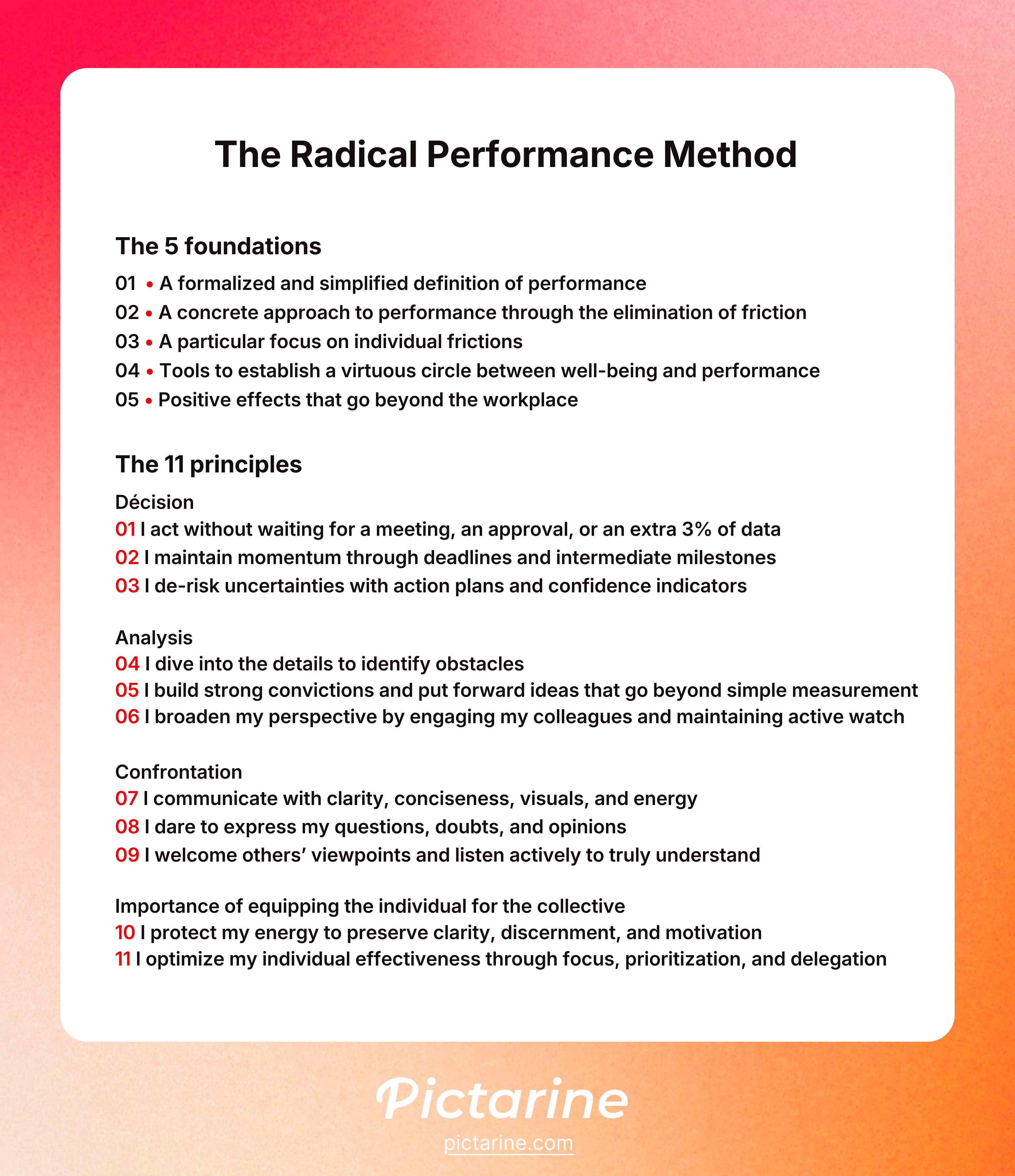
As the company scaled, they introduced middle management early, then later reorganized around a new Operation department and a dedicated Design department, while the founders focused on product & marketing vision. This is also when François Goldgewicht, first product hire back in 2014, moved from CPO to COO and formalized what had been an implicit way of working into a method called Radical Performance.
I sat down with François Goldgewicht, COO & Partner at Pictarine, to discuss how he built and rolled out the Radical Performance method across the whole organization and how other teams can adapt it to their own context.
Disclaimer: The organizational choices and technical solutions shared in this newsletter aren’t meant to be copied and pasted as-is. Always keep your company’s context in mind before adopting something that works elsewhere! 😊
Redefine performance so everyone uses the same formula
When Pictarine started to scale, the leadership team hit a classic trap. Different teams used different mental models of “performance.” Some optimized for shipping speed, others for product robustness, others for business impact. The result: local optimizations, global frustration.
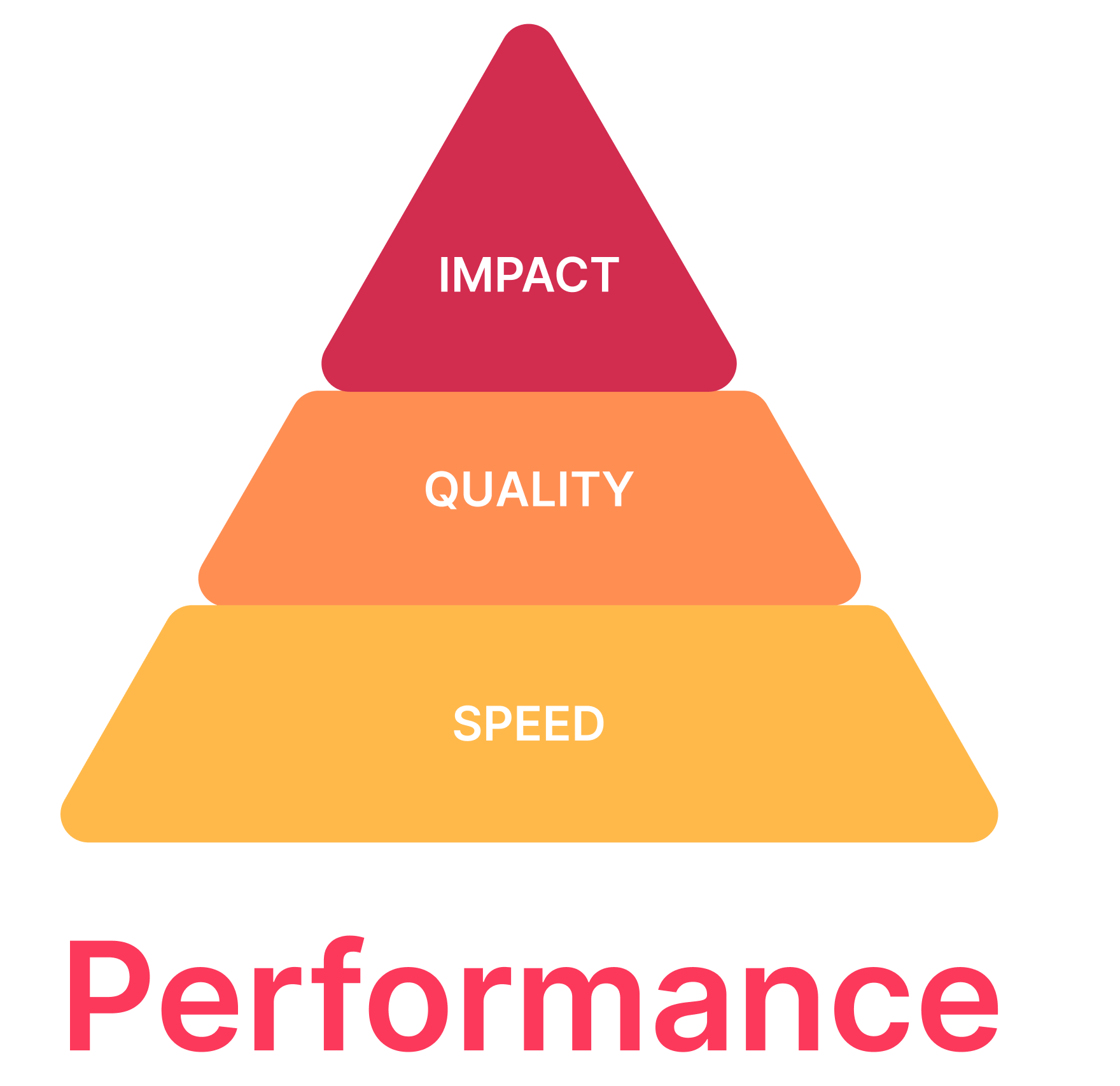
Radical Performance starts by forcing everyone to agree on a very simple formula. For Pictarine, performance equals speed, quality and impact, in that explicit order. Speed comes first because they operate in a highly uncertain environment, with competition, regulation and customer expectations that can shift in weeks. They need to learn fast. Quality means not only avoiding production incidents, but delivering a user experience that feels remarkable, while keeping the platform maintainable. Impact is the alignment of work with the company’s real business stakes, whether direct revenue or indirect value through customer satisfaction.
François explains that this formula was born from mistakes. At one stage of growth, quality was high, but execution really slowed. After fixing that, they shipped high quality features at good speed, yet could not explain why some of those features existed at all. They were well executed, but misaligned with core business priorities. That is when impact became the third non negotiable ingredient.
“We had shipped incredible things, speed and quality were great, but we could not really explain why we had done them” says François.
The lesson for other teams is straightforward. Before debating OKRs or stack choices, define a shared performance formula. Make it explicit, discuss the order of ingredients, and keep coming back to it when you arbitrate trade offs. Pictarine’s framing gives product teams a clear lens to argue about roadmaps, tech investments or experiments without falling back on vague notions like “do it properly” or “move fast.”
Hunt down frictions instead of pushing people harder
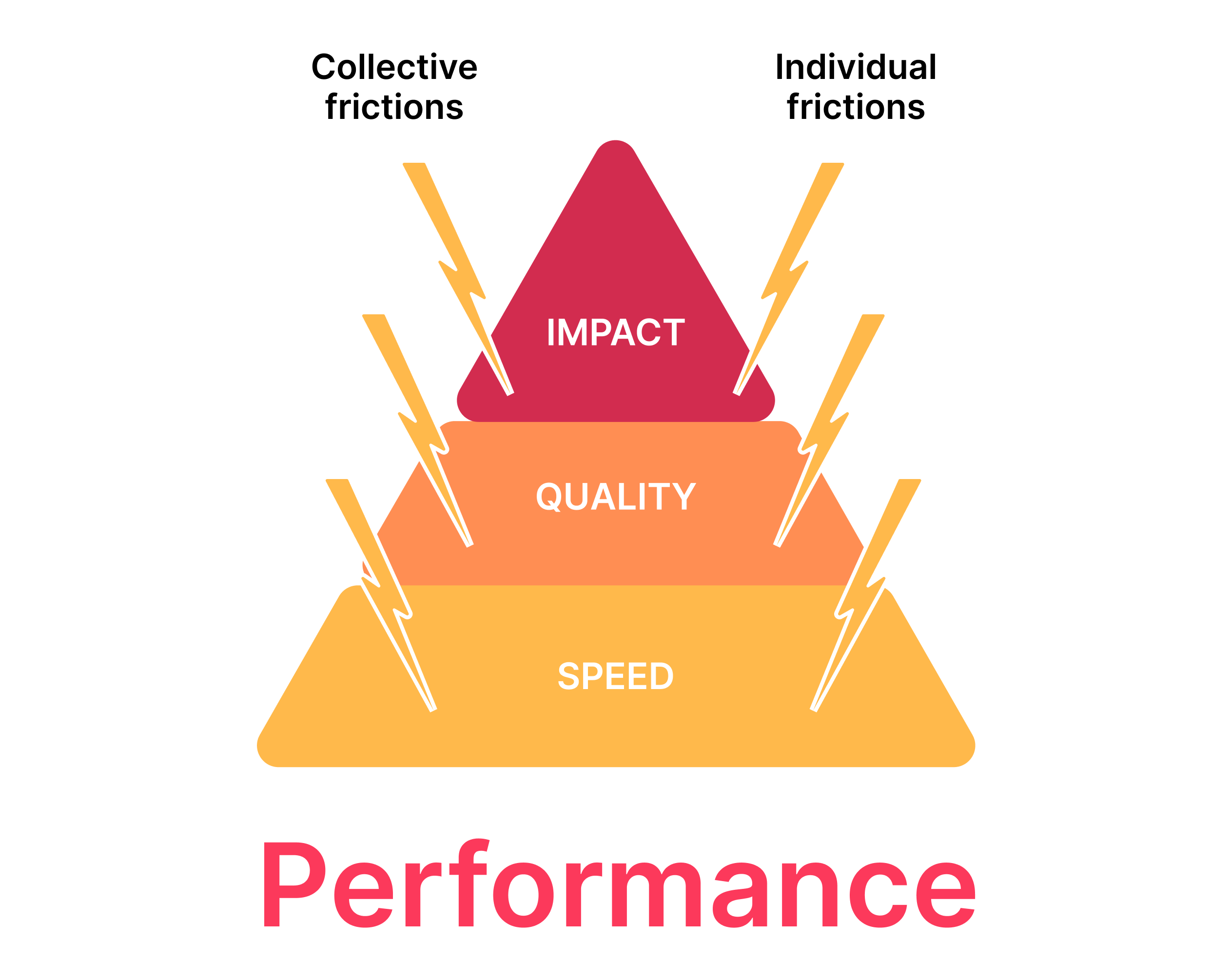
Once the performance formula was set, Pictarine resisted the temptation to “boost” each ingredient through slogans like “ship faster” or “raise the quality bar.” Instead, Radical Performance flips the question. Rather than asking how to increase speed, quality and impact, they ask what slows each one down. The answer, for François, lies in frictions.
They distinguish between collective frictions and individual frictions. Collective frictions are familiar: a developer ranting about incomplete specs, a PM frustrated because marketing changed a brief at the last minute, or misalignments between squads. These are visible, loud, and usually get handled because people complain. Individual frictions are quieter and more dangerous. Think of someone who avoids giving hard feedback, freezes before a big presentation, or silently drags a fear of failure into every decision. Those frictions can sabotage speed, quality and impact without ever surfacing in a meeting.
Radical Performance is designed to surface and work on those frictions, not to pretend they do not exist. This is where well-being enters the framework. Pictarine refuses the classic opposition between “high performance” cultures that burn people out and “well-being” cultures that treat work as a burden to compensate. For François, well-being is a driver of performance, and performance can reinforce well-being when people feel useful, impactful and proud of their progress.
“We see well-being as a source of performance, and performance as something that can feed well-being” sums François up.
Operationally, this shows up in how they talk. The method is built on “good conversations” about frictions, both collective and individual. When someone struggles with public speaking, feedback, or private personal issues that bleed into work, the goal is not to pathologize them, but to create a safe frame to name the friction and work through it. In that frame, high performance is not about pushing harder, but about removing what slows people down.
Turn principles into daily decisions with “I act”
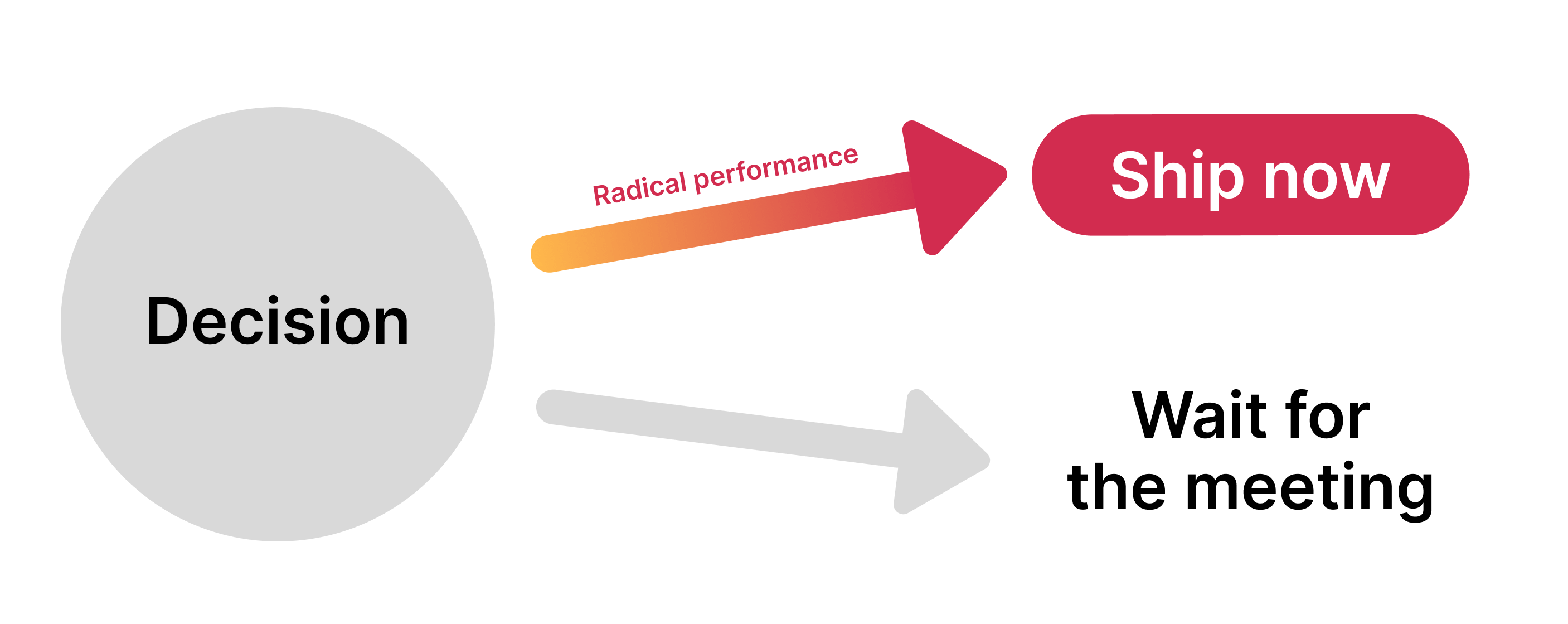
Principles only matter if they change how teams make decisions on Tuesday afternoon. Pictarine’s first and probably most provocative principle is “I act.” Work should not wait for the next meeting, for the manager to be back from holiday, or for a mythical extra few percent of data. New joiners, especially those coming from more hierarchical environments, are often surprised by how far this goes.
A concrete example: if they can ship on a Friday, they ship on a Friday. Weekends are busy periods for their photo printing apps, which means waiting until Monday would waste valuable learning time. The radicality here is not recklessness; it is about accepting that the cost of slowing learning is often higher than the risk of careful deployment. The team invests heavily in monitoring and alerting so that if something goes wrong, they detect and correct it quickly.
François describes this as the heart of their “radical” label. It is less about grand gestures and more about shaving days off feedback cycles, over and over. At the same time, acting fast does not mean acting alone. The principle comes with a strong expectation of communication. When someone takes a decision, they share it with the people affected so that it can be challenged, improved or reversed if needed.
“If we can put something in prod on a Friday, we put it in prod on a Friday” as François puts it.
This principle cascades into how they handle deadlines and risk. Another principle is about “guaranteeing the cadence,” which forces people to be realistic about dates, raise alerts early and refine estimates progressively. Yet another is about “derisking unknowns,” turning scary projects into sequences of experiments, checkpoints and confidence levels so that problems get smaller and more manageable as you go.
For other teams, the takeaway is that decision principles must be brutally practical. Radical Performance works because it tells people exactly how to behave when they are hesitating: default to action, backed by strong monitoring, honest communication and explicit derisking.
Train managers as coaches of Radical Performance
Pictarine realized early that no performance method survives contact with weak management. When they first crossed around 15 to 20 people, they introduced middle management and discovered that many implicit behaviors from the founders and early joiners were not transferring. The first version of Radical Performance was literally a list of principles built by contrasting “what we want” with “what we are seeing.” It worked well enough to justify going further.
Today, Radical Performance is deeply tied to their management culture. The company uses the book Radical Candor as a kind of internal bible, especially for managers. Every manager, even experienced hires, goes through a training path of about a dozen sessions to learn “how to be a manager the Pictarine way.” Weekly one on one meetings between managers and their reports are mandatory and non negotiable. If those conversations stop happening, that is treated as a serious problem, not an acceptable scheduling casualty.
Those one on ones are not freestyle chats. They rely on templates and structures designed to surface both business topics and individual frictions. The goal is not to turn managers into therapists, a fear François addresses explicitly, but to make sure they care enough about the person to catch important signals for collaboration and performance. The method asks a lot in return: people need to be willing and able to work on themselves as they take on more responsibility. With scale comes confrontation with your own fears and limits. Radical Performance tries to make that confrontation safe and productive.
Interestingly, François insists that the benefits spill beyond work. Learning to give and receive difficult feedback or handle a hard conversation with a colleague often improves relationships at home too. Over time, they have built the conviction that people do not just become “better professionals” at Pictarine, they become better humans, full stop.
Raise the bar from metrics to convictions
Another cluster of principles focuses on how people reason about data and decisions. In a business like Pictarine’s, measurement is everywhere. They ship a feature, track metrics, and declare success or failure. The trap, which François sees repeatedly with newcomers, is to stop at superficial wins.
He uses an example from their product catalog. Suppose they launch a new poster format and sell a thousand units in the first week. Declaring victory is tempting. But if you look deeper and notice that sales of classic prints have collapsed, the global picture may actually be negative. The principle “I forge my convictions” exists to fight that kind of shallow reasoning. Teams are expected to dig into second order effects, question apparent wins and look across the portfolio, not just at a single chart.
The second part of the principle is about what happens after you have looked at the data. Product managers in particular are expected to arrive at rituals with the Comex not only with dashboards, but with recommendations. Phrases like “here are three options” are welcome, but they sit on top of a clear point of view on what should happen next. Internally, they talk about “injecting expertise” into the room rather than passively waiting for executives to decide.
To make this possible, François pushes for regular “side steps” – moments where people step out of execution to ask whether they are doing the right things, in the right way, with the right people. Protecting even one or two calendar slots per week for that kind of reflection can significantly change the trajectory of a project. But it requires discipline, because the day to day always feels more urgent.
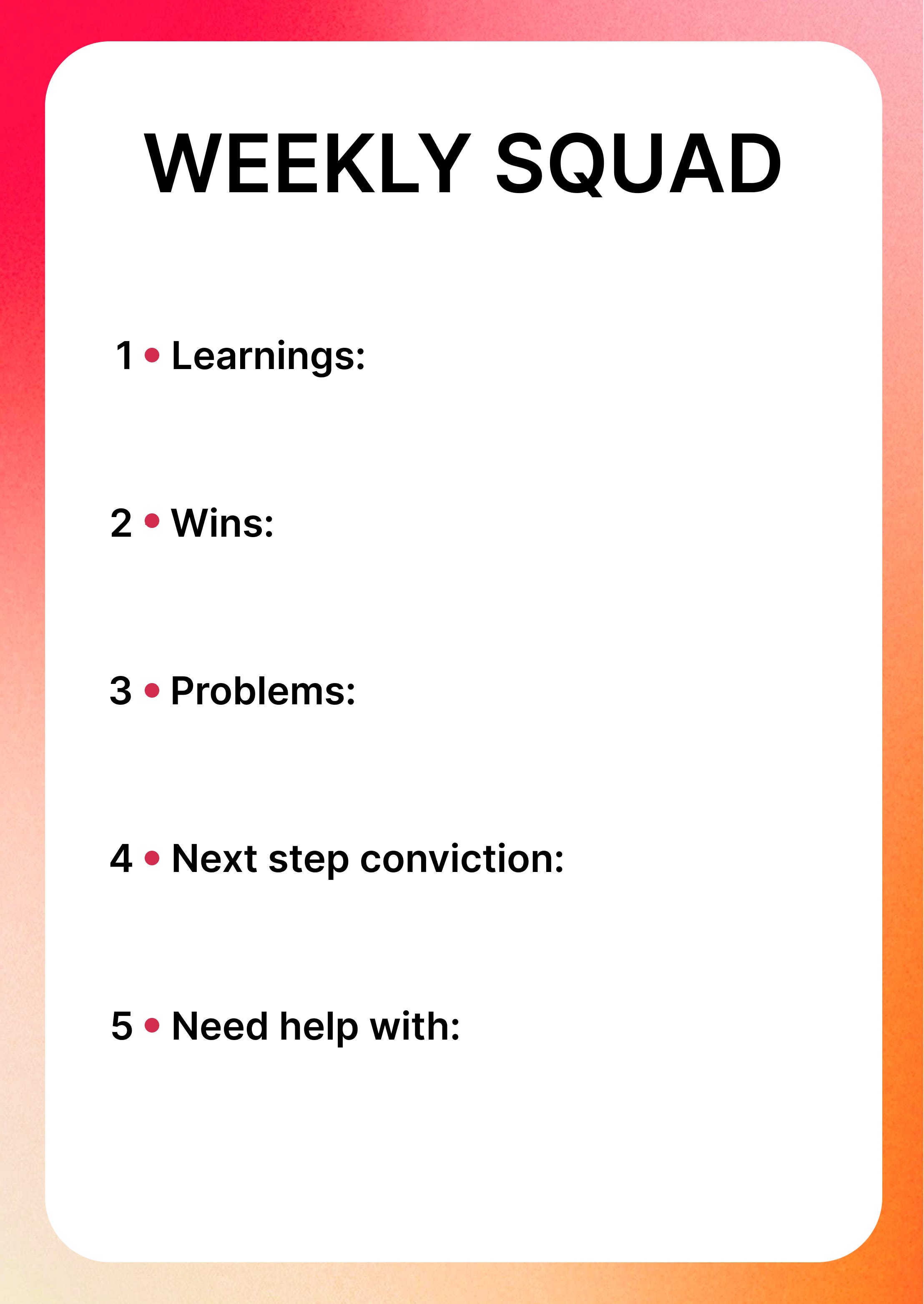
Rituals tie it all together. Squads choose their own ceremonies, as long as they avoid empty status meetings. PMs have their own syncs to maintain a common standard. And every Monday morning, each PM spends around ten minutes with the Comex sharing what they learned, last week’s success, their biggest problem, and where they need help or a decision. This recurring touchpoint keeps Radical Performance connected to strategy instead of drifting into a local process owned by product alone.
Error section – do not assume your culture will scale without explicit principles
Radical Performance did not appear as a polished framework from day one. Pictarine learned some hard lessons along the way, and most of them come down to underestimating how fragile culture becomes with scale.
The first warning sign came when they introduced middle management for the first time, around 15 to 20 people. Up until that point, founders and a handful of early employees had “shown the way” by example, mixing product, tech and operations hands on. When managers arrived, the company suddenly felt slower and less sharp. François and the team realized that many of the unwritten expectations about speed, ownership and care for people had simply not been transmitted. The response was pragmatic. They listed the behaviors that bothered them, the patterns they did not want, and turned those into their first set of principles. That list was the MVP of Radical Performance.
A second painful learning came from the performance formula itself. At a certain stage of growth, quality remained high, but execution significantly slowed down. Fixing that led them into another trap: they shipped high quality work quickly, but some projects had no clear business rationale. Teams were busy, but impact was weak. Only by admitting those missteps could they justify rewriting performance as speed, quality and impact, and explaining why impact needed to be explicit.
Finally, François highlights an organizational blind spot. For years, Radical Performance mostly lived implicitly inside the product team. It took a later reorganization, where they suppressed the Product department to create Operations and Design and clarified that the founders own the “what” while he owns the “how,” for the company to give Radical Performance the dedicated focus it needed. Only recently did they give the method a name, a clear frame and enough time from a senior leader, which in practice is almost a full time job. Waiting that long to formalize the system was itself a risk.
If you want to avoid the same traps, do not rely on heroics or osmosis. As soon as you feel that your implicit way of working does not scale – for instance after introducing managers or squads – freeze the picture, list the behaviors you want and do not want, and turn that into explicit principles, tools and rituals with clear ownership.

- A usable performance model has to fit on a sticky note. “Speed, quality, impact” is simple enough to remember yet rich enough to drive real trade offs.
- Looking for what slows teams down is more actionable than exhorting them to “go faster”; naming frictions changes the conversation from blame to problem solving.
- Treating well-being as an input to performance, not a perk layered on top, lets you design processes that surface and work through individual frictions instead of hiding them.
- Decision principles like “I act” only work when paired with robust monitoring, explicit communication and agreed derisking practices, otherwise they just create chaos.
- Weekly one on ones with structure and intent are a non negotiable foundation for any culture that claims to care about both performance and people.
- Training managers in a shared framework such as Radical Candor gives them concrete tools to handle hard conversations instead of leaving “caring personally and challenging directly” to chance.
- For product teams, success is not “the new feature’s metrics are green” but “we understand the net effect on the portfolio and have a clear conviction about the next move.”
- Protecting time for “side steps” away from execution creates space to ask whether you are doing the right things, in the right way, with the right people, and to adjust before it is too late.
- Rituals between PMs and the executive team, even as short as ten minutes weekly, keep product decisions aligned with strategy and prevent Radical Performance from becoming a local process.
- Culture does not scale automatically with headcount; introducing middle management without explicit principles is a reliable way to slow the company down.
- Methods like Radical Performance often start as scrappy lists of do’s and don’ts; the challenge is to formalize them early enough and give them clear ownership so they do not dissolve as you grow.
- High ambitions and hard targets are compatible with well-being when you design a frame that attacks frictions, shares context and teaches people to work on themselves.
My full interview with François Goldgewicht, COO & Partner
Dive deeper into this topic with François Goldgewicht, COO & Partner at Pictarine, in my latest podcast episode:

Test your Product performance in 10 min
Trusted by 100+ startups and top CPOs like:


In this article
About Stellar
Stellar is a team of senior CPOs and CTOs who work hands-on inside product and engineering teams to fix what slows them down. Not advisors. Not trainers. Operators who've done the job before and know exactly where to look.
Discover StellarDive deeper
See all articles

.avif)
.avif)