

Product Market Fit
How Tally bootstrapped to $4M ARR with radical simplicity
Real strategies, frameworks, and insights from leaders who built Europe's fastest-growing products.
2/4/2026
•
.png)

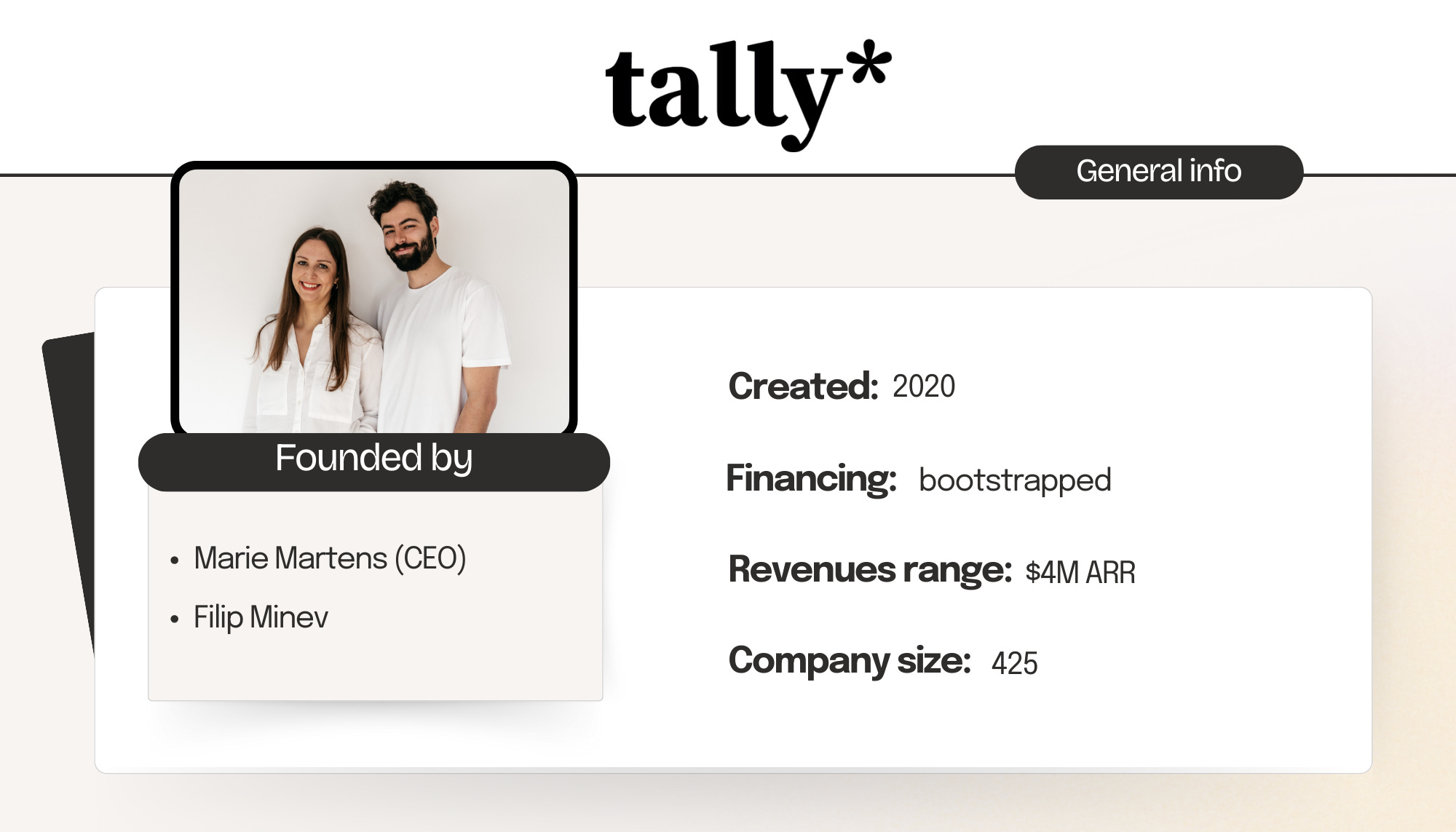
Tally was founded in 2020 by Marie Martens and Filip Minev in Belgium with a simple mission: make creating online forms radically simple and accessible to everyone, without punishing users for growth.
Growth data
- Over 1.5M users worldwide
- More than $4M ARR
- Fully bootstrapped
- Team of around 10 people, including several part-time roles
- Single paid plan, unlimited free usage
Tally positions itself as a simple, opinionated alternative to traditional form builders. Inspired by tools like Notion, it focuses on speed, keyboard-first interactions, and clarity. Its core audience started with indie hackers and tech-savvy builders and expanded to product and marketing teams in small and mid-sized companies. The company intentionally avoids enterprise customers, sales teams, and complex feature sprawl.
Key milestones
- 2020: Tally launched as a simple form builder
- First year: User acquisition driven by manual cold outreach and early community feedback
- 2022–2023: Strong word-of-mouth growth inside the no-code and Notion ecosystems
- 2024: Passed $1M ARR while remaining fully bootstrapped
- 2025: Crossed $4M ARR with a team of around 10
I sat down with Marie Martens, co-founder of Tally, to discuss how they built a product-led, lovable company by embracing simplicity, free usage, and deliberate constraints.
Disclaimer: The organizational choices and technical solutions shared in this newsletter aren’t meant to be copied and pasted as-is. Always keep your company’s context in mind before adopting something that works elsewhere! 😊
Build for yourself before building for everyone
Tally started with a very personal frustration. Marie and Filip were building products themselves and constantly needed forms. Google Forms was free but rigid. Typeform was beautiful but expensive and restrictive. The breaking point came when they hit submission limits and felt punished for growing.
That experience shaped Tally’s entire philosophy. Instead of starting with market research decks or ideal customer profiles, they built the product they wanted to use themselves. Marie described this as a strict commitment to early users who were tech-savvy, curious, and comfortable with opinionated tools.
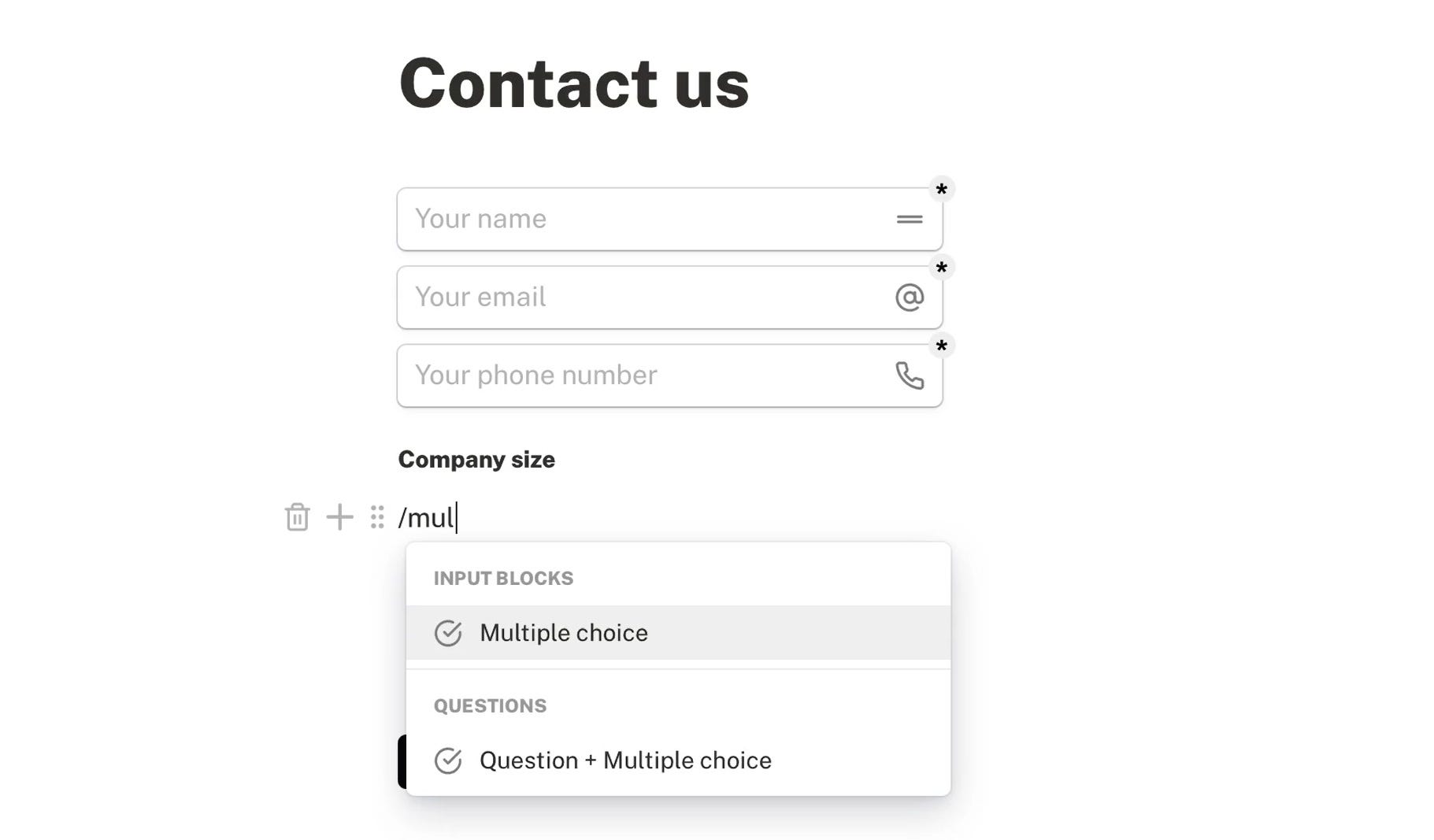
From day one, Tally removed as much friction as possible. There was no landing page at launch. No signup required. Users could go directly into the form builder and start typing. The interface looked like a blank document, inspired by Notion, and relied heavily on keyboard shortcuts instead of drag-and-drop.
“We built Tally for ourselves. We optimized for people who love tools like Notion and are not afraid of an opinionated interface” — Marie Martens
This choice immediately excluded some users. Non-technical users or so-called “mouse people” struggled. But instead of trying to please everyone, Tally leaned into that constraint. By focusing on a narrow group early, they created something distinctive in a crowded market.
Early growth did not come from ads or SEO. Marie personally reached out to thousands of makers and builders she found on Product Hunt and indie communities. Filip built while Marie talked to users. This manual phase lasted months and created the foundation for product-market fit.
Unlimited free usage as a deliberate business decision
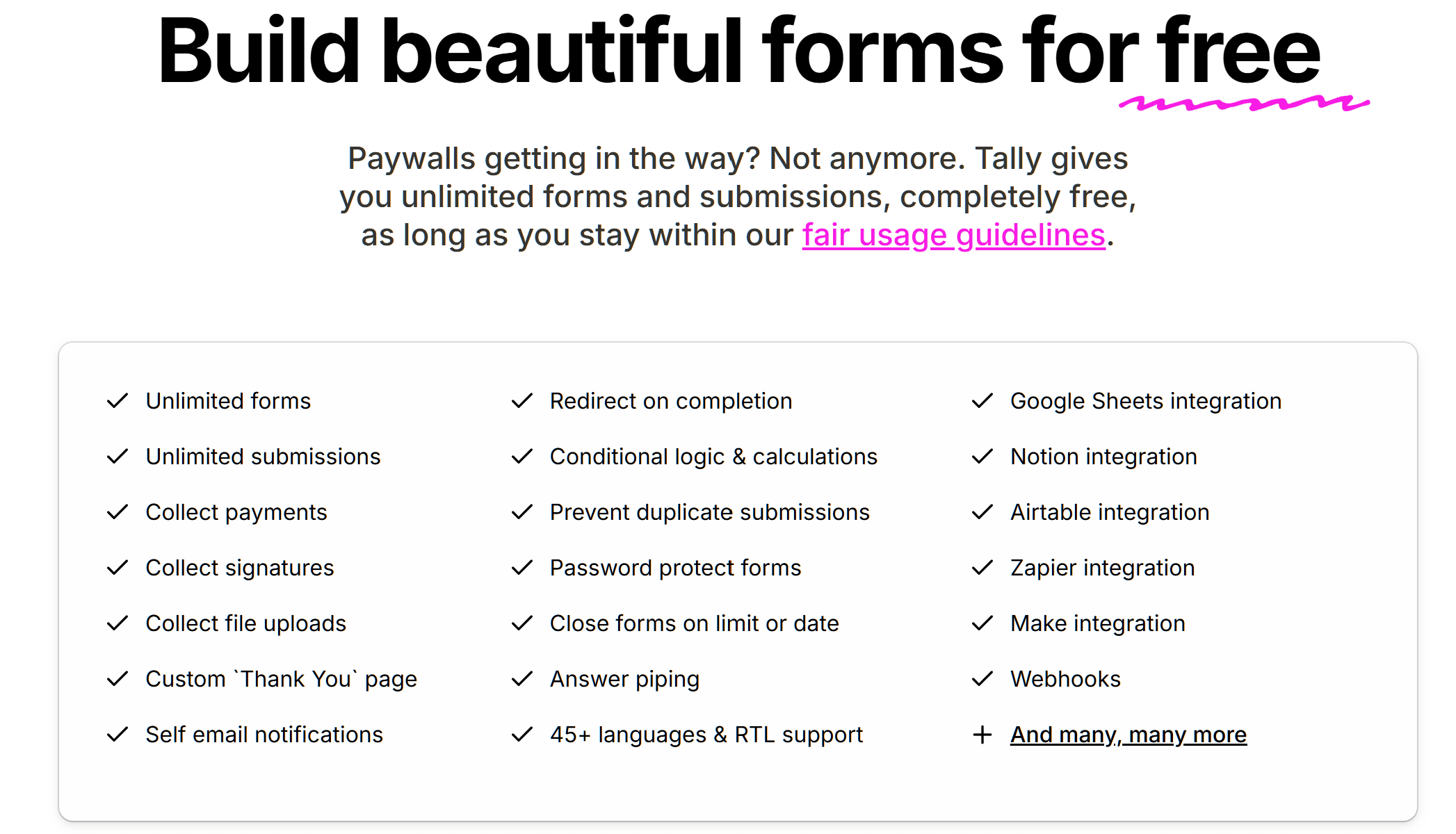
One of Tally’s most radical product moves was making the core product completely free, without limits on forms or submissions. This was not a marketing experiment or a temporary growth hack. It was a foundational choice.
Forms are inherently viral. Every form is meant to be shared. By allowing free users to create unlimited forms with subtle Tally branding, the product marketed itself.
“We wouldn’t be here today without the free plan. We would never have been able to grow at this pace” — Marie Martens
Instead of volume-based pricing, Tally introduced a single paid plan that unlocked advanced features. The pricing itself was chosen in a simple way: look at competitors and pick the lowest price. That price has not changed in 5 years.
This approach required confidence and patience. Free users generate support costs and abuse. As Tally scaled past 1M users, they faced phishing attempts, spam, and misuse. But simplicity helped here too. A clean product, good documentation, and clear constraints kept support volume manageable.
The free plan did more than acquisition. It shaped the company culture. Without pressure to extract revenue early, Tally could focus on long-term product quality and user trust.
Product-led growth is mostly about removing friction
Tally’s growth is often described as product-led, but Marie is clear that PLG is not magic. It is a series of deliberate, sometimes uncomfortable choices.
First, they chose a product category that spreads naturally. Forms do not need education. Every business eventually needs one. That meant Tally could focus on differentiation instead of explaining the problem.
Second, they removed every possible blocker: no signup, no paywall, no onboarding surveys. Users could experience value immediately.
Third, they talked to users constantly. Early users were invited into Slack channels. Feature requests were discussed daily. Shipping happened weekly. This created not just a better product, but passionate advocates.
“If you don’t want to support free users, product-led growth will never work” — Marie Martens
As Tally scaled from $1M to $4M ARR, PLG changed. Abuse increased. User quality fluctuated. New acquisition channels like LLMs brought churn and confusion. But the core principle remained the same: optimize for clarity, not conversion tricks.
Say no aggressively to protect simplicity
Around year two or three, Tally explicitly narrowed its scope. The goal was to do one thing extremely well: build forms and surveys.
This meant saying no to obvious expansion paths : CRMs, document generators, bloated analytics dashboards. Even today, some advanced analytics are missing by design.
Marie explained that it is easy to end up with a powerful but overwhelming product. Competitors like Jotform can do everything. Tally intentionally chose not to.
Every feature decision goes through the same filter: does this make form building simpler, faster, or more enjoyable?
Integrations became the escape valve. Instead of building everything, Tally integrates with tools like Zapier and Make, allowing users to extend functionality without bloating the core product.
This restraint also enabled speed. With a small team, shipping weekly is only possible if the surface area stays small.
Let the product be the brand
Tally never invested heavily in traditional branding or marketing. The brand emerged from the product experience itself.
The interface is simple. The illustrations originally came from a free illustration pack. There was no in-house designer for years. Even today, design decisions are made to support clarity and not aesthetics for their own sake.
“The product is the brand. How you experience Tally is how you’ll talk about it” said Marie Martens
Support plays a key role. Users are helped quickly, even on the free plan. Feedback is acknowledged and bugs are fixed visibly.
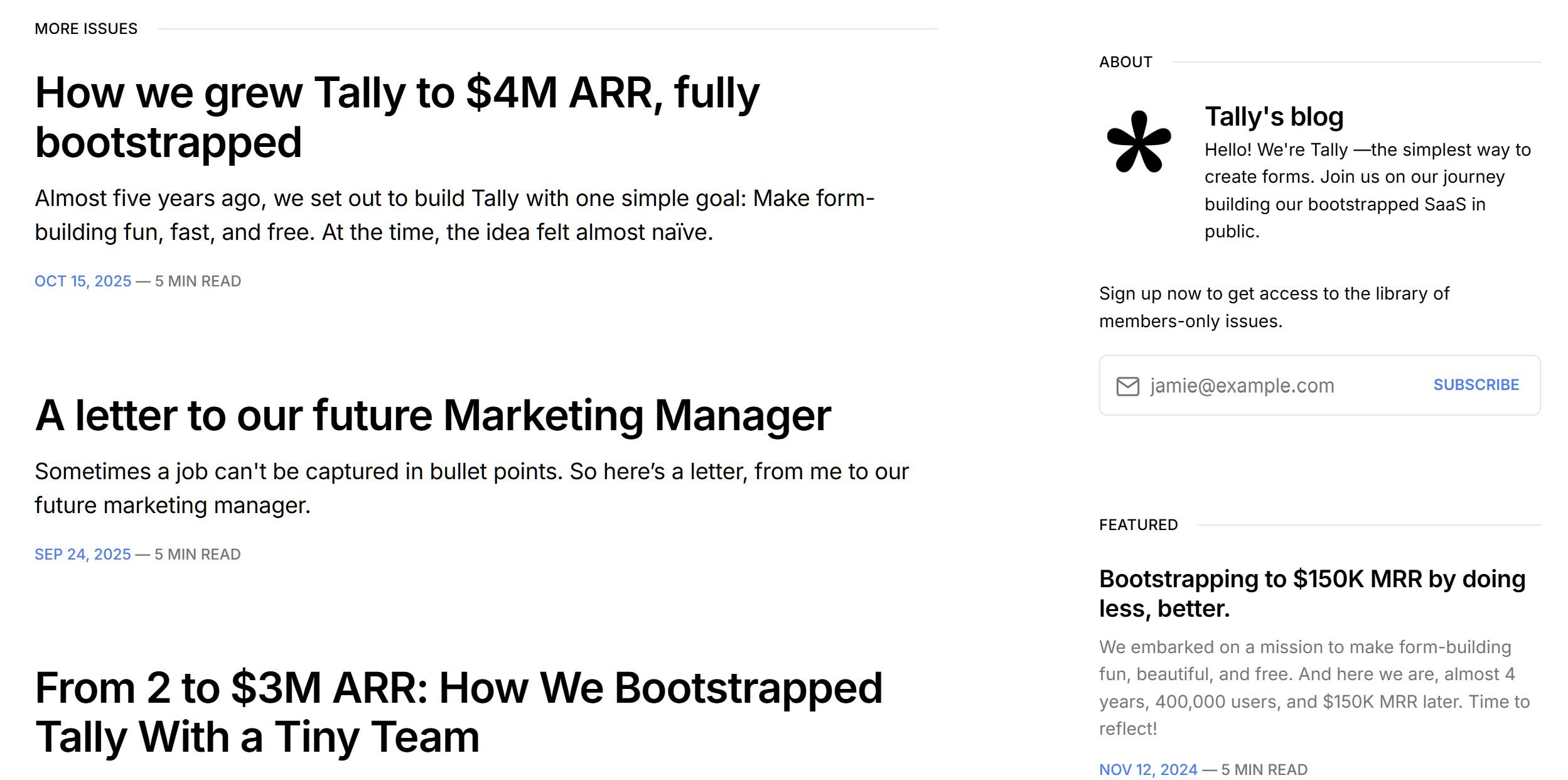
Building in public amplified this effect. By sharing revenue milestones, mistakes, and decisions, Marie turned transparency into a distribution channel. Without funding announcements, progress itself became the story.
The result is something rare: people say they love a form builder.
Errors and challenges
Tally’s approach came with real downsides. Abuse was one of the biggest. Phishing forms, spam, and misuse increased significantly after reaching scale. This required building internal systems and moderation tools that were never part of the original vision.
Another challenge was user quality. As discovery shifted toward LLMs, Tally attracted more users who were not ideal customers. Some upgraded unnecessarily due to incorrect information and later churned. Refunds increased and metrics became noisier.
The team also waited too long to hire for customer support. For years, Marie and Filip handled support themselves, slowing down product development and creating burnout.
The lesson is not that free or PLG is wrong. It is that every growth model creates second-order problems. Simplicity helps, but it does not eliminate the need for operational maturity.

- Radical simplicity works best when it is paired with strong conviction and a clear idea of who the product is for.
- Unlimited free usage can be a sustainable growth engine if the product is inherently viral and simple to support.
- Product-led growth is less about funnels and more about removing every possible point of friction.
- Saying no to features is often more important than saying yes, especially for small teams.
- Building in public compounds over time and can replace traditional PR for bootstrapped companies.
- A lovable product is created through details, honesty, and respect for users, not marketing spend.
My full video with Marie Martens, Co-founder
Dive deeper into this topic with Marie Martens, co-founder of Tally, in my latest podcast episode:

Test your Product performance in 10 min
Trusted by 100+ startups and top CPOs like:


In this article
About Stellar
Stellar is a team of senior CPOs and CTOs who work hands-on inside product and engineering teams to fix what slows them down. Not advisors. Not trainers. Operators who've done the job before and know exactly where to look.
Discover StellarDive deeper
See all articles


.avif)