

Product Market Fit
Inside Timeleft's journey to connecting 150,000 diners monthly across 200+ cities
Real strategies, frameworks, and insights from leaders who built Europe's fastest-growing products.
9/10/2025
•
.png)
.avif)
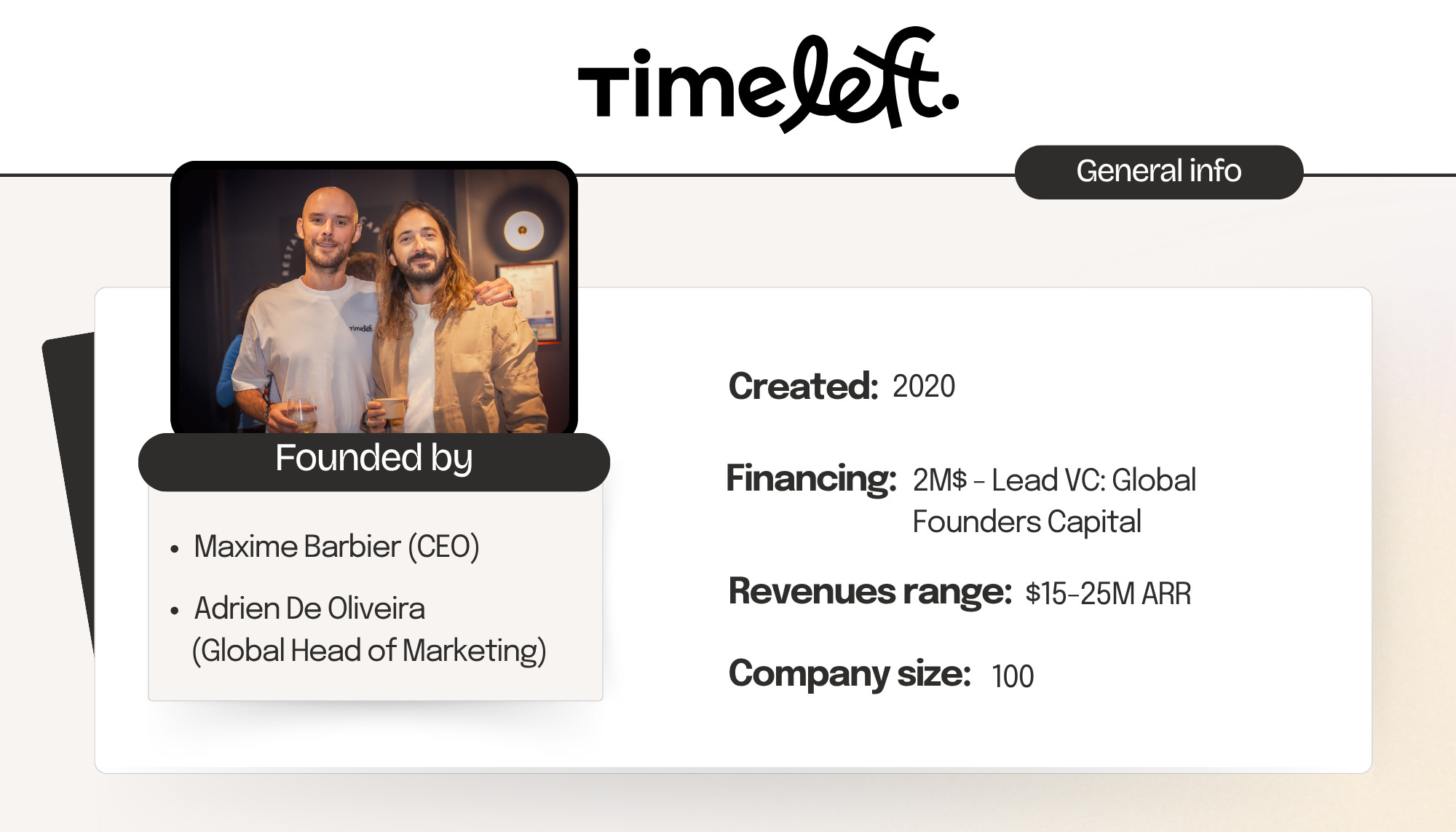
Timeleft was founded in 2023 by Maxime Barbier and Adrien De Oliveira, with the mission to fight urban loneliness by creating offline human connections.
- Growth data: 150,000 participants join dinners each month across more than 200 cities worldwide. Timeleft employs ~100 people and generates €18M in ARR after 20 months.
- Market position: Positioned as the world’s largest IRL social connection platform, Timeleft differentiates itself by focusing on scalable offline experiences powered by lightweight digital flows, not heavy tech or local ambassadors.
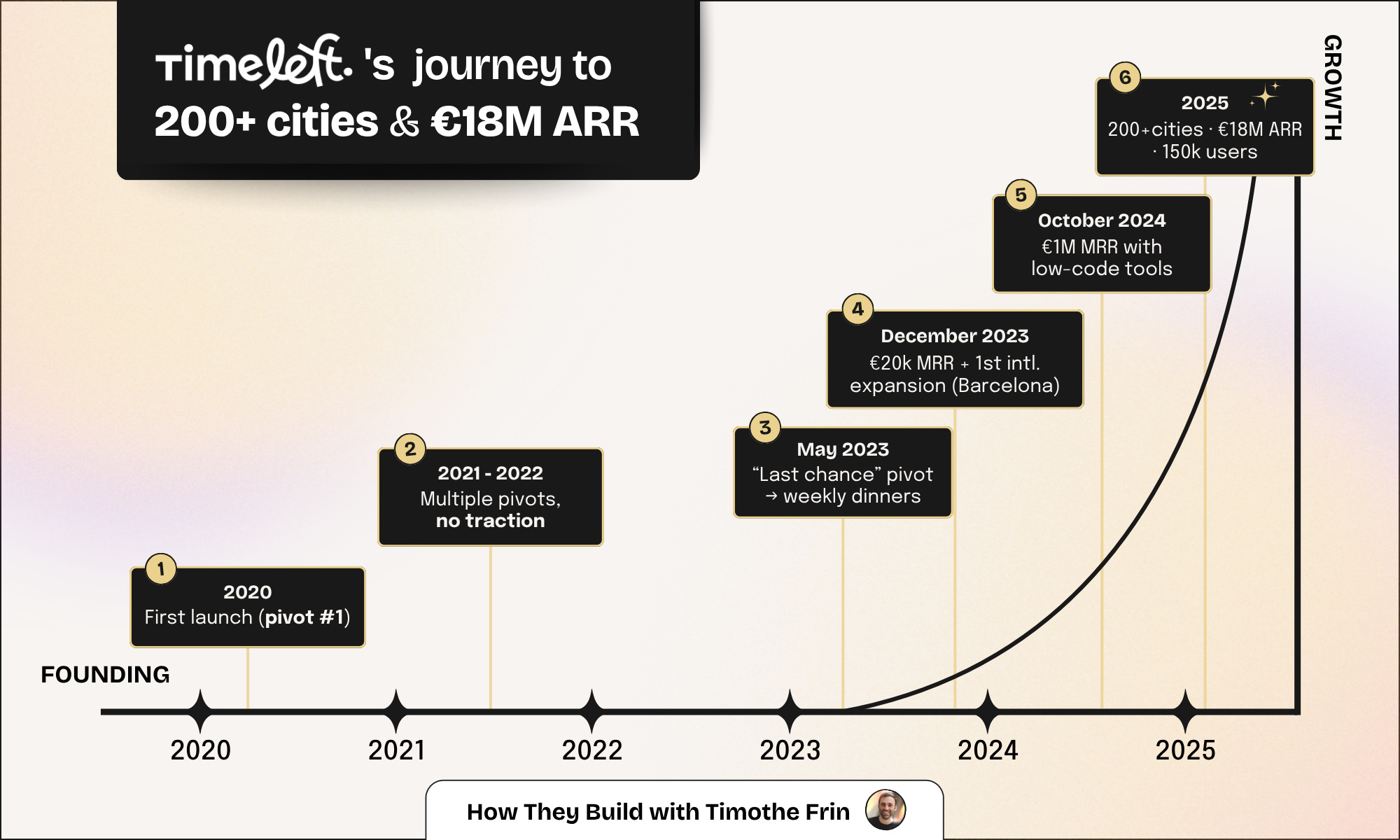
- Milestones:
- 2020: Initial launch as an app for connecting people around shared dreams (pivot #1).
- 2021–2022: Multiple pivots (activities, groups, etc.) fail to gain traction.
- May 2023: “Last chance” pivot to weekly dinners between strangers, validated with Typeform + WhatsApp + Stripe.
- Dec 2023: €20k MRR
- Jan 2024: first international expansion via ads (Barcelona).
- 2024: Expanded to 320+ cities in one year, that’s one per day on average. Reached €1M in monthly revenue using only low-code tools 16 months after the launch.
- 2025: Scaled down to 200+ cities, hit €18M ARR & 150k monthly participants in August.
I sat down with Maxime Barbier, CEO and cofounder of Timeleft, to discuss the product moves that took the company from repeated failure to hypergrowth.
Disclaimer: The organizational choices and technical solutions shared in this newsletter aren’t meant to be copied and pasted as-is. Always keep your company’s context in mind before adopting something that works elsewhere! 😊
Backstory: why 3 years of pivots set the stage for success
Maxime’s journey to Timeleft was far from linear. After leaving MinuteBuzz, he spent 3 years testing idea after idea: matching people on dreams, activities, and group meetups. Before realizing none worked.
“We realized that apart from dreaming, it wasn’t going to go very far.” — Maxime Barbier (Timeleft’s CEO)
The turning point came in 2023, when, out of cash and energy, he and Adrien gave themselves 15 days to test one last idea: dinners between strangers. Instead of building yet another complex app, they hacked together a Typeform, a WhatsApp group, and a Stripe link. The first week, they made €125. And most importantly, strangers actually loved the experience.
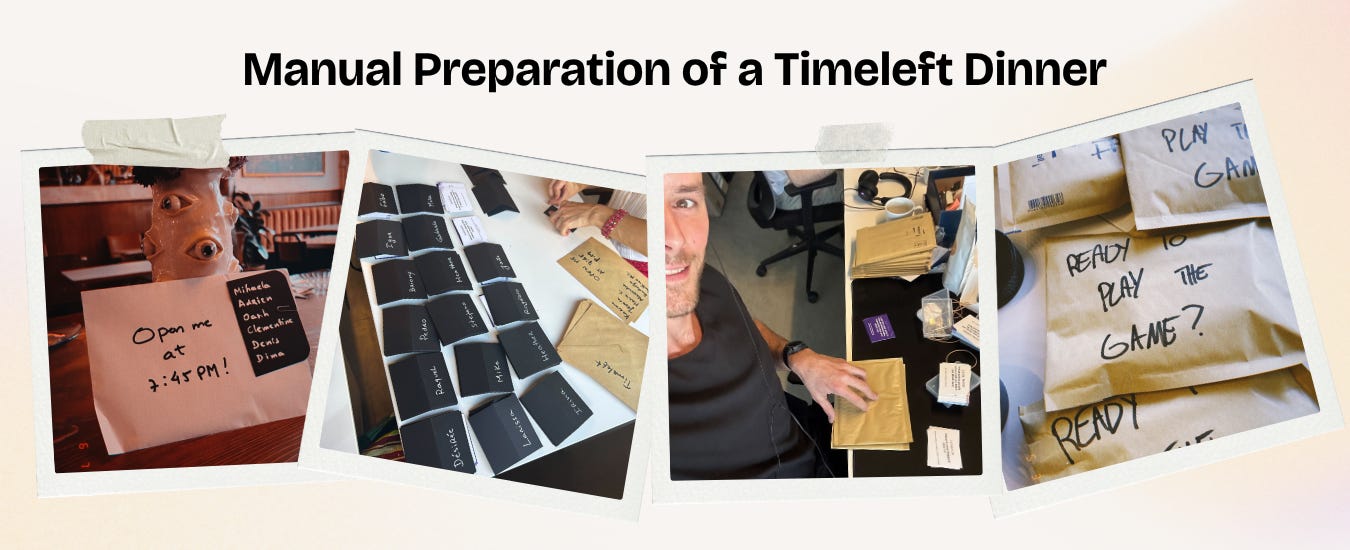
This scrappy launch laid the cultural and operational DNA of Timeleft: test quickly, prioritize human connection, and keep tech lightweight until proven.
Scale fast with low-code, but know when to let go
For its first 16 months, Timeleft ran entirely on Bubble and FlutterFlow, reaching €1M in monthly revenue without a traditional codebase. The low-code stack enabled hyper-fast iteration and minimized upfront costs. But eventually, complexity caught up.
“My CTO told me: I can’t touch anything anymore, if I touch something, it breaks.” — Maxime Barbier.
The team spent 8 months migrating off the brittle setup. The lesson: low-code can take you remarkably far, but the transition to custom infrastructure must happen before growth multiplies small bugs into massive operational issues.
Design offline as technology
A defining insight was treating the dinner itself as a “technology.” While many platforms focus on the digital interface, Timeleft focused on designing the offline flow: a restaurant table, 5 strangers, 3 hours, and the natural structure of a meal. This simple but powerful framing allowed for scale without heavy ops or hosts. Restaurants became partners, not bottlenecks. Feedback loops were digitized: 15–20k participants leave reviews weekly, enabling quality control at scale. By seeing offline as part of the product, Timeleft built defensibility competitors relying on ambassadors can’t match.
International growth without local presence
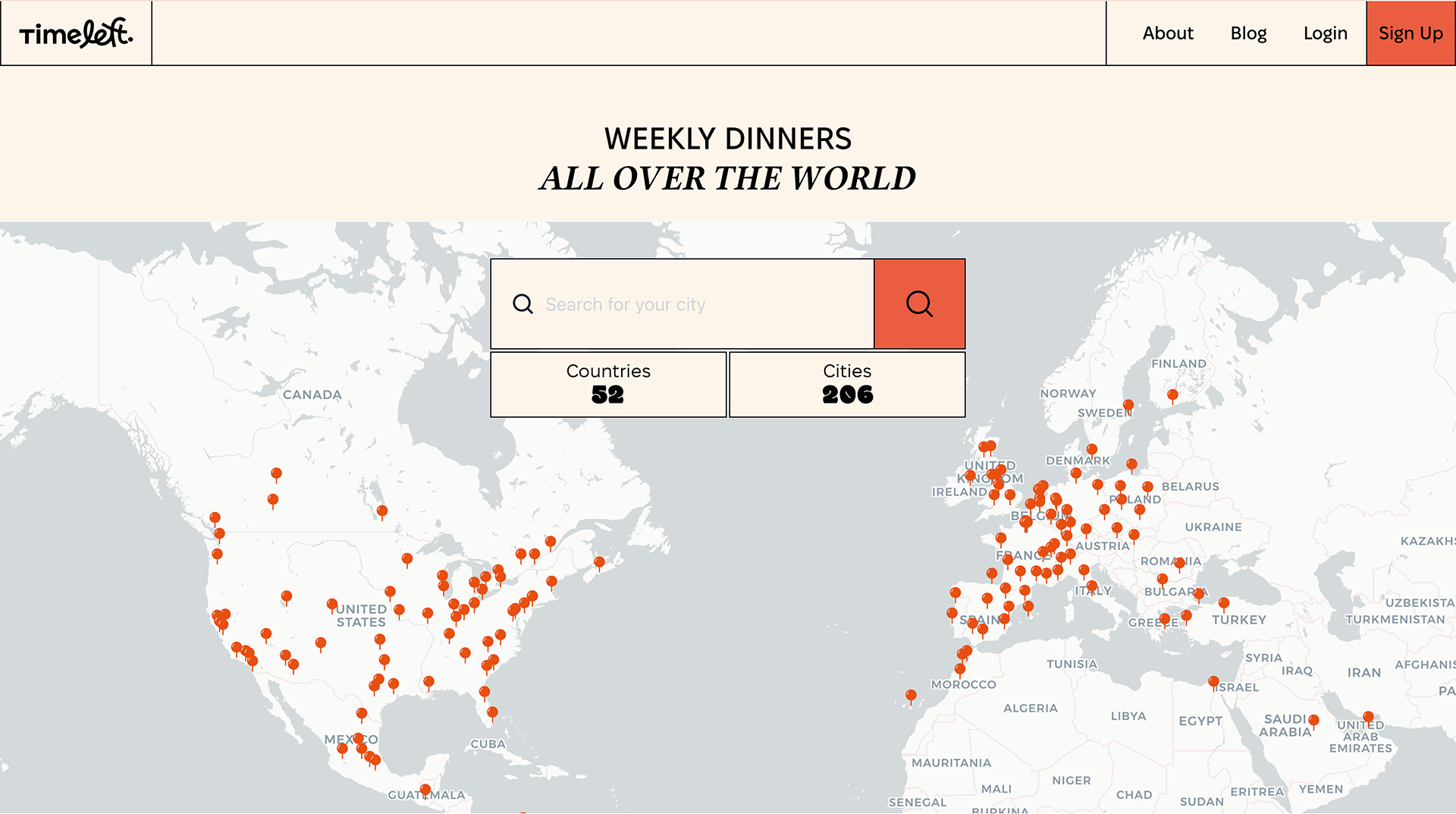
Instead of hiring city managers or ambassadors, Timeleft opened one city per day for a year using nothing but ads. At its peak, it launched in 325 cities. The discovery: people didn’t need hand-holding or icebreaker cards; they simply showed up. The first Barcelona dinners worked seamlessly with zero team on the ground, proving scalability. However, hyper-expansion came with costs, leading to a retrenchment to ~220 cities. The refined playbook: open fast with ads, but double down on depth (50+ weekly participants) before sustaining long-term operations.
Expand experiences beyond the dinner table
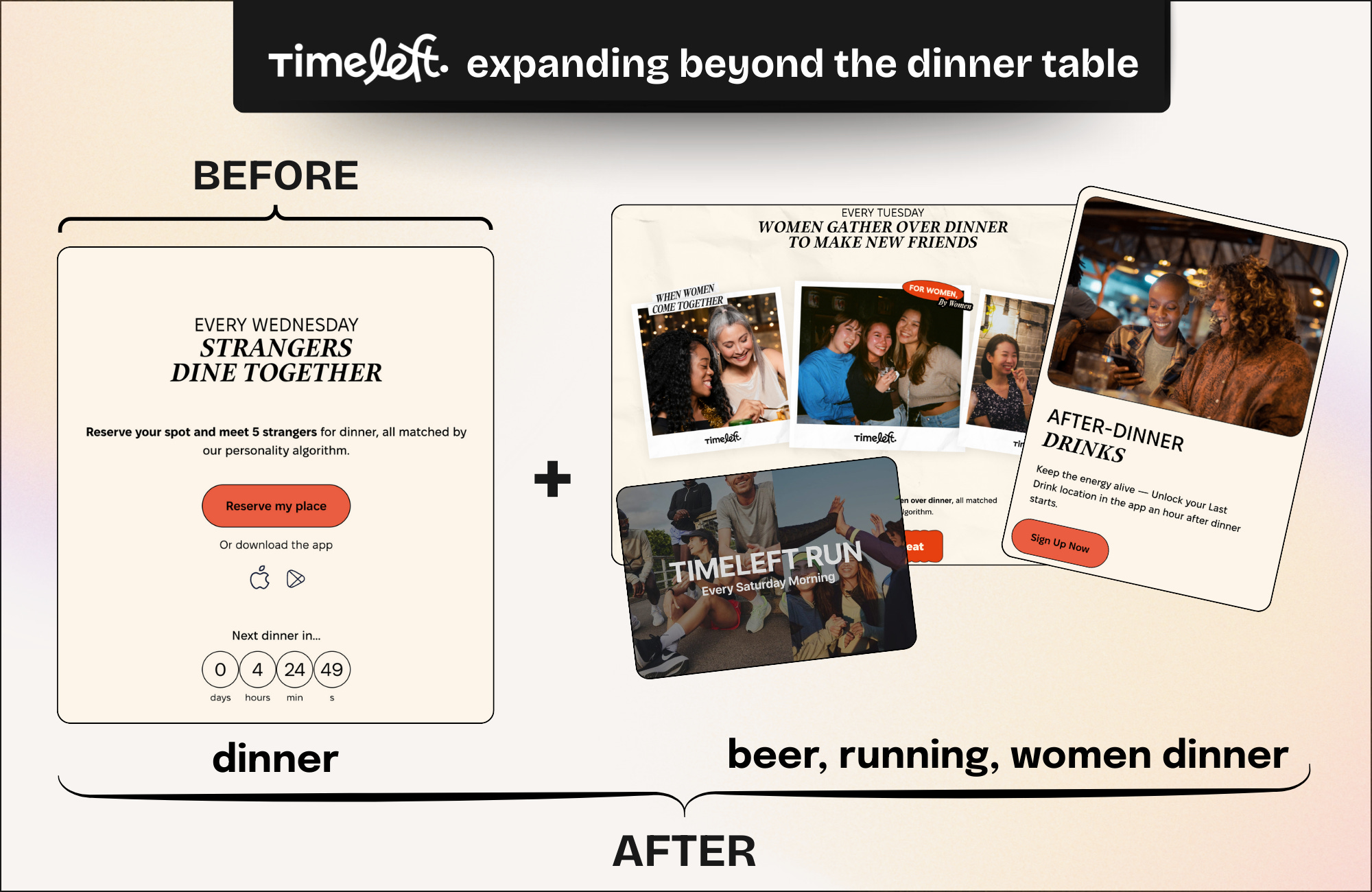
Once the dinner model scaled, the team faced a ceiling: not everyone can or wants to dine weekly. To increase engagement, they added new “technologies” of connection: bar meetups, women-only dinners, and running groups. Each new format followed a structured test: (1) friends-and-family trial, (2) paid marketing test, (3) app integration if CACs work. This disciplined expansion lifted average member usage from 1.4 to 2.2 experiences per month, deepening stickiness and revenue per user.
Mistake: chasing scale too fast
One of Timeleft’s biggest challenges was opening 325 cities in a single year. The strategy generated press buzz and global visibility but stretched ops and budgets thin. Many smaller cities fizzled due to limited participant density—users quickly grew bored of dining with the same 10 people weekly. Maxime admits the company should have focused earlier on depth rather than breadth. The pivot: cut back to ~220 cities, prioritize those with critical mass, and aim for Paris-level depth before reopening smaller markets. The broader lesson for consumer marketplaces: global expansion can build brand, but true defensibility lies in deep local network effects.

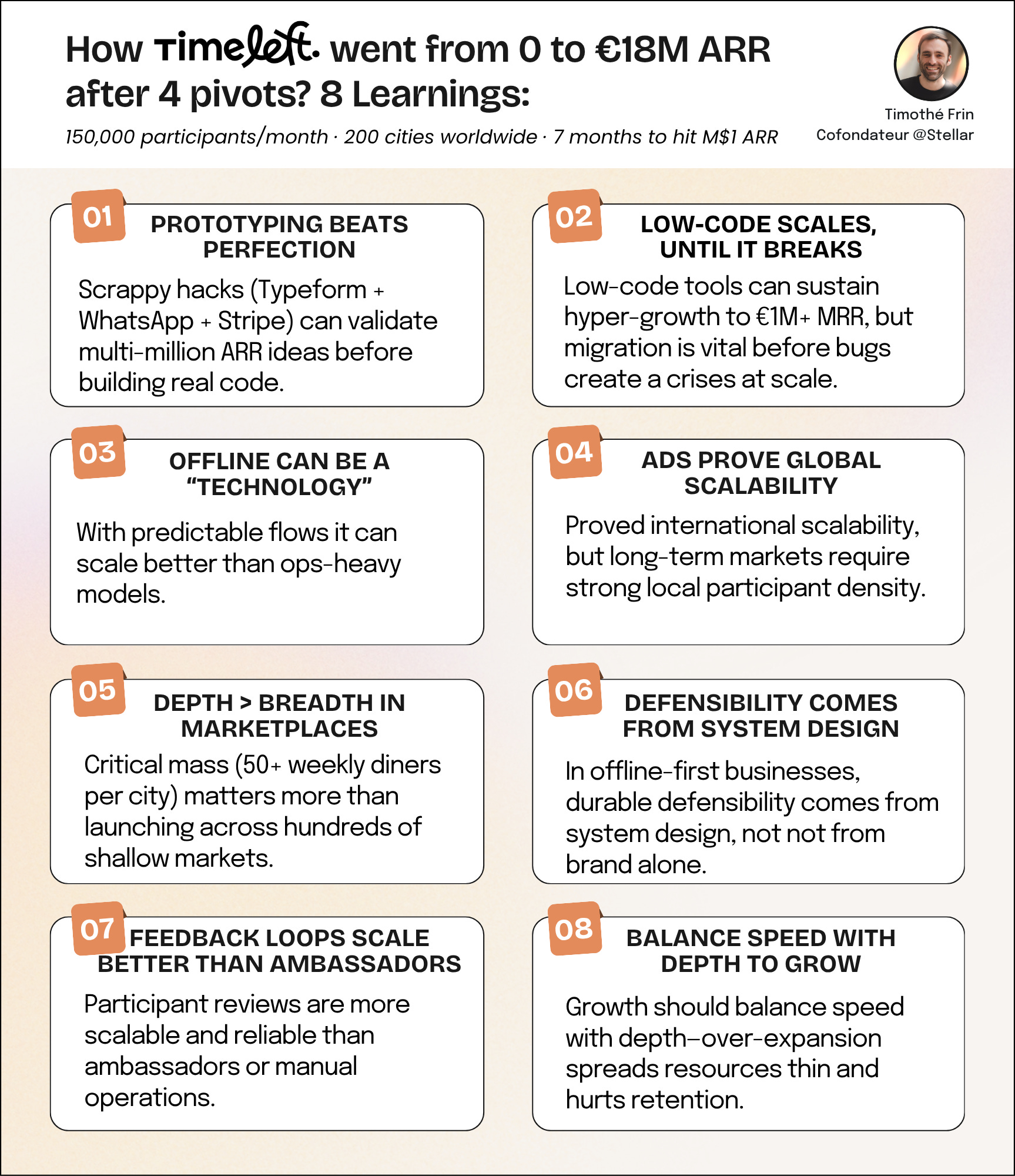
- Scrappy prototyping (Typeform + WhatsApp + Stripe) can validate multi-million ARR businesses before writing real code.
- Low-code tools can sustain growth to €1M+ monthly revenue, but transition before volume turns bugs into crises.
- Offline experiences can be designed as “technologies” with predictable flows, not just chaotic social events.
- Ads-only expansion proved international scalability, but sustainable markets require participant density, not just breadth.
- Expanding verticals (bars, runs, women-only dinners) deepens engagement by fitting diverse user habits.
- Product defensibility in offline-first businesses comes from system design, not brand alone.
- Feedback loops from participants are more scalable than ambassadors or manual ops.
- Growth should balance speed with depth—over-expansion can dilute resources and harm retention.
My full interview with Timeleft’s CEO
Dive deeper into this topic with Maxime Barbier, CEO of Timeleft, in my latest podcast episode:

Test your Product performance in 10 min
Trusted by 100+ startups and top CPOs like:


In this article
About Stellar
Stellar is a team of senior CPOs and CTOs who work hands-on inside product and engineering teams to fix what slows them down. Not advisors. Not trainers. Operators who've done the job before and know exactly where to look.
Discover StellarDive deeper
See all articles
.avif)
.avif)
.avif)