

Product Vision and Strategy
Inside Amplitude’s journey to enterprise-scale Product analytics
Real strategies, frameworks, and insights from leaders who built Europe's fastest-growing products.
5/2/2026
•
.png)
.avif)
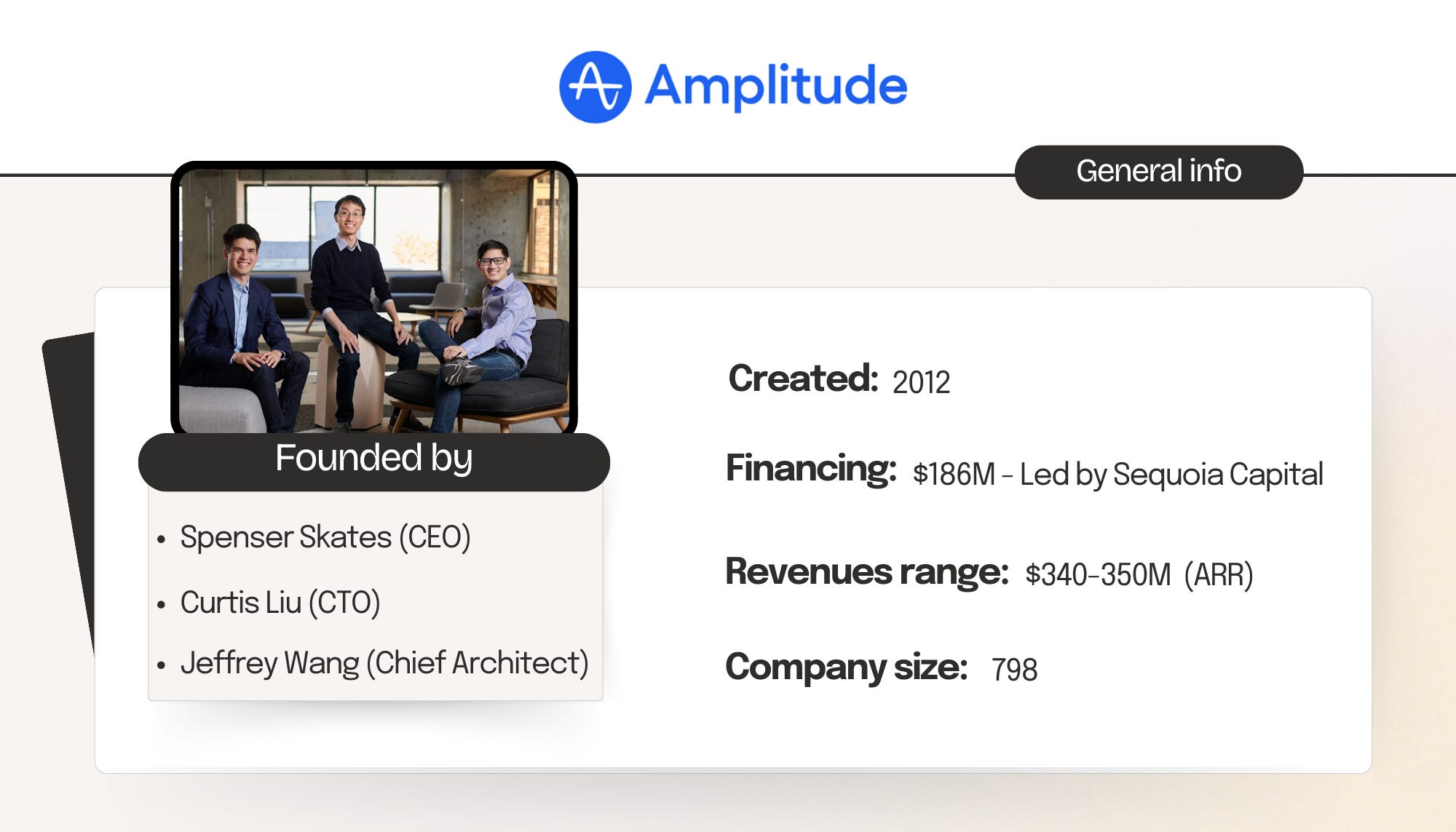
Amplitude was founded in 2012 by Spenser Skates, Curtis Liu, and Jeffrey Wang to help teams understand user behavior through data and build better products by grounding decisions in real usage.
Growth data
- ~$347M ARR (2025)
- Thousands of customers globally, including enterprise companies
- Public company (NYSE: AMPL)
- Product org of ~200 people across engineering, product, and design
Qualitative description
Amplitude positions itself as a product analytics platform built for teams that want to deeply understand user behavior, experiment quickly, and improve retention. Over time, it expanded from core analytics into experimentation, session replay, guides, surveys, and now AI-driven insights. The company emphasizes bottoms-up product development, high engineering standards, and velocity as a competitive advantage.
Key milestones
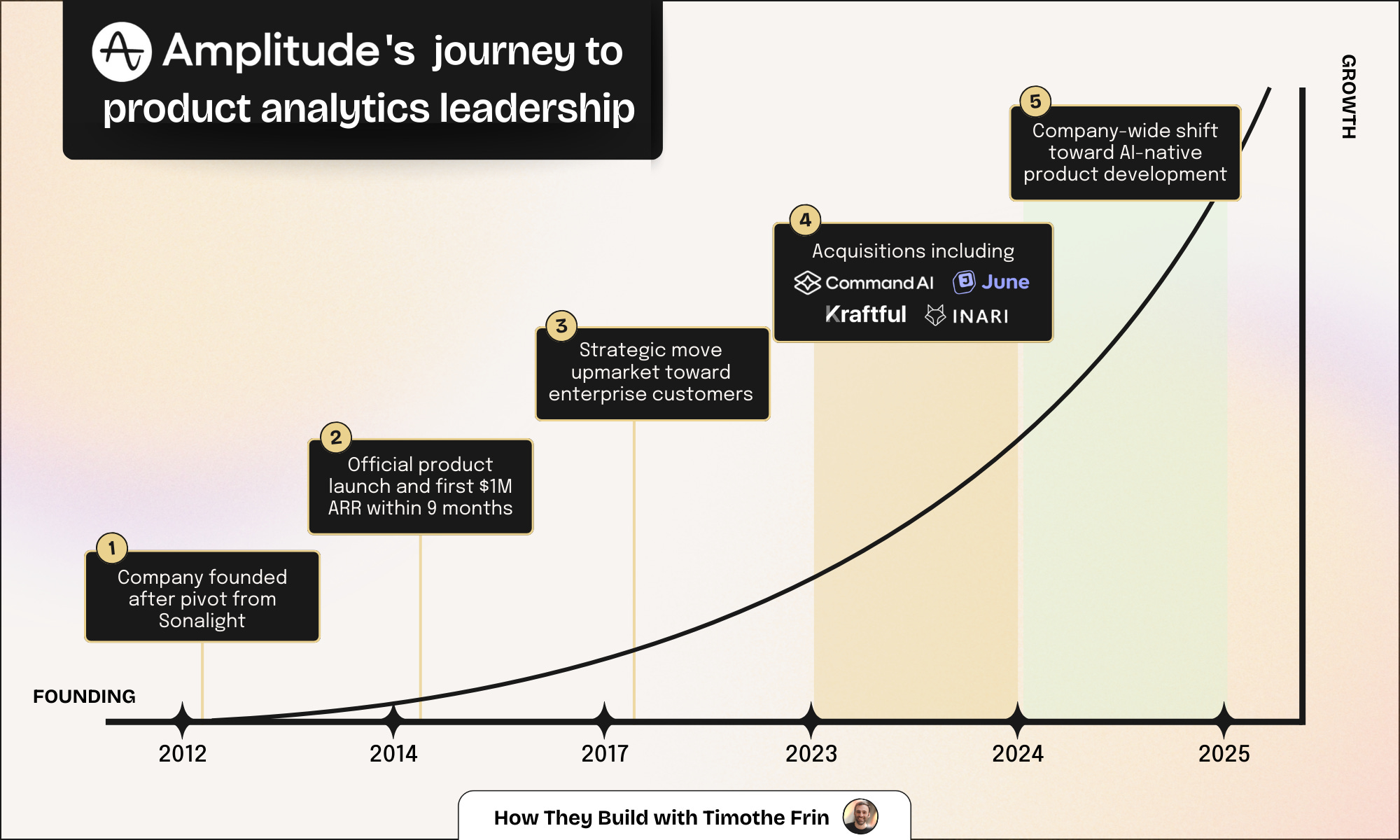
- 2012: Company founded after pivot from Sonalight
- 2014: Official product launch and first $1M ARR within nine months
- 2017: Strategic move upmarket toward enterprise customers
- 2023–2024: Acquisitions including Command AI, June, Craftful, and Inari
- 2024–2025: Company-wide shift toward AI-native product development
I sat down with Spenser Skates, CEO of Amplitude, to discuss how the company scaled from an early-stage startup to an enterprise product organization while reinventing itself around AI.
Disclaimer: The organizational choices and technical solutions shared in this newsletter aren’t meant to be copied and pasted as-is. Always keep your company’s context in mind before adopting something that works elsewhere! 😊
Backstory
Amplitude exists because its founders couldn’t get the answers they needed while building their first startup. Before Amplitude, Spenser Skates co-founded Sonalight, a voice recognition app that predated Siri. Despite strong press coverage and early excitement, the product struggled with retention.
The breakthrough came when the team built their own internal analytics to understand why users weren’t sticking. That work revealed a critical insight: users who had a successful first interaction were twice as likely to retain long term. This experience permanently shaped how Spenser thinks about product.
“We spent probably a third of our team’s time building analytics just to answer one retention question” - Spenser Skates
Existing tools like Google Analytics or Mixpanel could not connect user actions to long-term retention. That gap felt fundamental. When the team realized analytics was a solvable distributed systems problem with deterministic answers, the pivot became obvious.
By June 2012, Sonalight was shut down. Amplitude was born with a clear philosophy: product teams should understand user behavior deeply and quantitatively, not rely on intuition alone.
Scale without killing velocity
As Amplitude grew into a large enterprise company, maintaining product velocity became a core obsession. For Spenser, scale is dangerous because it introduces process, coordination costs, and risk aversion.
The foundation is talent density. Amplitude maintains an extremely high engineering bar and aggressively manages performance. No process can compensate for the wrong people.
On top of that, product development is deliberately bottoms-up. Teams own prioritization decisions and are expected to invent the future themselves rather than execute top-down roadmaps.
“Your job as a product leader is to invent the future. That’s an almost impossible task” - Spenser Skates
Customer proximity is non-negotiable. Product managers talk to customers daily. Engineers talk to customers weekly. Velocity is reinforced culturally through hackathons, experimentation, and a mantra of “ship fast”.
Amplitude explicitly accepts tradeoffs. Shipping fast can cause instability, especially in enterprise software. But the company believes iteration count is the strongest predictor of quality.
“The best predictor of quality is the number of iterations something has been through” – Spenser Skates
Don’t worship data
For a company selling analytics, Spenser’s stance is counterintuitive: data is not the goal.
Data helps teams understand what users are doing. It does not tell you what future to build. Teams that blindly optimize metrics risk shipping locally optimal but strategically empty features.
Amplitude encourages teams to triangulate multiple signals: customer conversations, usage data, personal product experience, market context, and competitive behavior. Strong signals emerge when different models align.
“Data can be a false god. Your job is to invent the future, not optimize a dashboard” – Spenser Skates
This mindset traces directly back to Sonalight. Analytics helped identify what mattered, but human judgment decided whether the business was viable.
Build AI differentiation the hard way
Amplitude did not rush into AI. In fact, its leadership was initially skeptical. The team saw widespread “magical thinking” where AI was treated as a shortcut rather than a tool.
The shift happened about a year ago. The company realized AI would fundamentally transform analytics, but only if approached correctly.
The biggest difference between SaaS and AI is that customers don’t know what to ask for. Product discovery must start from understanding the technology’s capabilities and limits, not feature requests.
Amplitude invested heavily in AI-native talent through hiring and acquisitions. Teams like Command AI and June brought years of applied experience. That knowledge was then spread internally through initiatives like AI Week, where the entire company learned and built together.
Ship AI that creates deep value
Amplitude distinguishes between usage and deep value. High usage alone is not success. The real test is whether customers rely on a feature, return to it, and would be upset if it disappeared.
“It’s very easy to deceive yourself that something is valuable when you’re innovating” – Spenser Skates
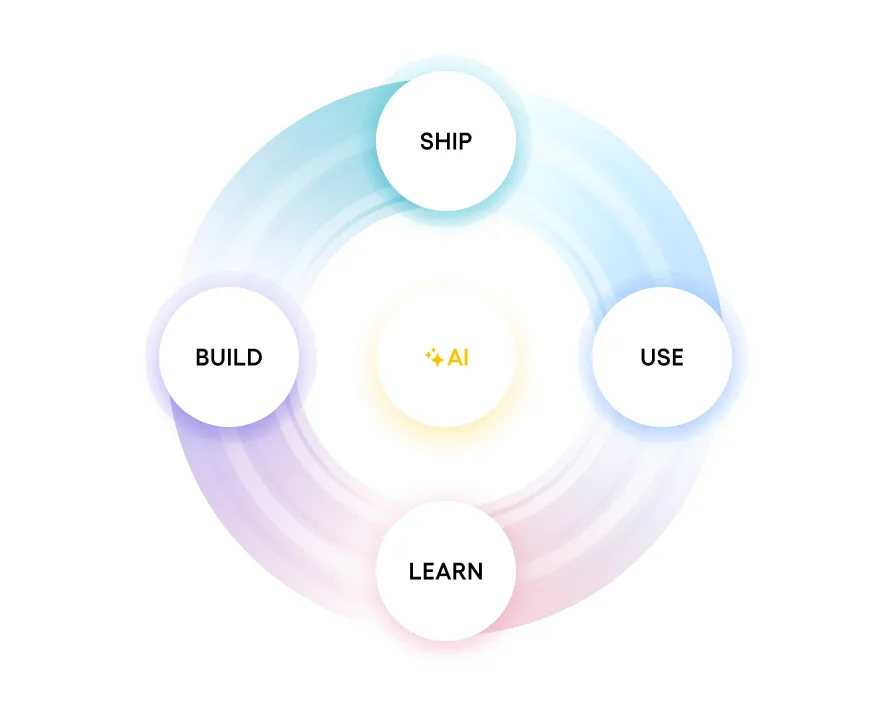
AI initiatives are evaluated using qualitative heuristics: frequency of use, repeat behavior, willingness to pay, and customer dependence. Teams are encouraged to double down quickly on what works and cut aggressively what doesn’t.
This is especially hard in enterprise software, where even weak features can accumulate paying customers. Amplitude is still learning how to kill AI products faster, but the intent is clear.
Error: scaling makes killing ideas emotionally harder
One of Amplitude’s hardest challenges is sunsetting products. In B2B, customers rely on features long after they stop being strategic. That creates emotional and operational friction.
Spenser admits the company is not good enough yet at killing ideas fast. Scale amplifies coordination costs, dependency chains, and fear of breaking trust with customers.
The lesson: innovation at scale requires explicit mechanisms to de-risk experimentation and normalize failure, or velocity will decay naturally.

- Velocity is a strategic choice, not an accident, and requires constant reinforcement at scale.
- Talent density matters more than org size or process sophistication.
- Data should inform judgment, not replace product intuition and leadership.
- AI product strategy must start from understanding technical capability, not customer demand.
- Usage metrics lie easily; deep value reveals itself slowly through dependence and retention.
- Acquisitions work when you buy learning and leadership, not just features.
- Enterprise success increases emotional attachment to products, making innovation harder over time.
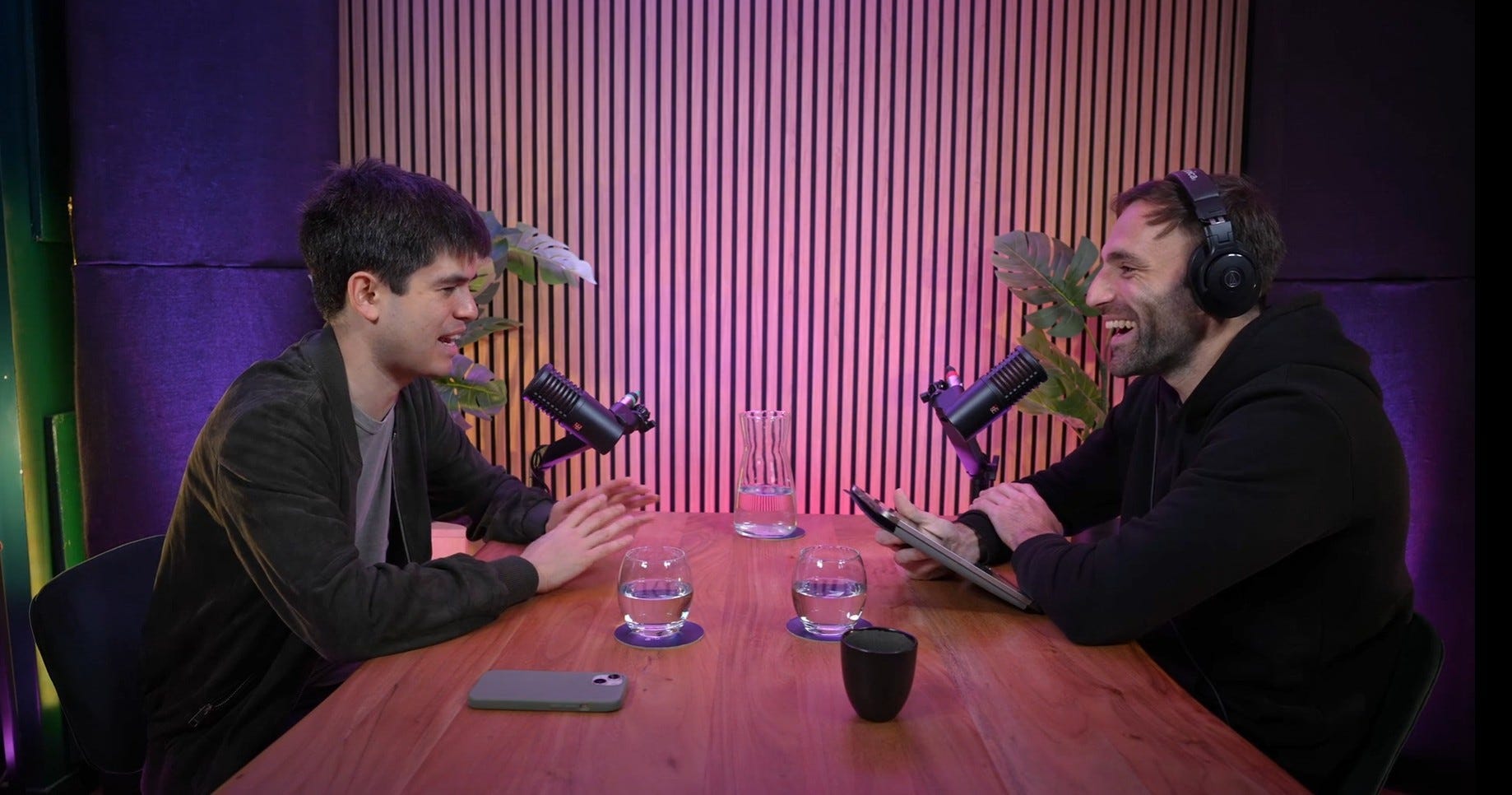
My video (in french 🇫🇷) with Amplitude’s CEO
Dive deeper into this topic with Spenser Skates, CEO of Amplitude, in my latest podcast episode.
Test your Product performance in 10 min
Trusted by 100+ startups and top CPOs like:


In this article
About Stellar
Stellar is a team of senior CPOs and CTOs who work hands-on inside product and engineering teams to fix what slows them down. Not advisors. Not trainers. Operators who've done the job before and know exactly where to look.
Discover StellarDive deeper
See all articles
.avif)
.avif)
.avif)