

Product Market Fit
Inside Entrepreneurs First's path to building founders from zero
Real strategies, frameworks, and insights from leaders who built Europe's fastest-growing products.
11/12/2025
•
.png)
.avif)
Entrepreneurs First (EF) was founded in 2011 in London by Matt Clifford and Alice Bentinck with the mission to enable exceptional individuals to become founders even before they have an idea or cofounder. Instead of backing startups, EF invests in talent first, creating the environment and funding for people to find a cofounder, validate an idea, and build a company from scratch.
Growth data:
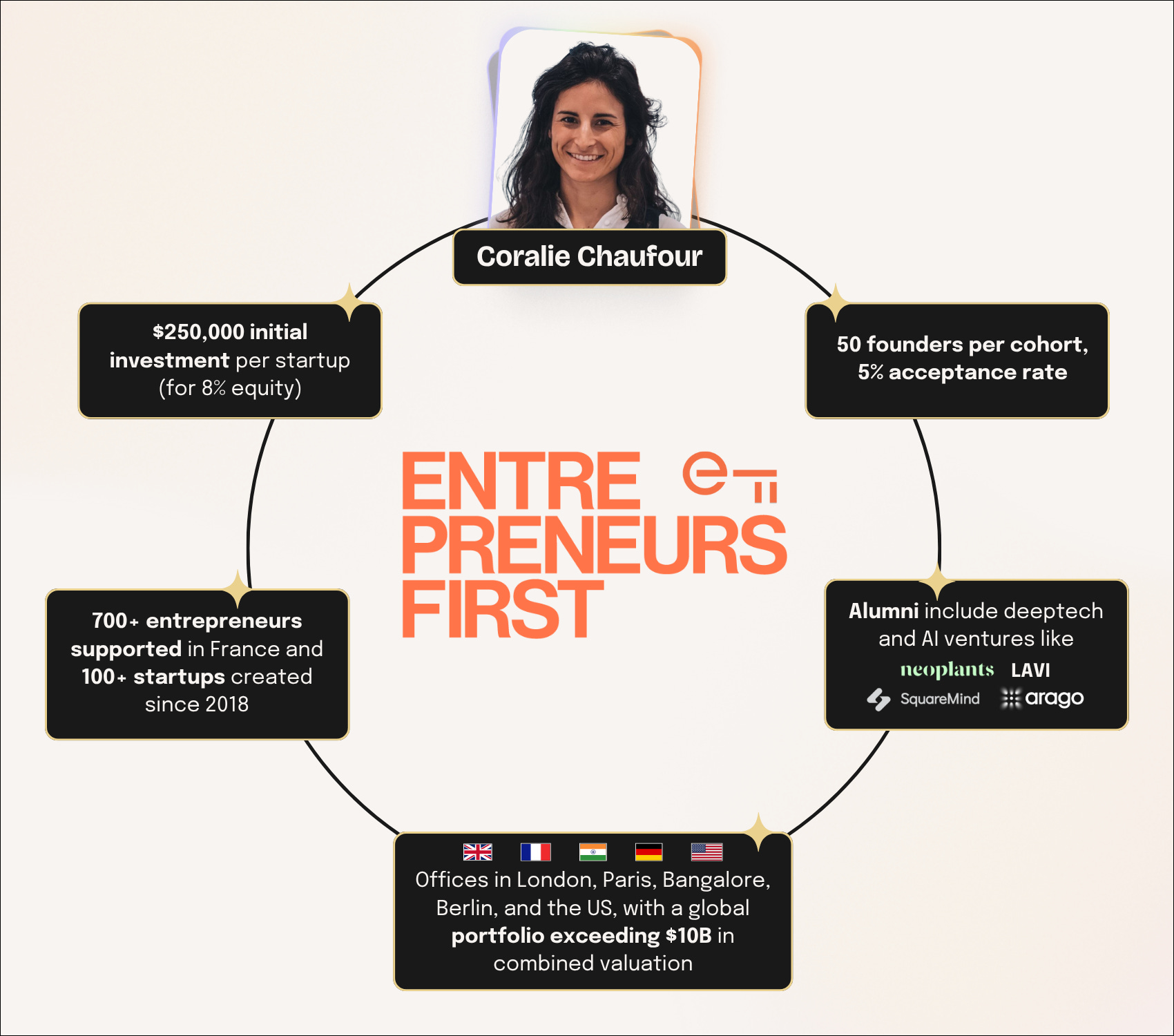
- 700+ entrepreneurs supported in France and 100+ startups created since 2018
- 50 founders per cohort, 5% acceptance rate
- $250,000 initial investment per startup (for 8% equity)
- Alumni include deeptech and AI ventures like Neoplants, Lavi, Arago, and SquareMind
- Offices in London, Paris, Bangalore, Berlin, and the US, with a global portfolio exceeding $10B in combined valuation
Market position: EF occupies a unique spot between accelerator, talent investor, and venture studio. Unlike traditional accelerators, EF admits individuals rather than existing teams or ideas, running a 12-month program that helps them find cofounders, build products, and raise their first round.
Key milestones:
- 2011: EF founded in London
- 2018: Launch of EF Paris at Station F under Coralie Chaufour
- 2020: EF expands to Bangalore and North America
- 2022: Demo Day moves to San Francisco to attract Tier 1 US VCs
- 2023: Paris runs simultaneous double cohorts
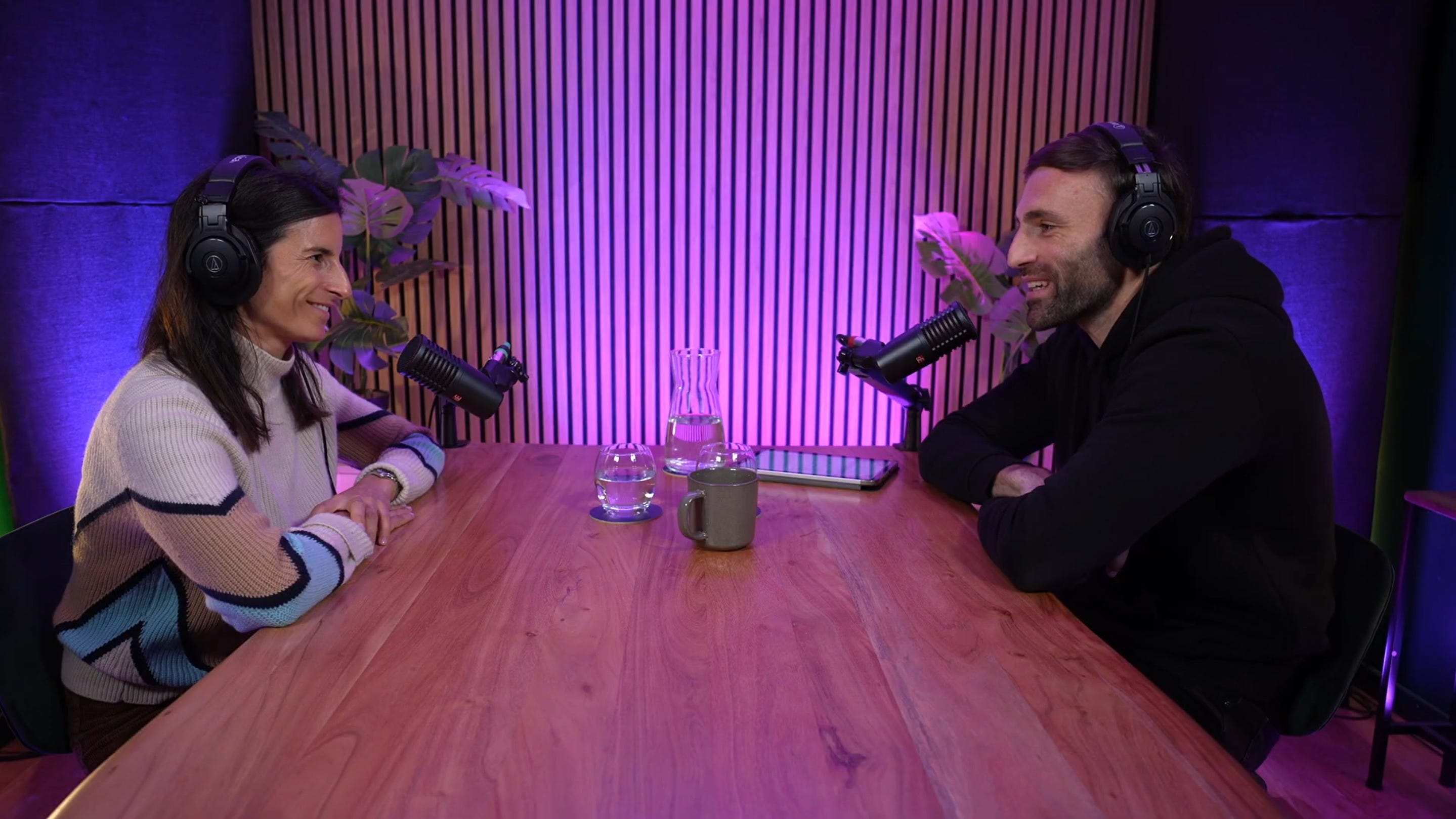
I sat down with Coralie Chaufour, General Manager of Entrepreneurs First Paris, to discuss the EF playbook for turning individuals into founders and products from zero.
Disclaimer: The organizational choices and technical solutions shared in this newsletter aren’t meant to be copied and pasted as-is. Always keep your company’s context in mind before adopting something that works elsewhere! 😊
Backstory
Entrepreneurs First’s idea was radical from day one: start with people, not projects. Founded by Matt Clifford and Alice Bentinck, EF reversed the startup pipeline by asking: what if we could manufacture founder teams as a product? When Coralie Chaufour launched the Paris office in 2018, Station F became the laboratory for this experiment.
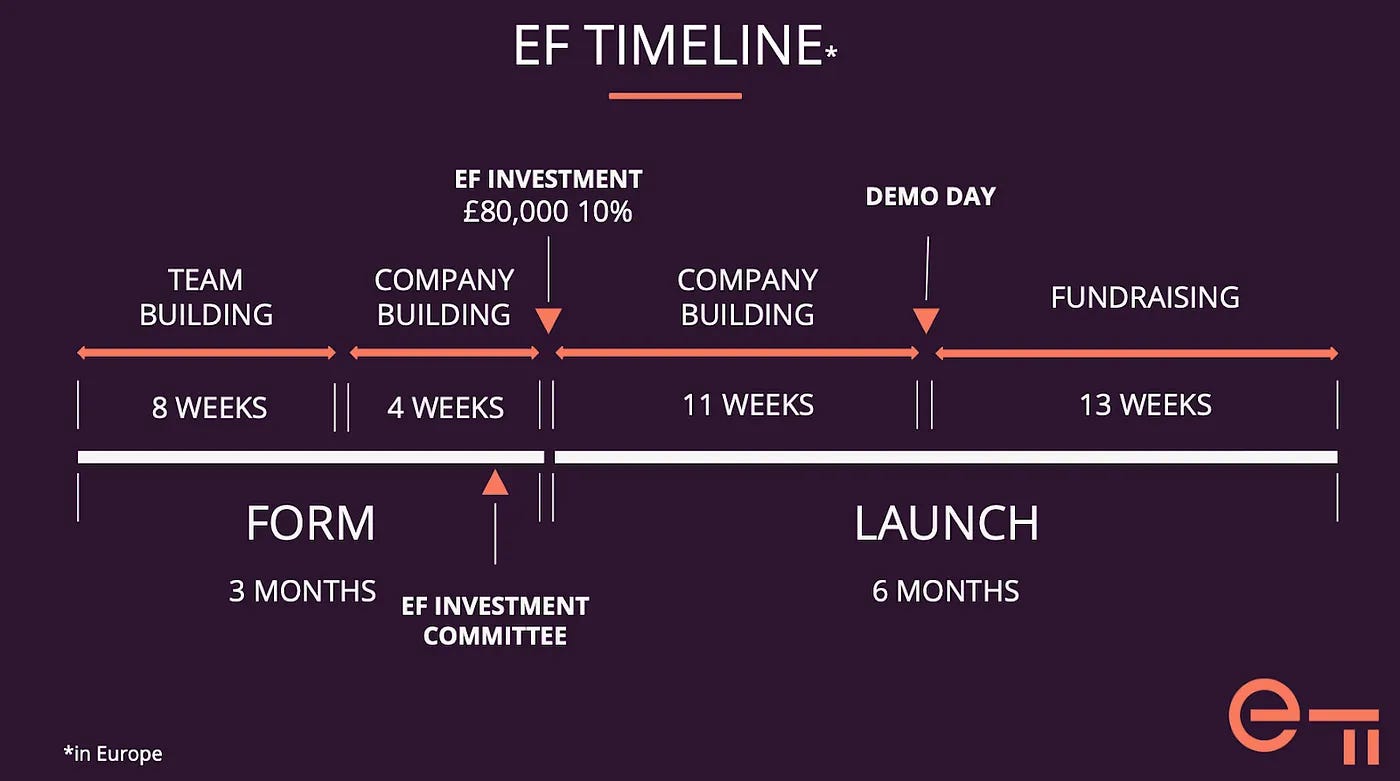
Each EF cohort brings together about 50 exceptional individuals, PhDs, engineers, or operators, and gives them 3 months to find a cofounder, form a team, and test a startup idea.
“We don’t accept projects, we accept people,” says Coralie. “We remove the main excuses people have not to start : no cofounder, no idea, no money”
The process starts with EF’s Form phase: a 3-month sprint of workshops, founder matching, and validation sprints. Only 40% of participants reach EF’s investment committee, which then funds around 50% of those teams. This cadence forces founders to work at a pace rarely seen outside of Y Combinator.
Turning cofounder matching into a product
At EF, the matchmaking process is engineered like a marketplace. Founders meet during an immersive 48-hour offsite and start forming temporary teams, supported by structured feedback and even public “breakups.” Each pairing is celebrated or closed in Slack with transparency and humor, emoji champagne (🍾) included. The result: a culture that de-dramatizes iteration.
Founders use dashboards to rank potential partners based on skill and ambition. “It’s like dating : strategic and emotional at once” Coralie notes. The EF team acts as coaches, helping founders assess fit and alignment before pitching to investors.
This playbook produces what Coralie calls “intentional cofounder chemistry”, engineered serendipity where energy, ambition, and complementary edges create alignment faster than traditional networks could.
How ideas emerge: the Edge framework
Instead of imposing startup ideas, EF teaches founders to discover them. Each founder defines their Edge, the area where they are in the top 0.01% globally in skill, insight, or experience. Edges can stem from academic research, domain expertise, or unique behavioral strengths. EF encourages teams to intersect their edges to find valuable, defensible problems.
“A good idea is not an invention. It’s the intersection between what you uniquely know and what the market desperately needs” as Coralie puts it.
3 main origins of ideas emerge:
- Industry insight from a founder’s previous role (e.g. quality control in food tech)
- Academic technology from a PhD or postdoc (e.g. Neoplants’ bioengineering)
- Intersection of two founders’ edges (e.g. optimization meets supply chain)
What makes a good founder
After 7 years leading EF Paris, Coralie identifies 3 core traits of exceptional founders: ambition, intensity, and curiosity. The best founders show “an urgency to build and a hunger for feedback.” EF’s short cycle (12 weeks to investment) creates artificial constraint, accelerating maturity and selectivity.
Coralie often says that Europe’s best founders are “half naive, half visionary.” The right amount of naivety helps challenge conventional paths, especially among younger founders who haven’t been shaped by corporate experience. EF’s mission has increasingly shifted toward these early, high-energy profiles.
Building a people business as the product
EF is, at its core, a “people product.” The team sits physically next to founders at Station F, sharing workspaces, observing interactions, and making investment decisions with far deeper qualitative data than any VC.
“We know how people behave under pressure before we invest” says Coralie.
This intimacy allows EF to assess cofounder dynamics and productivity long before traction appears.
The internal team, called Talent Investors, follows founders through every stage: scouting, team formation, and fundraising. EF’s coaching structure is deliberately lean, balancing group education (via workshops and frameworks like The Mom Test and Customer Discovery) with 1:1 mentorship. The model works because EF’s customers and its product are the same: the entrepreneurs.
From Paris to San Francisco: evolving the value proposition
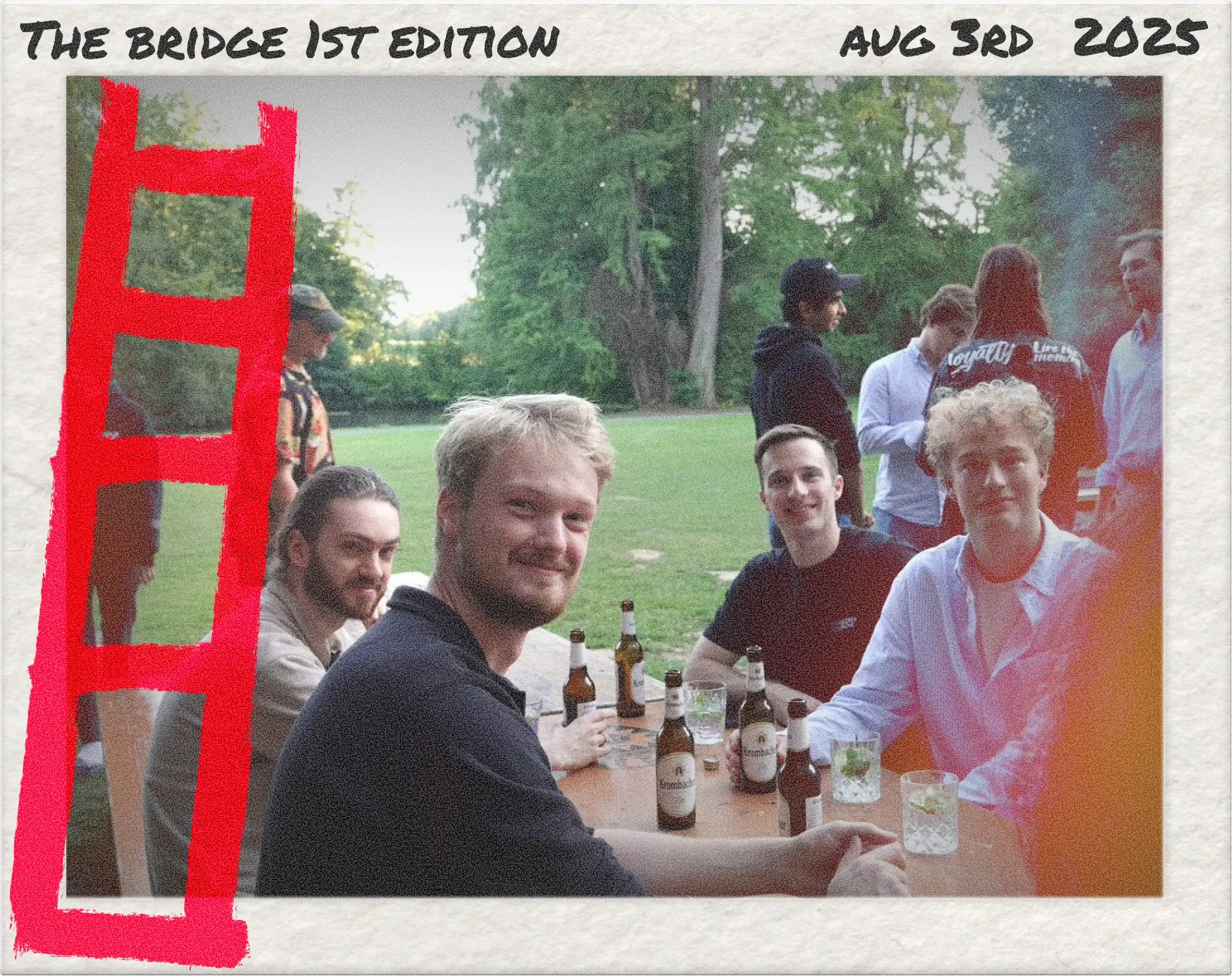
Over time, EF evolved from a UK experiment to a global network connecting talent ecosystems. The Paris office pioneered the Bridge model, exposing founders early to international markets like Germany and the US. Demo Day now happens in San Francisco, where EF startups pitch to top-tier American VCs. The goal: help European founders think globally from day one.
“We’re building founders for global markets, not local ecosystems” says Coralie.
EF’s next challenge is expanding this bridge while staying true to its deeptech DNA and founder-first culture.
Error: mistaking ideas for validation
One recurring pitfall Coralie sees is founders over-indexing on product building before market validation. Many founders build MVPs before speaking to customers. EF flips this by requiring hundreds of customer discovery calls before writing code. The best signal, Coralie says, is when prospects “are as eager to hear from you as you are to pitch them.”
Another challenge is founders who seek perfection in the first prototype. EF encourages teams to collect early signals of traction, letters of intent, data access agreements, advisor commitments, especially for deeptech startups where commercialization can take years.

- Founder matching can be designed as a repeatable, high-velocity process, not left to chance.
- EF’s “Edge” framework transforms personal expertise into defensible startup insights.
- Constraints drive creativity: 12 weeks to form a team and secure investment creates momentum.
- The best founders balance ambition with intellectual humility and fast iteration.
- Treating the program as a product enables EF to measure and iterate its own success.
- Customer discovery should start before coding, validation precedes vision.
- European founders win by thinking globally early, not by local optimization.
- Intimacy with founders (sharing space, context, and daily feedback) beats abstract mentoring.
- Transparency and gamification (Slack breakups, leaderboards) create accountability.
- Early proof of traction can take many forms beyond revenue : data access, advisor buy-in, letters of intent.
- EF’s model shows that deeptech venture creation can be industrialized without losing humanity.
-
My full interview with Coralie
Dive deeper into this topic with Coralie Chaufour, General Manager of Entrepreneurs First Paris, in my latest podcast episode:
Test your Product performance in 10 min
Trusted by 100+ startups and top CPOs like:


In this article
About Stellar
Stellar is a team of senior CPOs and CTOs who work hands-on inside product and engineering teams to fix what slows them down. Not advisors. Not trainers. Operators who've done the job before and know exactly where to look.
Discover StellarDive deeper
See all articles

.avif)
.avif)