
AI
Is Europe falling behind in AI?
Real strategies, frameworks, and insights from leaders who built Europe's fastest-growing products.
12/2/2026
•
.png)

Last November, I boarded a flight from Paris to San Francisco with a simple obsession in mind: how are the best tech companies actually using AI inside their products? Not in demos. Not in decks. But in the messy reality of shipping, iterating, and learning.
What I discovered there wasn’t a technological breakthrough. It was a behavioral one. Designers writing code. Engineers prototyping in real time. Teams shipping by default, not by exception. In Silicon Valley, speed isn’t something you plan for. It’s something you assume.
That first journey became a documentary filmed during OpenAI DevDay in San Francisco, where I explored how the most advanced teams are already building with AI today. You can watch it here.
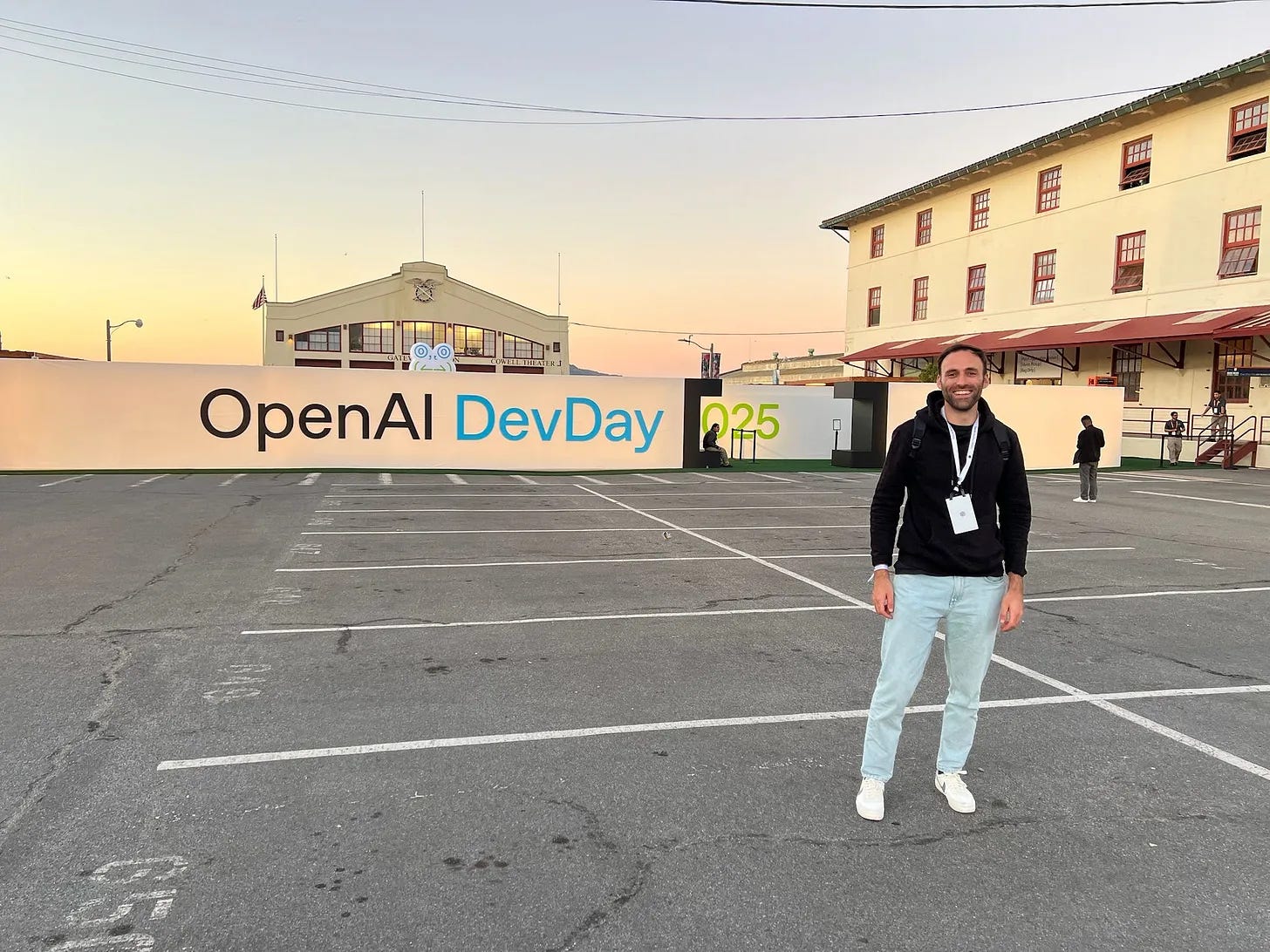
But it also left me with a second, more uncomfortable question.
If the gap between the US and Europe isn’t about talent or technology, but about mindset, what does that mean for the European AI ecosystem?
To find out, I packed my bags again and headed to Barcelona, at the heart of one of the largest AI gatherings in Europe: the AI Summit.
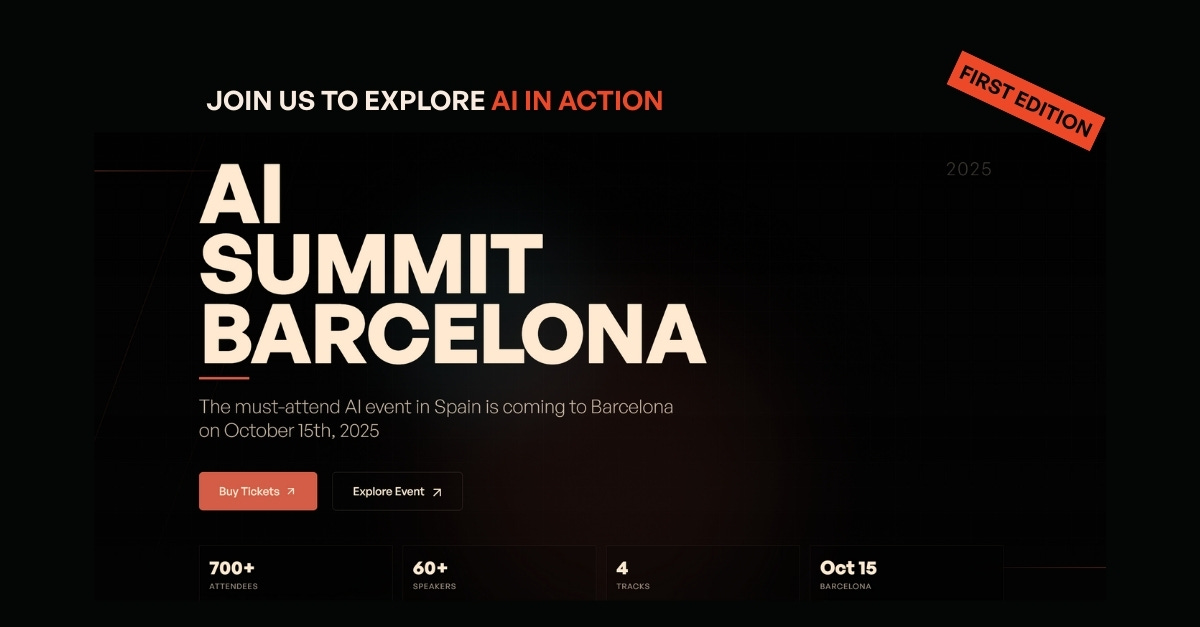
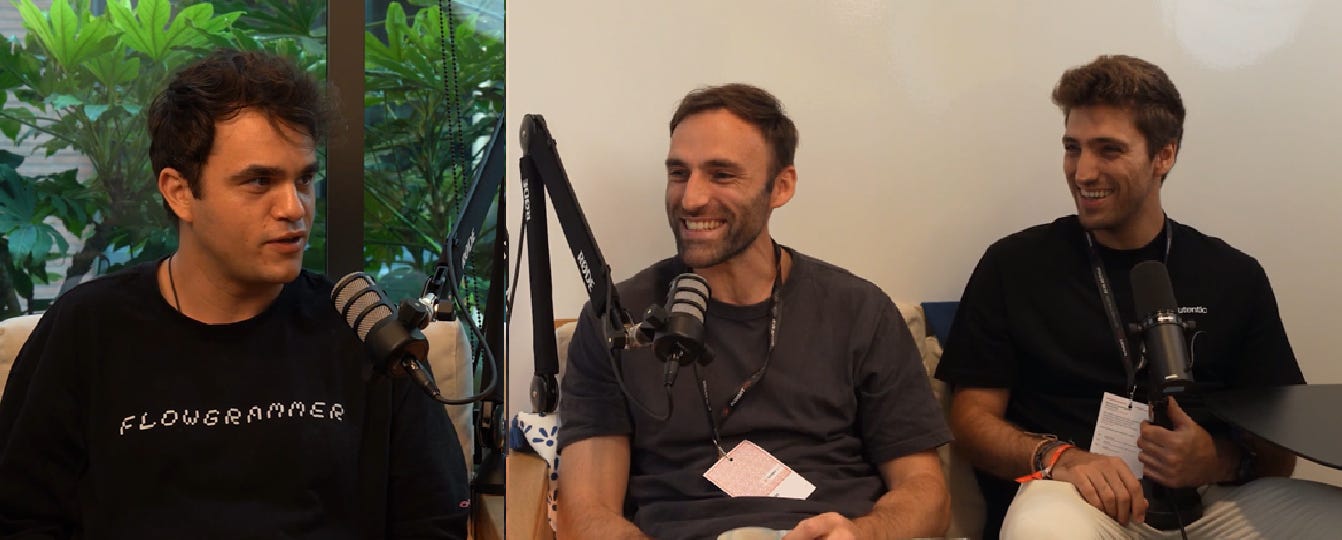
Over 2 days, I had the chance to conduct 8 in-depth interviews with founders, CTOs, product leaders, and operators who are building with AI at real scale. Not alone, but alongside Dani Diestre, the most prominent Product podcaster in Spain and host of “Entrevistas a Product Leaders”.

Together, we captured unfiltered conversations about what’s actually working, what’s breaking, and how teams across Europe are navigating this shift. Startups and large enterprises. Optimism and skepticism. Speed and restraint.
This documentary is the result of those conversations. A snapshot of Europe’s AI ecosystem in motion. Not behind. Not ahead. But building in its own way.
Disclaimer: The organizational choices and technical solutions shared in this newsletter aren’t meant to be copied and pasted as-is. Always keep your company’s context in mind before adopting something that works elsewhere! 😊
Speed is a mindset, not a roadmap
What stood out immediately in San Francisco was not access to better models or tools. It was the default behavior. Teams don’t wait for certainty. They ship, observe, adjust. AI isn’t treated as a strategic bet. It’s infrastructure.
In Barcelona, the contrast was clear. European teams are thoughtful, deliberate, often skeptical. Engineers question reliability. Leaders worry about long-term maintainability. AI adoption is discussed as a transformation, not an acceleration.
This difference shapes everything. In the US, AI compresses cycles. In Europe, it extends decision-making. Neither approach is inherently wrong. But they produce very different outcomes when speed compounds.
The key insight: velocity is cultural. Tools only amplify what already exists.

Curiosity beats fear inside strong engineering cultures
Inside Glovo, one of Europe’s largest tech scale-ups, AI adoption didn’t require a mandate. It emerged naturally from culture. Curiosity was already there.
Skepticism still exists, especially among senior engineers. But instead of blocking experimentation, it’s framed as healthy friction. AI doesn’t replace engineering judgment. It amplifies it.
This pattern repeated across conversations. Where teams already value learning and experimentation, AI accelerates progress. Where teams are risk-averse, AI becomes another reason to slow down.
The technology doesn’t change people. It magnifies them.

“Just try it” is still the most underrated strategy
One recurring theme from seasoned engineering leaders was simple: most resistance disappears once people actually use the tools.
The fear isn’t about AI quality. It’s about loss of control. But hands-on usage reframes the conversation. AI stops being a threat and becomes leverage.
The most effective teams aren’t chasing the perfect setup. They start small. Personal projects. Side experiments. Clear testing. Human review in the loop.
AI doesn’t reward blind trust. It rewards clarity of intent.

When building becomes cheap, product judgment becomes everything
Several speakers pushed this idea to its extreme: if building is 100x easier, the bottleneck shifts entirely.
Product understanding. Taste. Distribution. Growth. These become the real constraints.
AI allows smaller teams to do what once required entire departments. Roles blur. PMs become orchestrators. Engineers become system architects. The skill isn’t writing code. It’s knowing what should exist and what should not.
This is where Europe may have an advantage. Less obsession with novelty. More focus on durability.

Measuring value is the only antidote to AI hype
AI creates powerful “wow” moments. But wow doesn’t equal value.
Across companies, the most mature teams treat AI features like any other product bet. Clear success metrics. Time-boxed experiments. Controlled rollouts. Kill decisions when impact isn’t real.
AI doesn’t get a free pass. If it doesn’t move the needle, it doesn’t ship.
The principle hasn’t changed. Only the speed at which teams can test it has.

Enterprises don’t need disruption, they need transformation
In large organizations, AI adoption isn’t blocked by technology. It’s blocked by structure.
Silos. Legacy systems. Misaligned incentives. Shadow AI usage. All slow progress.
The teams making progress aren’t replacing humans. They’re augmenting them. AI summarizes, translates, assists, routes. Humans still decide.
The future isn’t fully automated. It’s hybrid. And making that work at scale requires patience, executive involvement, and relentless focus on operational reality.

The cultural gap is real, but it cuts both ways
The US ecosystem is increasingly monomaniacal about AI. That obsession creates speed. It also creates waste.
Europe moves slower. Sometimes too slow. But it also filters harder. Regulation, caution, and skepticism act as brakes. Sometimes frustrating. Sometimes protective.
The gap isn’t about talent. European engineers are world-class. It’s about ambition versus restraint.
And restraint, when paired with execution, can build remarkably durable companies.
Conclusion
I arrived in Barcelona asking whether Europe was falling behind.
After 2 days at the AI Summit, the answer became clearer. Europe isn’t behind technologically. The gap is cultural.
The US optimizes for speed. Europe optimizes for value.
AI is raising the bar for everyone. Code is becoming a commodity. Judgment, taste, and system thinking are becoming the differentiators.
So is Europe behind?
If the race is only about speed, maybe.
If it’s about building products that last, the story is far from written.
This documentary is not a verdict. It’s a mirror.

- The AI gap between Europe and the US is cultural, not technical.
Talent and technology are on par, but speed of execution is treated as a default in the US and as a deliberate choice in Europe. - AI doesn’t change how good teams work, it amplifies it.
Teams with strong product culture, curiosity, and experimentation move faster with AI, while cautious teams become even more cautious. - As building becomes cheaper, product judgment becomes the real bottleneck.
When one person can design, build, and ship, taste, prioritization, and distribution matter more than pure execution. - AI features don’t deserve special treatment. Value still has to be measured.
The “wow effect” fades quickly. Sustainable impact only comes from clear metrics, time-boxed experiments, and kill-or-scale decisions. - Enterprises don’t win by disrupting everything, but by transforming workflows.
At scale, AI works best when it augments humans, reduces friction, and improves quality rather than attempting full automation. - Engineers are evolving from code producers to system and product leaders.
Code is becoming a commodity. The new skill is knowing what the system should do, validating outputs, and orchestrating humans and machines together.
My full video on AI Summit Barcelona 2025
Watch the documentary to see how Europe is really building with AI today.

Enjoyed this newsletter? Share it with your network using the button below—your support means a lot!
Share How They Build with Timothe
Test your Product performance in 10 min
Trusted by 100+ startups and top CPOs like:


In this article
About Stellar
Stellar is a team of senior CPOs and CTOs who work hands-on inside product and engineering teams to fix what slows them down. Not advisors. Not trainers. Operators who've done the job before and know exactly where to look.
Discover StellarDive deeper
See all articles
.jpg)
.avif)