
Product Market Fit
Inside Lago and Formance: How 2 European founders are scaling Fintech infra to the US
Real strategies, frameworks, and insights from leaders who built Europe's fastest-growing products.
11/9/2025
•
%201.avif)
.avif)
Today I sat down with two European founders building mission-critical fintech infrastructure — Anh-Tho Chuong (Lago) and Anne-Sybille Pradelles (Formance) — to break down how they’re scaling Open source products in one of the most demanding markets out there.
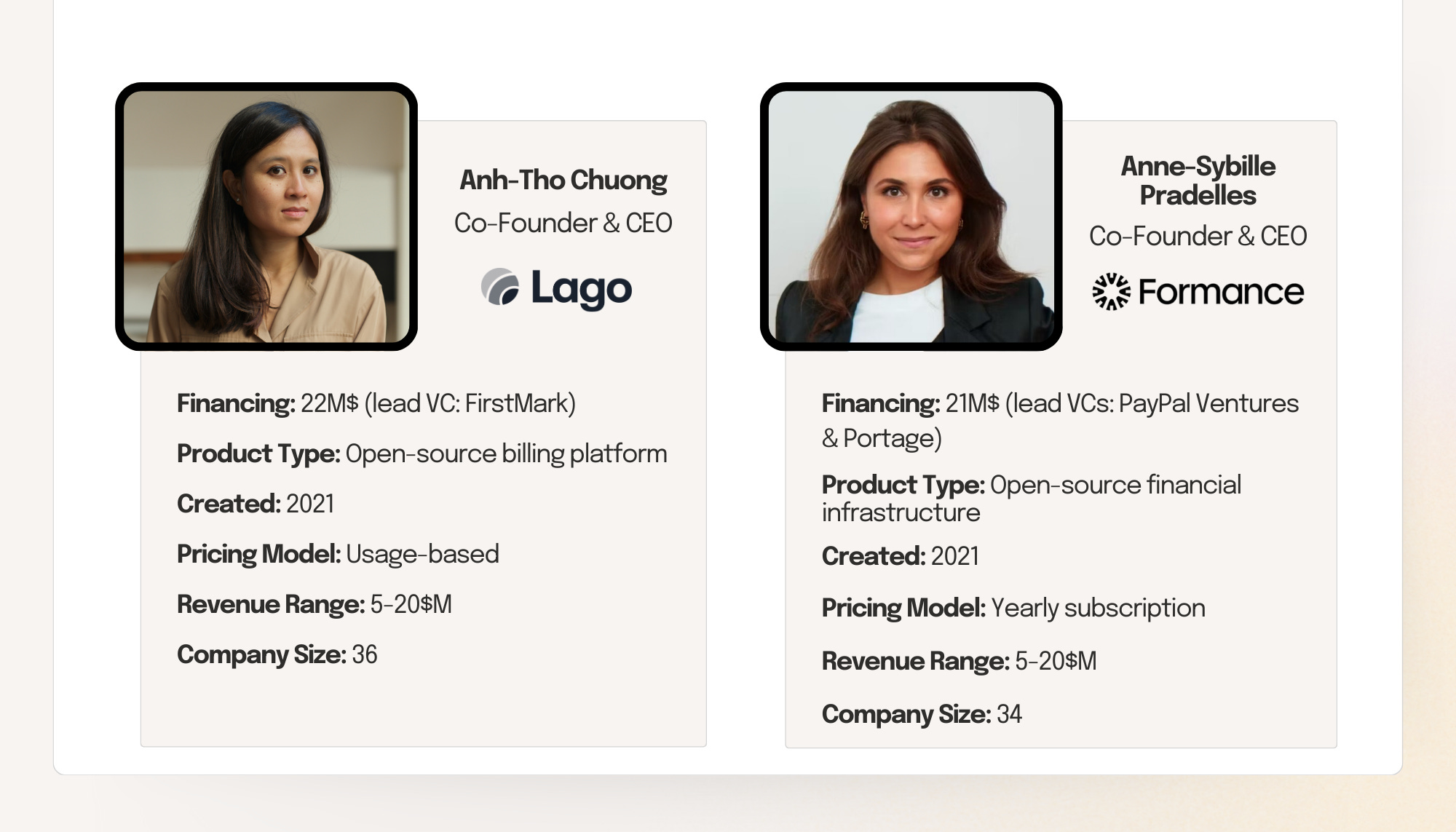
And they have a lot in common:
- Both are female founders building deep fintech infrastructure
- Both chose open source software from day one
- Both are scaling from Europe to the US
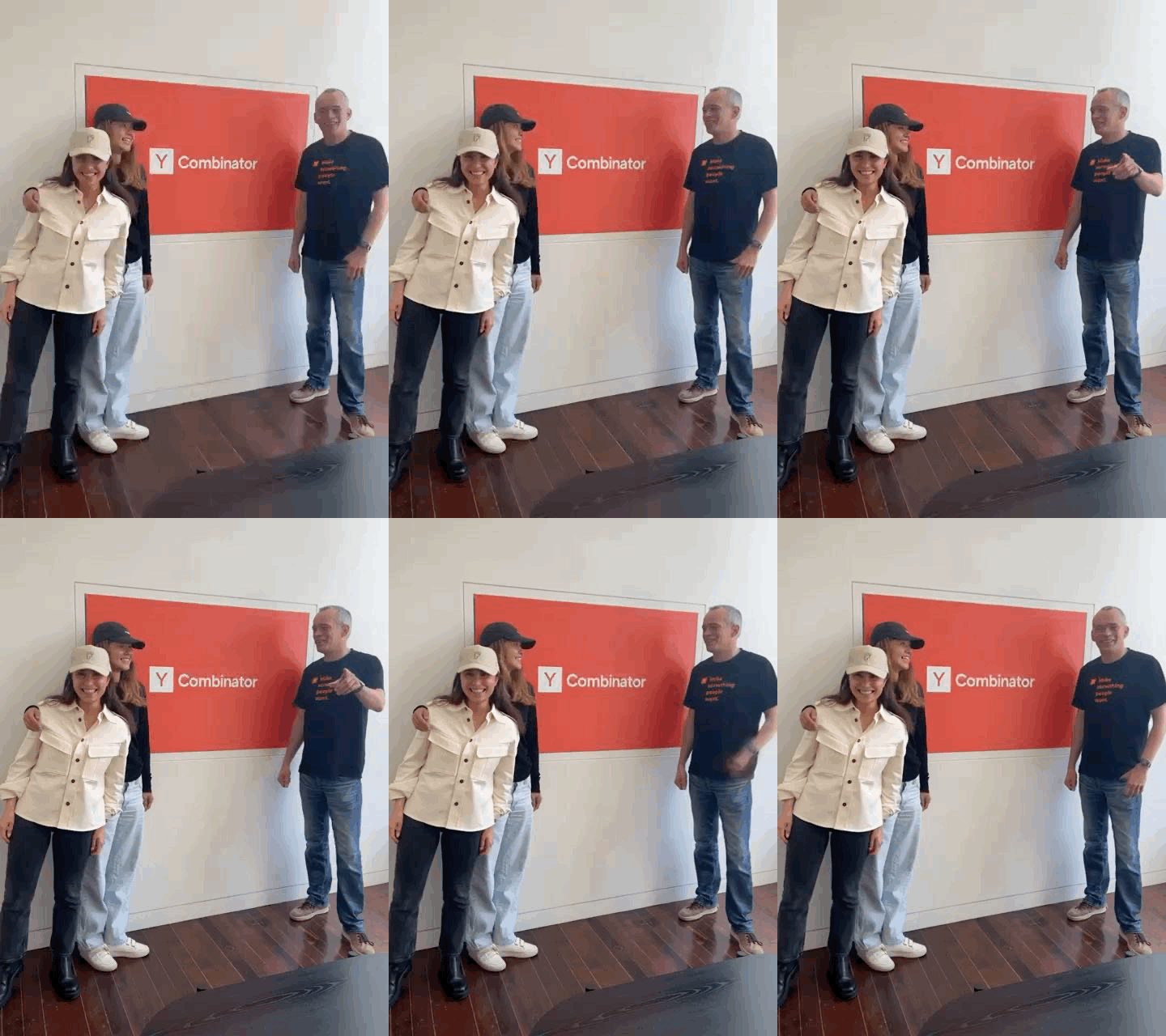
- Both went through Y Combinator.
Here’s the TL;DR:
- Went Open source from day 1 to join the ecosystem and win technical buyers
- Built systems where bugs are unacceptable and MVPs don’t exist
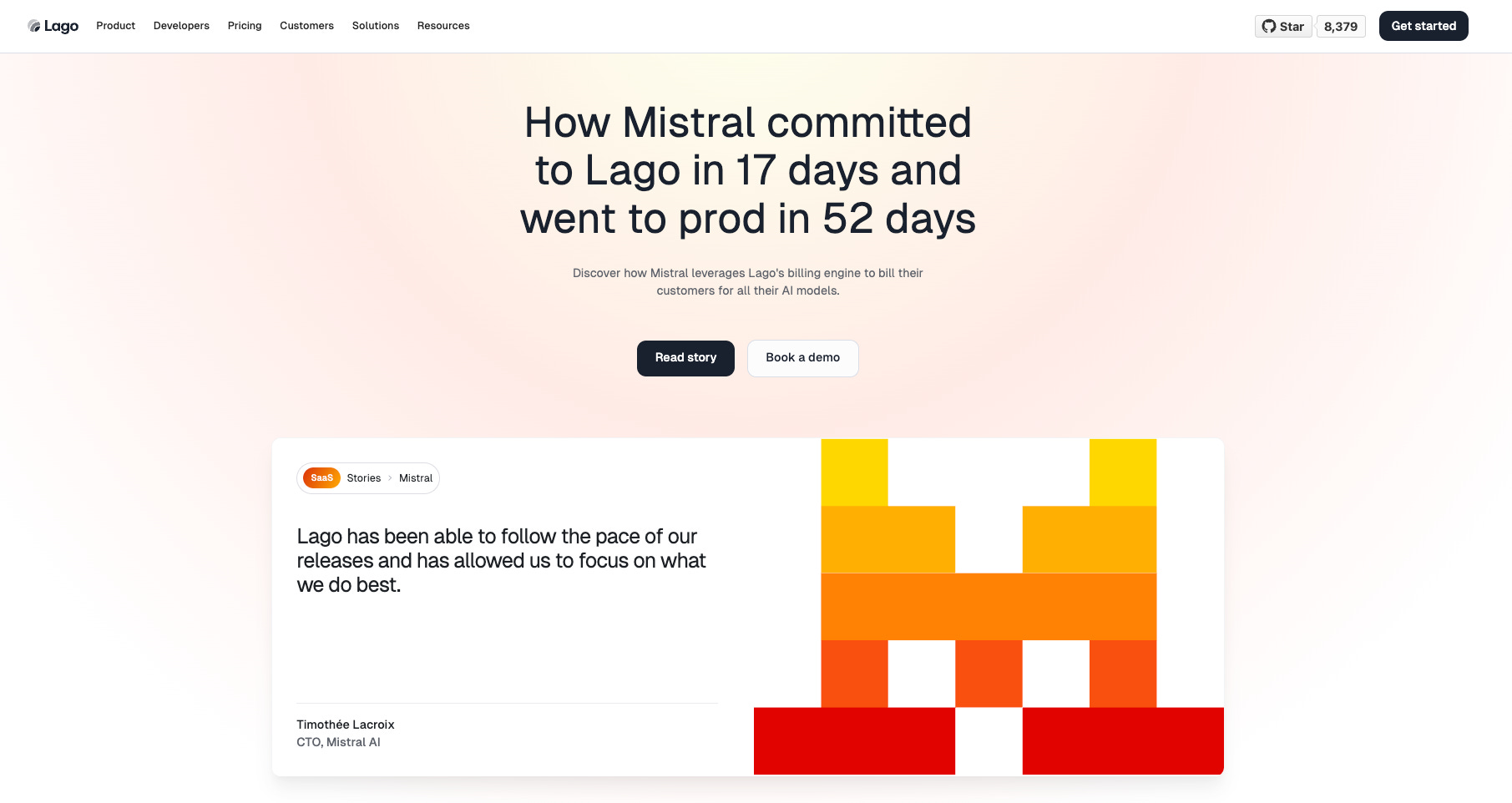
- Lago used Hacker News and technical content to drive 100% inbound in early years
- Pivoted to targeted outbound to go upmarket and verticalize
- Learned that selling in the US costs 2–3x more and demands SOC2-level rigor
- Turned early logos into growth levers through case studies, referrals, and proof-driven GTM
Disclaimer: The organizational choices and technical solutions shared in this newsletter aren’t meant to be copied and pasted as-is. Always keep your company’s context in mind before adopting something that works elsewhere! 😊
Built on trust, not speed
Lago and Formance went Open source from day one. Since both build core financial infrastructure, their buyers wouldn’t even consider a product that wasn’t transparent and auditable
“Our early users told us: if it’s not open source, we won’t even consider it.” — Anne-Sybille, CEO of Formance.
Open source unlocked:
- Credibility with technical buyers
- Shorter sales cycles
- A wedge into developer communities who hate being sold to
Anh-Tho’s post on “billing nightmares” became one of the top Hacker News threads that year. Anne-Sybille saw early traction from engineers searching “open source ledger” on Google.
Learning: First a product decision, Open source became a key differentiator in GTM.
There’s no MVP when money’s on the line
Both founders are building infrastructure for financial flows.
If the product fails, clients lose revenue or regulatory approval.
“This is 10x the level of rigor we had at Qonto. There’s no room for error.” — Anh-Tho, CEO of Lago
That reality reshapes everything:
- QA is a major part of Product development
- External testing tools like Antithesis simulate failures
- Engineers handle support on the features they ship
There’s no “move fast and break things” here. Just bulletproof systems, designed slowly and intentionally.
Learning: In fintech infra, your product isn’t allowed to fail. Build like it’s already in production.
Inbound worked until they outgrew it
Both startups kicked off with pure inbound: technical content, OSS visibility, SEO, and Hacker News buzz.
But inbound eventually hit a ceiling:
- Leads weren’t always qualified
- Pipeline wasn’t predictable
- Target verticals weren’t filling up
Formance now works with a GTM agency to run verticalized outbound campaigns.
Lago keeps things founder-led and sharp, obsessing over specific accounts and chasing them down.
“I spot companies I love and just chase them for months.” — Anh-Tho, CEO of Lago
Learning: Inbound is a great start. But if you want repeatability, you need to layer in outbound to get to larger companies.
Breaking into the US market as a European CEO
Unlike many US-born infra startups, Lago and Formance are led by European founders. And expanding across the Atlantic isn’t just about timezone headaches. It’s about cost, compliance, and credibility.
- Sales hires cost 2–3x more in the US
- SOC2 and ISO certifications are considered the minimum expectation
- Cycles are shorter and expectations higher
Formance is building a 10-person GTM team to tackle that challenge.
Lago is laying the groundwork before going full-scale.
Learning: You don’t just “go to the US.” You need a compliance-ready product and a focused, local GTM motion.
Logos aren’t trophies. They’re lead generators
Early customers weren’t just a source of revenue. They became part of the acquisition strategy.
Formance built a give/get model into early contracts:
- Case studies at go-live
- Public endorsements at conferences
Lago used early adopters as proof points in outbound, not just logos to showcase on the homepage.
“Every new deal helps close the next one.” — Anne-Sybille, CEO of Formance
Learning: Early logos should earn their keep. Make them work like part of your GTM team.
Note: Linear shares this approach too — I covered it in this edition of How They Build
My full interview with Anh-Tho & Anne-Sybille
Dive deeper into this topic with Anh-Tho and Anne-Sybille in my latest podcast episode:

Test your Product performance in 10 min
Trusted by 100+ startups and top CPOs like:


In this article
About Stellar
Stellar is a team of senior CPOs and CTOs who work hands-on inside product and engineering teams to fix what slows them down. Not advisors. Not trainers. Operators who've done the job before and know exactly where to look.
Discover StellarDive deeper
See all articles
.png)
.avif)