AI
Product Organization
8 Lessons from Figma Config: What Product Designers Are Doing Right Now
Real strategies, frameworks, and insights from leaders who built Europe's fastest-growing products.
10/9/2026
•

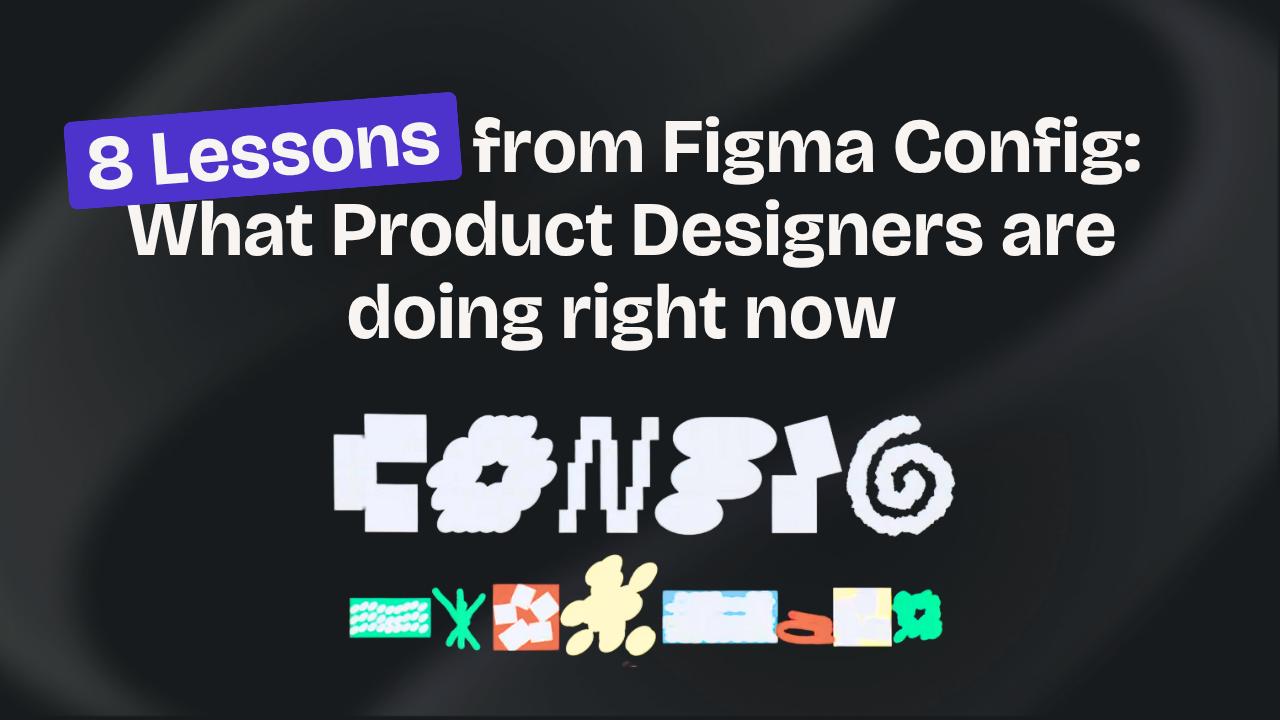
In June, Figma invited me to Config, the biggest design event in the world: 10,000 designers, 3 days, San Francisco.
But the timing was bad.
We were deep in a rush at Stellar with David:
- We were repositioning the entire company
- We had a revenue target to hit before the summer
- And we were underwater on client work
Flying to San Francisco for a week wasn’t a serious option at the time.
Over the following days, I kept thinking I’d made a mistake.
Because while we were repositioning Stellar, we were thinking hard about how Product roles are evolving. And nobody has ever speculated this much about where those roles are heading. In tech, those shifts always start in the US. Then they settle into the daily work of thousands of people around the world, for years afterward.
Config was suddenly the right place to feed that thinking.
So I went back on my no, with one idea. What if we used the trip to answer the question everyone was asking:
What is AI actually doing to the designer’s job?
Turns out there’s no better place on earth to find out.
I pitched it to my cofounder David.
He said: “Go. And I’m coming with you.”
A few weeks later we landed in San Francisco with a camera and a list of questions for as many designers as we could stop.
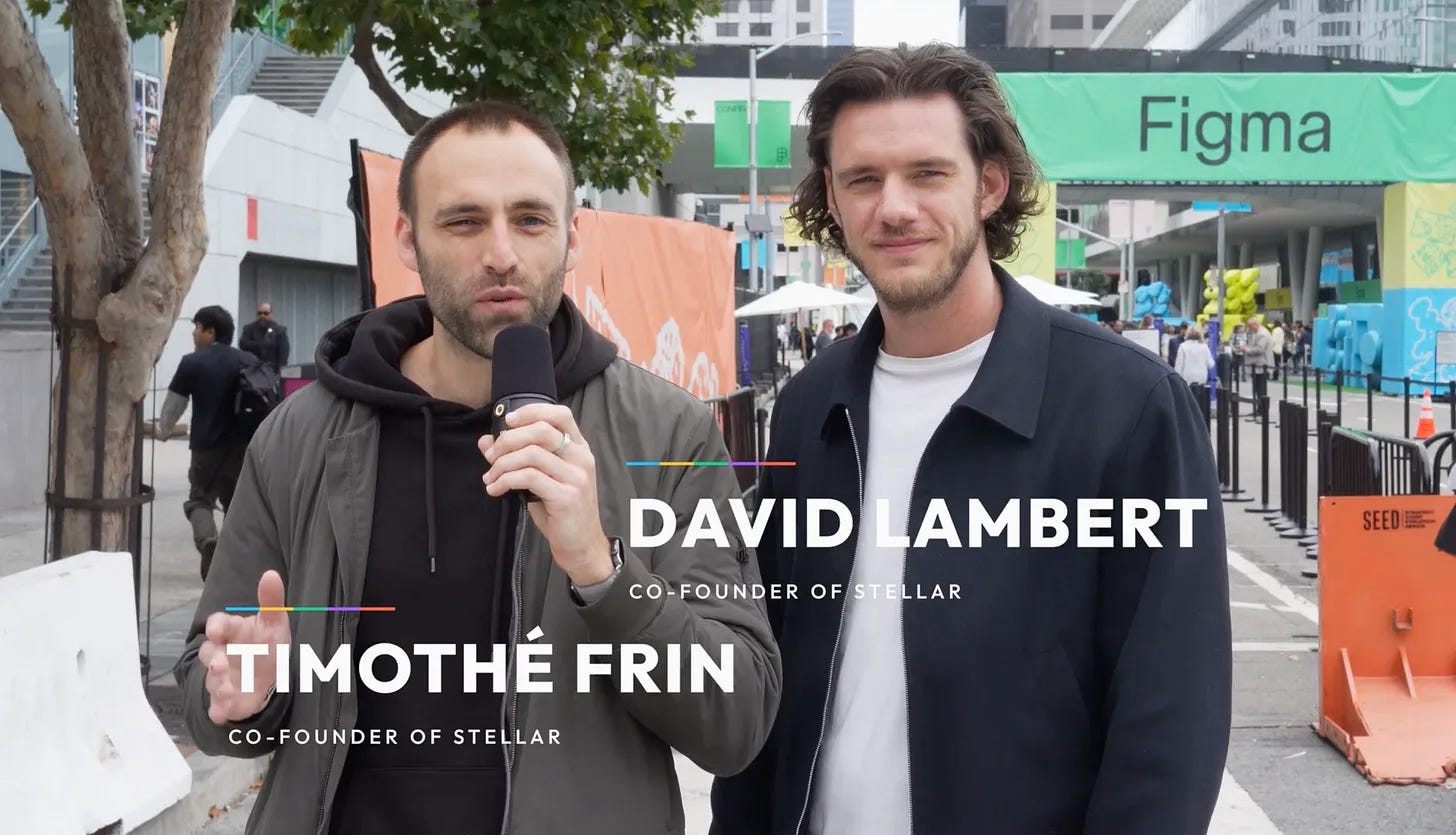
In a single day at Config, we approached around 50 designers on the floor and recorded 16 interviews: Figma’s VP Product and VP Design, plus designers from DoorDash, JP Morgan, Marriott, Amplitude and many more.
The 22-minute documentary is out.
Watch the documentary on Youtube
Here are the 8 things I took home:
Lesson 1: 3 months of design now fits into 3 days
I asked a product designer at DoorDash what had changed the most in his work. He didn’t hesitate:
“What used to take three months can now take three weeks, can now take three days.”
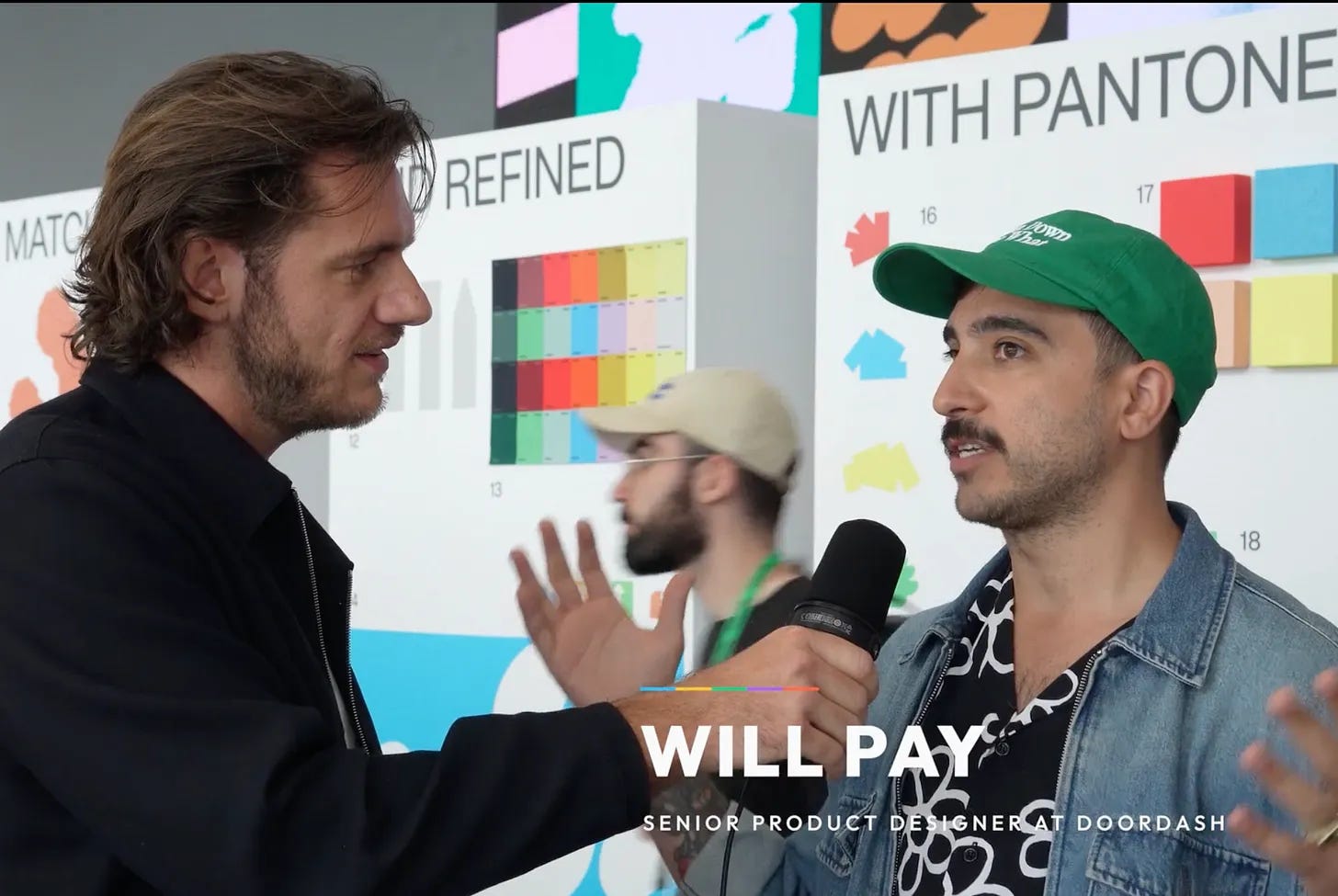
He wasn’t the only one with that math.
At Cox Automotive, changes that used to take a week now land in a day. At Marriott, a design system review that took two days takes two hours because the team built a plugin that checks in one click whether components are using the right variables and tokens, instead of opening every layer by hand.
Everybody expects AI to compress production.
What I didn’t expect is that the prototype changed job along the way.
A senior designer at DaVita, a US healthcare company, put it best. The prototype used to be a design artifact, something you built to test an idea. Now it’s the alignment tool. It’s what travels through the company, what a PM shows to VPs, what replaces the 10-page brief nobody reads. And when I asked him what he’d want Figma to build next, he didn’t ask for a faster canvas. He asked for a way to narrate a prototype, so it keeps making sense in the rooms he isn’t in.
That request tells you where the bottleneck moved. Producing the artifact stopped being expensive. Making a room of people understand it is now the hard part.
Here’s what I keep telling the CEOs I work with. AI lets you produce far more code, and more code means more debt. That bill arrives later, usually right when you’re trying to scale.
So spend the time you just gained upstream on deciding which features and which bets are worth shipping at all.
Lesson 2: Designers have the codebase now
At JP Morgan, the design team is building its own repo. Not a sandbox, an actual repo, with branches their engineers can diff against what’s live in production. Their stated goal is to close the gap between design and engineering, and they’re doing it inside one of the biggest banks in the world.
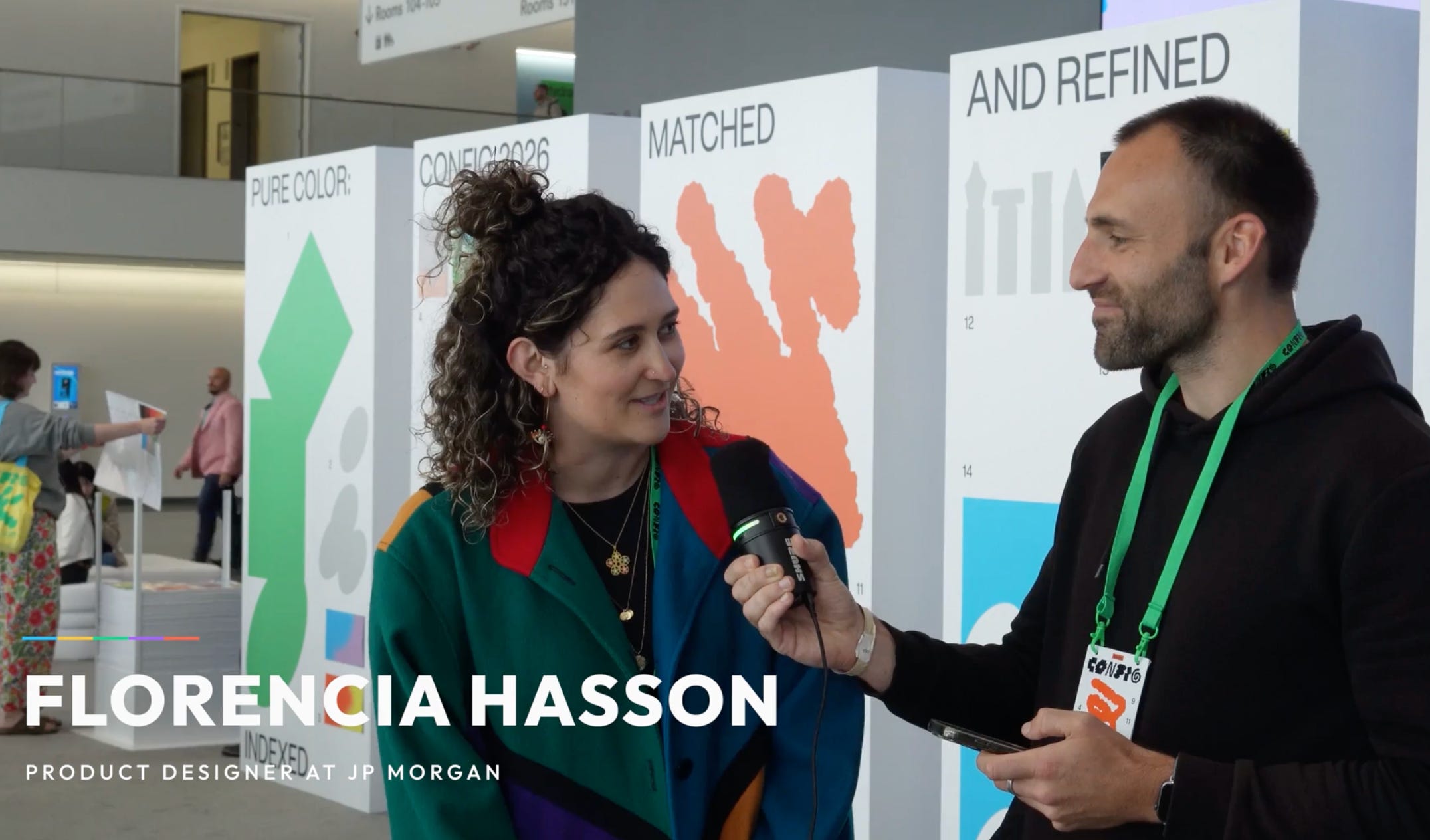
At Eyequant, the Head of Product and Design writes the UI of the app himself. At PrizePicks, the engineering team ran a hackathon where the only tool allowed was Claude Code. At Zero, they’re moving toward designers pushing to production, and the person who described it to me has seen it work before:
“Having no friction between design and engineering, being able to move something from idea all the way through to the customer. That’s what everyone wants.”
None of this is new as an ambition. Designers have wanted to ship for twenty years. What changed is who’s allowed to try.
Noah Levin gave me the number that makes it concrete. He has around 60 designers on his team at Figma. Before, maybe 20 of them had a CS background and only those 20 could express an idea at full code fidelity. Everyone else described their idea and waited. Today the other 40 can build it themselves.
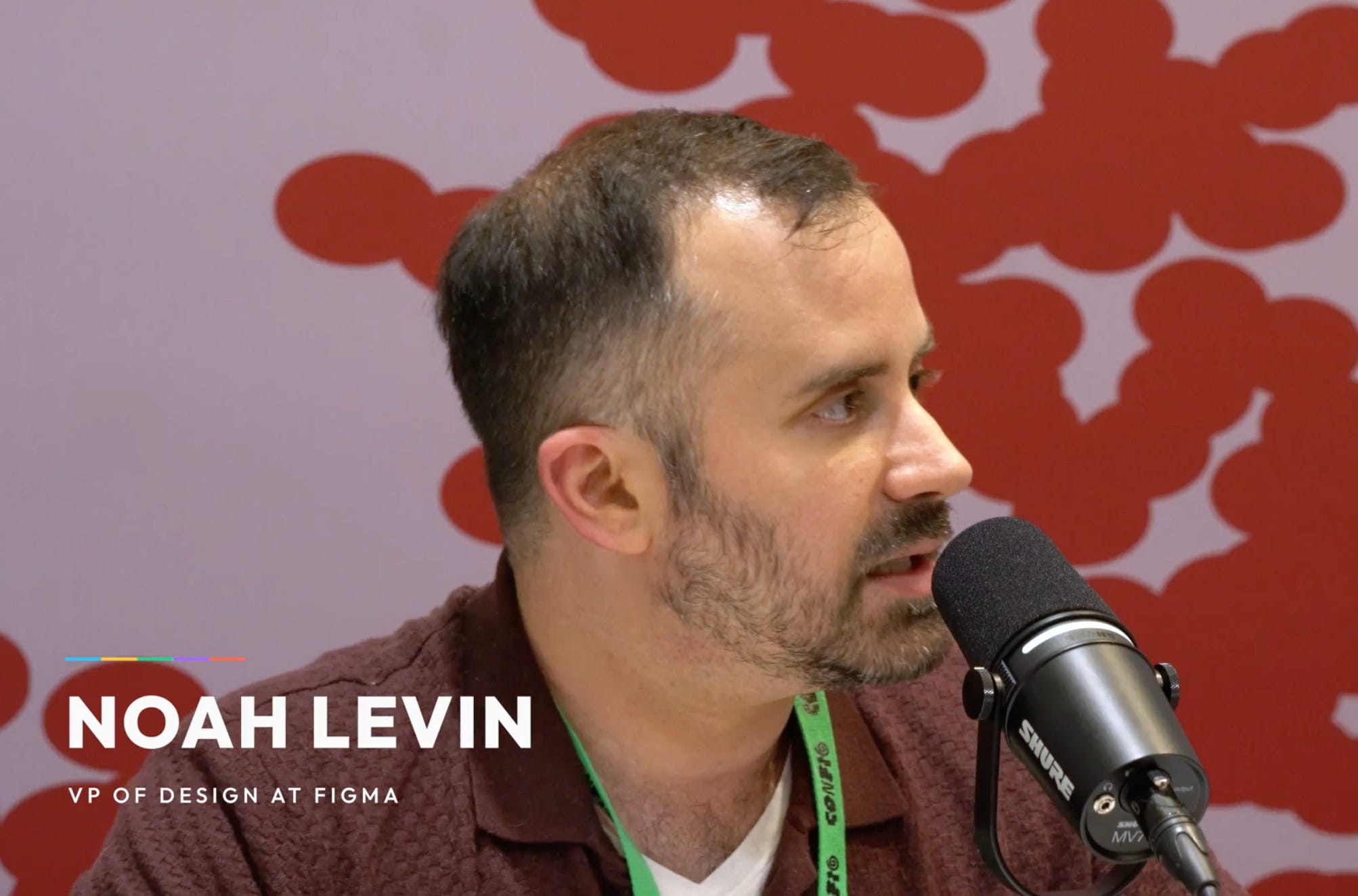
That’s the actual unlock and it isn’t about tools. Companies didn’t refuse to let designers touch the codebase, they just knew most designers couldn’t. That argument is gone.
Which means the constraint moved to your side of the table. If your designers still can’t get near the code, it’s now a decision your organisation is making.
The pattern I see in almost every company that bought licences first: everyone uses Cursor on their own with no shared way of working.
The individual gains are real. They just never add up to anything. What the company gets instead is new silos and information that stops circulating.
Company-wide productivity moves when the whole organisation agrees on a common frame and a common set of tools. That decision comes before the licences.
Lesson 3: Roles are collapsing and it hurts more than people admit
Every single person I spoke to used the same word. Blurring. The lines between product, design and engineering are blurring.
Two people told me what it actually costs.
A senior UX designer at Bentley Systems laid out the chain reaction. PMs started prototyping themselves, so the UX team got worried: if PMs are doing UX, what is our job? Then UX started writing code, which the developers found harder to stomach than anyone had expected. Her conclusion:
“Our roles are blending a bit, and that is creating tension between the roles.”
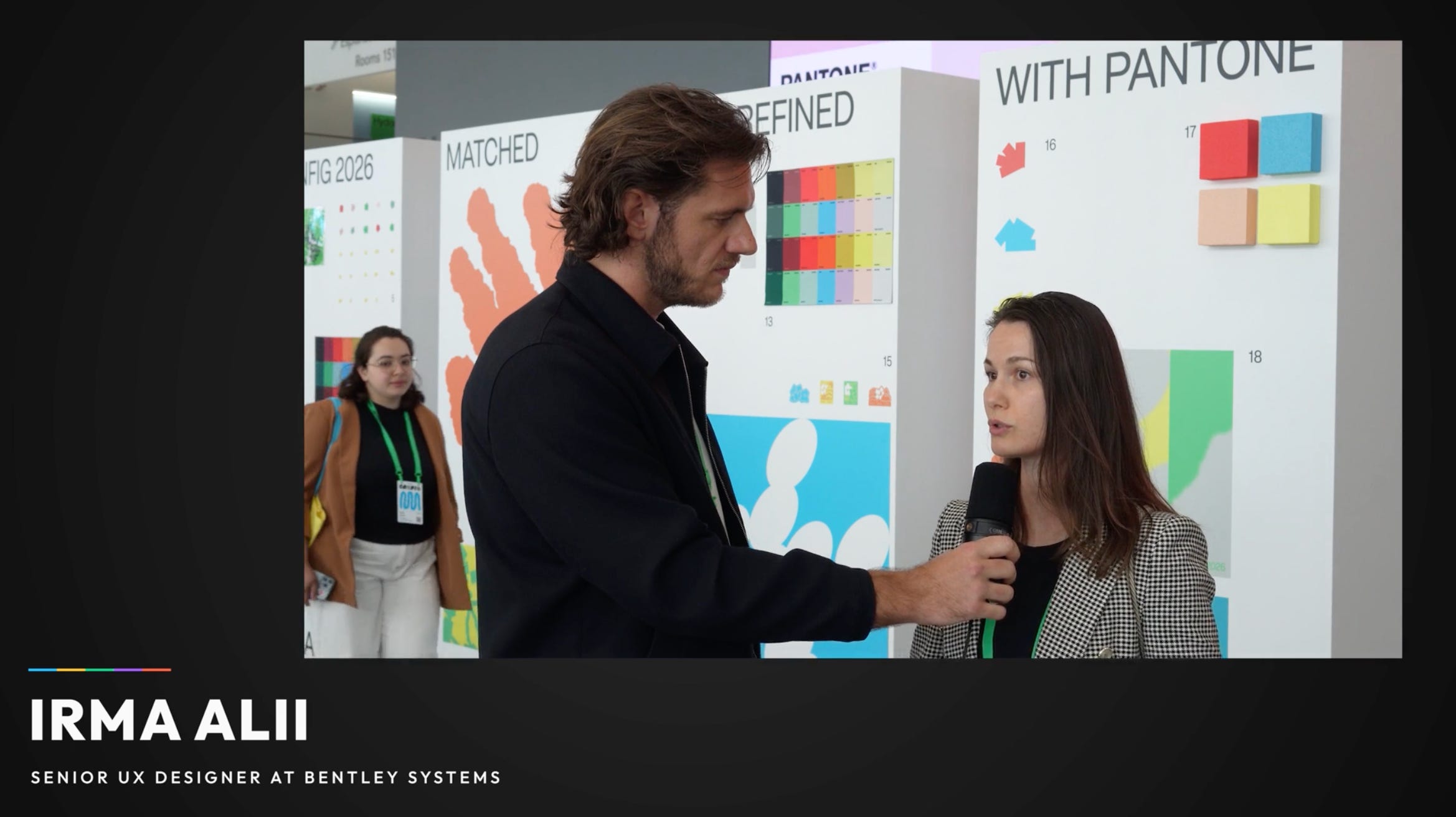
A designer at PrizePicks was blunter. She opened with “I don’t want to piss off any product managers, but the line is getting blurry” then described feeding a feature to AI and getting a PRD back that already knew which requirements to include. So I asked her where that leaves the PM role. She paused, and answered: “I don’t know.”
What I see splits by company age. The early-stage companies born after AI went mainstream draw their teams differently: fewer silos and more complete profiles like “Product Engineers” or “Product Builders”.
In larger companies the shift is harder to read. Specialists arrive later in a company’s life than they used to. Squads seem to need fewer developers. Roles like UX Research and QA may end up smaller. It’s genuinely too early to call.
What is not too early to call: a company that never re-examines how it organises and how it trains its people will keep building products the way it did before AI, and collect none of the gains.
Lesson 4: Enterprises are adopting AI one team at a time
The most transferable thing I heard came from Cox Automotive, a US automotive marketplace group. They didn’t roll AI out company-wide. They built what they call AI transform teams.
Each one is cross-functional: product managers, designers and developers together. The first wave was deliberately small. Learn there, then add teams.
“We wanted to start small, see how it goes and learn from that experience. As we add more teams, it’ll be an easier process than if everyone were trying to adopt AI all at once.”
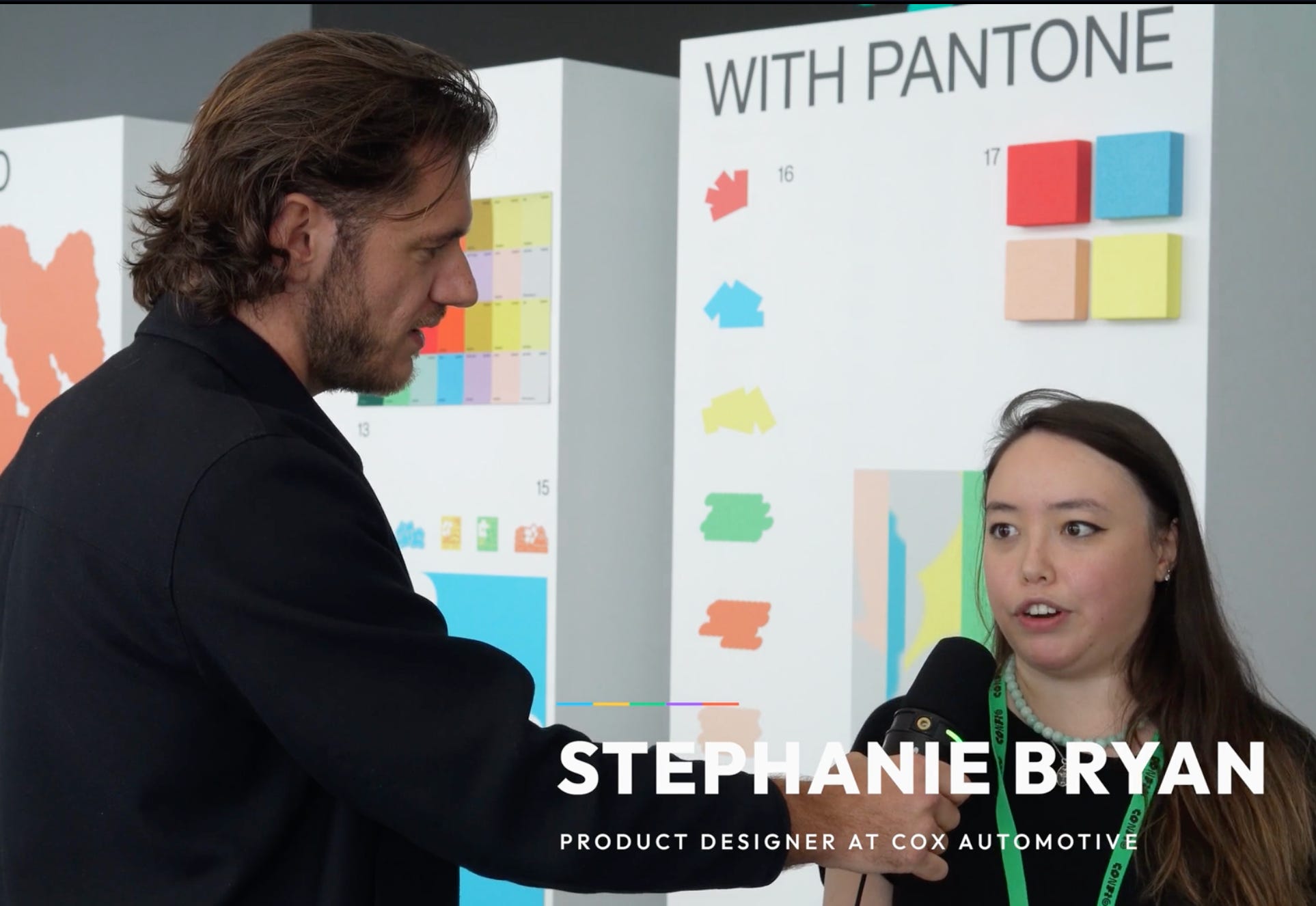
The designer on that first wave told me she now ships in days what used to take her a week, on a genuinely complex product. She has a mandate to break her own workflow, and a company that’s watching what breaks.
Compare that to Marriott, still in what their design manager called a ramp-up period, making sure people understand what AI can do without assuming it’s the end all, be all.
And then compare both to JP Morgan, where the story turns interesting. Their designer told me the security review means it could be months before she can touch the new tools at work.
Then she added, without missing a beat, that she’d be playing with them at home that evening.
That sentence should worry any CPO in a regulated European company. Your security process doesn’t slow adoption down, it just moves it somewhere you can’t see. The skills still get built, on personal machines, on personal accounts, outside every guardrail you wrote.
The Cox model is the answer to that: give a small cross-functional group official permission to move fast, in the open, with a mandate to report back. Otherwise your best people learn anyway, and you learn nothing.
Lesson 5: The learning is horizontal and nobody planned it
I kept asking a version of the same question. How do you keep up? New tools ship weekly, and none of these people have time to evaluate them properly.
Not one person answered “training”.
The senior UX designer at Bentley Systems described what actually happens:
“There’s always somebody testing something. Whether we like it or not, we hear from a colleague. They tested something and it was great, and then the rest of us adopted it.”
They’ve since put meetings on the calendar just to share what people found. At Cox Automotive it’s working sessions across teams, comparing where Claude is stronger and where Copilot is, tool by tool. At DoorDash, the rule is simply to keep trying new things and never settle into one program.
None of this came from the top. It came from individuals hitting walls in public.
And there’s a second half to that story which I think matters more. The same designer told me the tech still isn’t ready, that they keep hitting limits. But then:
“Whatever I could not do two months ago, I am now expecting to be able to do.”
That’s the part most organisations get wrong. They evaluate a tool, it fails, and the verdict sticks for a year. In this environment a failed experiment has a shelf life of about eight weeks.
So the mechanism you need isn’t a training plan. It’s two things: a place where people say out loud what they just tried, and a habit of re-testing what didn’t work last quarter. Both are cheap. Almost nobody has them.
Lesson 6: Figma stopped being the default
This is the part I did not expect to hear on Figma’s own conference floor.
A product designer at JP Morgan, mid-answer, caught herself:
“I know I shouldn’t be saying this here at Config, but I’m working a lot less in Figma these days.”
Her team is trying to live in VS Code. The Head of Product and Design at Eyequant told me his Figma usage had dropped significantly in six months, and that he’d arrived at Config assuming Figma would end up as the design system home and nothing more. A designer at PrizePicks described herself as a Claude Design convert. A freelance product designer put it gently: still a big fan, but no longer the thing she’s in all day.
A senior designer at DaVita said the strategic version out loud. The space got crowded, and Figma now has to differentiate its core product more clearly than it ever had to.
The CEO of Thiga, the only European consultancy leader I filmed, explained why this is structural rather than a Figma problem:
“A couple of years ago you signed a contract with a software company and stayed for two or three years. Now, because of the pace of AI models, they need the flexibility to switch fast. They don’t want to be stuck with one provider.”
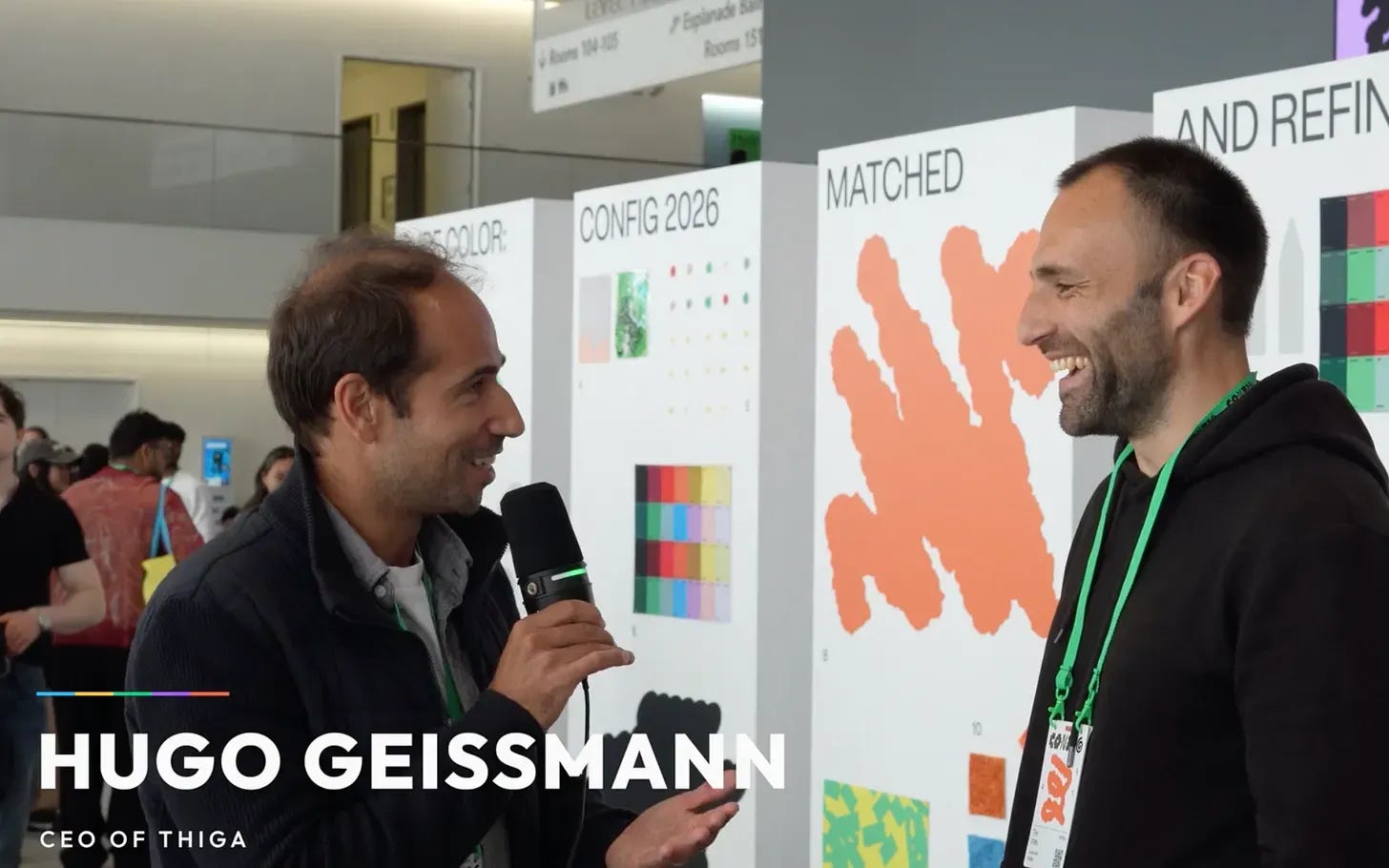
Procurement changed shape. Nobody wants a three-year bet on a category that reinvents itself every quarter.
Figma’s answer, from Noah Levin, is worth taking seriously: most AI tools today are single-player. You prompt alone. Their bet is that the work that matters gets made by teams, and that a shared canvas where you can see how colleagues are prompting is something a chat window structurally cannot copy.
By the end of the day, the PrizePicks designer had already changed her mind about what she’d be using next month. That’s the speed everyone is operating at now, including on procurement decisions that used to take a quarter.
Lesson 7: Average got free, standing out got expensive
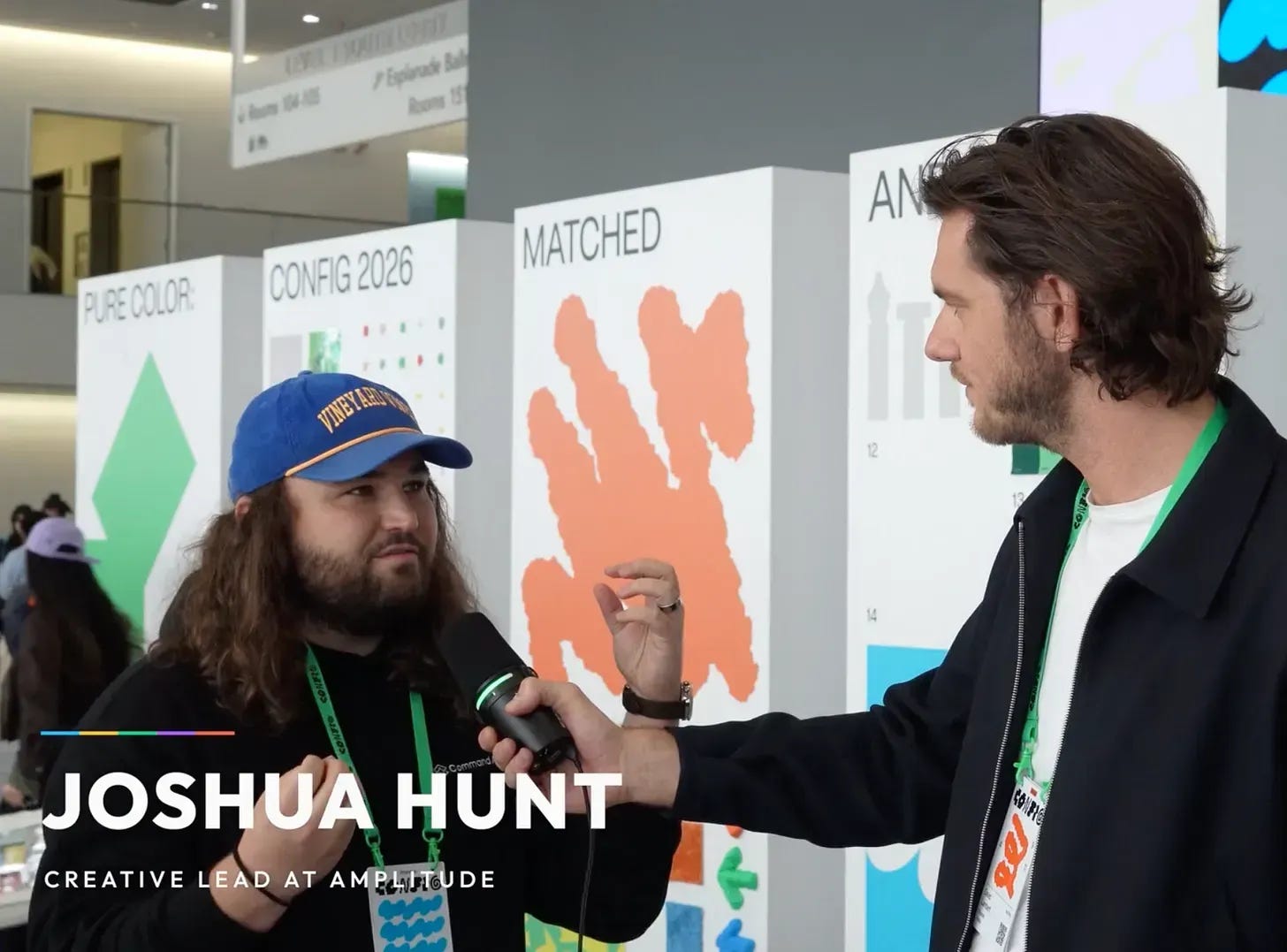
The sharpest thing anyone said to me all week came from a creative lead at Amplitude, and it had nothing to do with productivity.
“There’s a type of visual inflation that’s happened. Some sort of aesthetic hedonic treadmill. The things you make blend in a lot more than they used to.”
His point is that AI changed the viewer, not just the maker. Everyone’s feed is now full of work that looks competent, so competent stopped registering. His job got harder in a way no tool fixes: he has to be sharper about what will cut through, and what is even worth building.
Noah Levin arrived at the same place from Figma’s side. There’s an explosion of software, the App Store is flooded, and a customer wants five meaningful apps on their phone, not 150. Then the line that should be on a wall somewhere:
“Getting to average is so much easier than it used to be. To stand out today, average is not fine.”
And the Head of Product and Design at Eyequant closed the loop by attacking the comfortable answer. Most designers told me taste is what protects them. He disagreed:
“A lot of people are talking about how the designer’s unique ability is taste. I think that’s probably ultimately trainable.”
What survives, for him, is the sideways idea. The right turn when everyone, including the model, expects you to go straight.
Three people who never spoke to each other, landing in the same spot from three directions. That convergence is the closest thing to a consensus I found all day.
This is also my answer to the CEOs who tell me they’re about to ship three times more. Everyone is about to ship three times more. Shipping stopped being the hard part.
What’s left is knowing which bet is worth taking, and that’s a customer and business question long before it’s a design one.
Lesson 8: The profession has not agreed on its own definition yet
I ended the shoot expecting a pattern. Same questions, same room, some kind of shared answer.
There wasn’t one. And that turned out to be the most useful thing in the documentary.
They don’t agree on how big the change is. A senior UX designer at Bentley Systems told me everything had changed, that working without AI now feels like the Stone Age, and that it took a few months. A principal designer at Zero told me it’s a tool, like the computer was when desktop publishing arrived. Noah Levin, who runs design at Figma, refused both framings and called it a gradient.
They don’t agree on what protects them. A senior designer at PrizePicks says taste and craft. The Head of Product and Design at Eyequant names that consensus in order to break it:
“A lot of people are talking about how the designer’s unique ability is taste. I think that’s probably ultimately trainable.”
What survives, for him, is the sideways idea. The right turn when everyone expects you to go straight.
They don’t even answer at the same altitude. Asked what AI will never take from them, Marriott said QA, a task. DaVita said judgment, a faculty. PrizePicks said emotion, a human property. TextNow said the printed object, a material.
The people building the tools don’t have the definition either. Figma’s VP Product told me the honest version on camera: we can’t predict, we can only look at what AI-native companies are doing right now.
So there is no consensus available for you to import. Nobody is handing you the 2027 job description, and anyone selling you one is mostly selling certainty.
I can usually tell within one call whether someone has moved.
The ones who have built themselves new workflows. They automated the repetitive part of their job, they spend far more time with customers and on strategy, and far less on execution and specs.
The ones who haven’t are still writing specs to assist developers. That job stopped making sense, and they haven’t noticed yet.
What does this mean for Europe?
I asked Figma’s VP of Product the question everyone actually wants answered: should designers be worried?
She refused to predict, which I respected and then gave the only honest method available:
“The best we can do is look at AI-native companies and ask how they’re hiring. When you look at the frontier labs, they are hiring PMs and hiring designers. They are definitely not laying them off. And the large companies that did design layoffs rehired those people.”
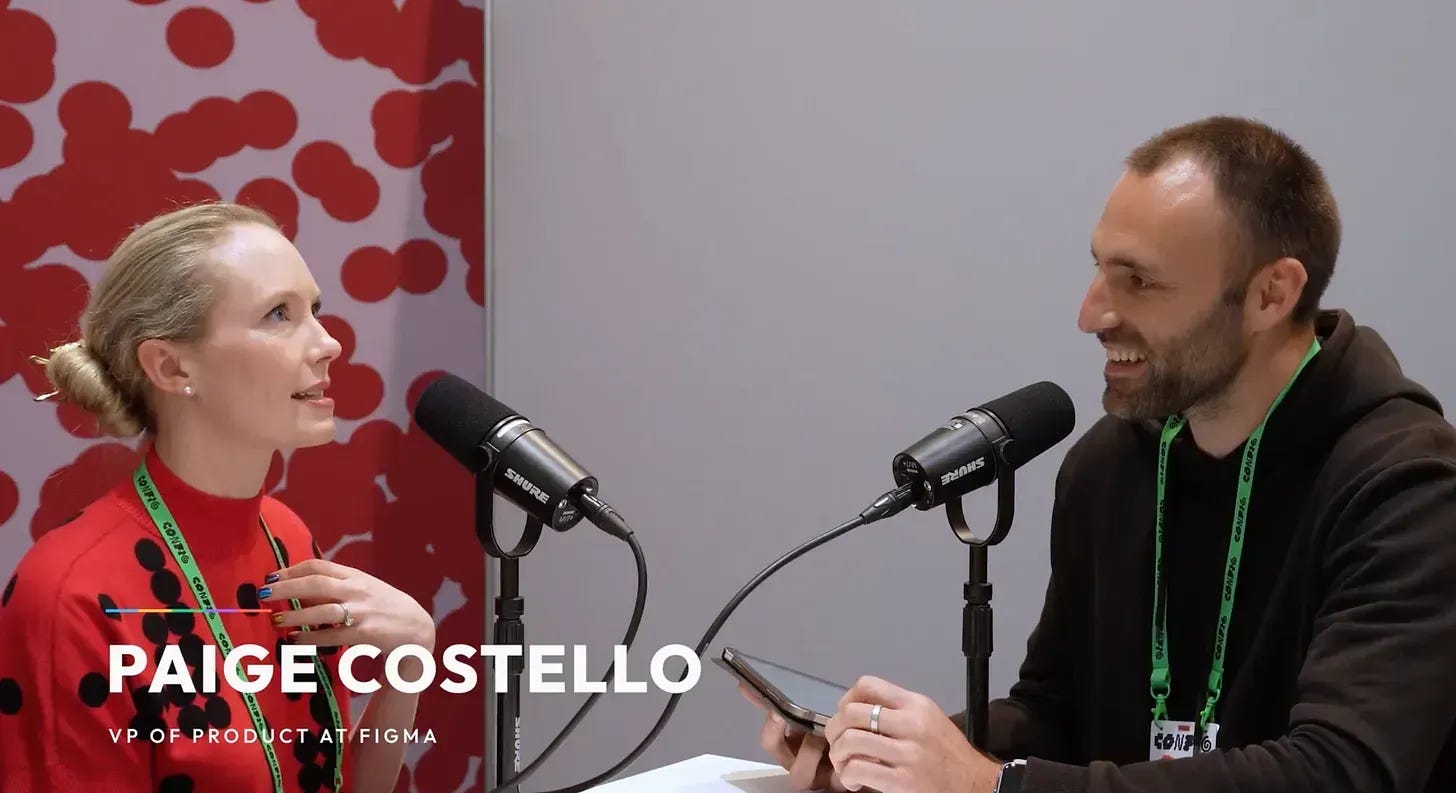
Her argument goes further, and it’s the one to bring to your Comex. A designer’s work is now higher ROI, because the mechanical part of the job collapsed. So one designer should produce more business impact than one designer produced last year. That’s an argument for more headcount, not less.
Noah Levin’s message to founders points the same way. Design is how you avoid looking and feeling like everyone else, at the exact moment when looking competent became free.
And the last word belongs to the only European I filmed, the CEO of Thiga, who was heading back to Paris:
“As code becomes a commodity, being able to design the right product matters more than it used to. You’re here to stay. But you clearly have to level up. Mastering AI, and your craft.”
My own read, after this week.
European companies are slightly behind. They move slower, they’re more skeptical, more cautious. But they know exactly what’s coming. They’re just less willing to buy the story as it gets told on social media and I don’t think they’re wrong about that.
What Config made clear is that the question is the same everywhere. A designer in Atlanta and a designer in Paris are asking each other the same thing.
The real gap runs between a small group of US companies moving far faster than everyone else and the rest of the world. That group is small, and it’s the one setting the direction for the next few years.
So if you’re a CEO who hasn’t started, the answer is boring and it’s the same every time. Put training in place and put rituals in place, so your teams get their hands on this as fast as possible. Everything else comes after.
Key takeaways
- 3 months of design work now fits into 3 days
- Designers reach the codebase and fluency stopped being the barrier
- Roles are blurring and nobody has written the new rules yet
- The best adopters start with one cross-functional team and scale from there
- The learning travels sideways, from colleagues who hit walls in public
- Figma lost its default status, and spent Config fighting to win it back
- Competent work became free. The value moved to choosing what to build
- Nobody agrees on what the job becomes, including the people building the tools
Test your Product performance in 10 min
Trusted by 100+ startups and top CPOs like:


In this article
About Stellar
Stellar is a team of senior CPOs and CTOs who work hands-on inside product and engineering teams to fix what slows them down. Not advisors. Not trainers. Operators who've done the job before and know exactly where to look.
Discover StellarDive deeper
See all articles